
Take a scheduled break this week, protect your sleep tonight, and hand off one specific task to someone else today. Those three moves are the evidence-backed starting point for caregiver burnout solutions, according to guidance from the Mayo Clinic and the NIH. If you’re having thoughts of harming yourself or can’t safely care for your loved one, that’s a signal to call a professional now, not later. Apps like Well-Check can carry some of the watching so the break actually feels like one.
TL;DR:
- Setting a scheduled break, delegating one task, and protecting sleep can significantly reduce caregiver stress and prevent burnout.
- Recognizing warning signs like irritability, sleep issues, and forgetfulness early helps avoid escalation to crisis levels.
- Small, consistent actions such as proper nutrition, relaxation techniques, and batching tasks provide quick relief and build resilience over time.
- Immediate professional help is critical for thoughts of self-harm, severe insomnia, or inability to perform basic daily activities.
- Using support tools like daily check-in apps and building a clear caregiving plan with boundaries prevents mental overload and sustained burnout.
Table of Contents
- What Are the Signs of Caregiver Burnout?
- What Can You Do Right Now to Relieve Caregiver Stress?
- How Do You Build a Caregiving Plan That Doesn’t Burn You Out?
- When Should You Get Professional Help for Caregiver Stress?
- What Resources and Tools Actually Reduce Caregiver Burden?
- What Small Daily Habits Protect You Long Term?
- Where to Go for More Help
- Why “Just Take a Break” Isn’t Real Advice
- Sources
What Are the Signs of Caregiver Burnout?
Burnout rarely announces itself. It creeps in as irritability with a parent who repeats the same question, or a sense of numbness where worry used to be.
Watch for these categories of warning signs:
- Emotional and behavioral: withdrawal from friends, snapping at the person you’re caring for, persistent guilt, or a flat “I just don’t care anymore” feeling.
- Physical: trouble falling or staying asleep, getting sick more often than usual, headaches, or appetite changes.
- Cognitive: trouble concentrating, forgetting appointments, or feeling like your brain is “foggy” most of the day.
Caregivers report higher stress levels than non-caregivers, and that stress compounds. It often starts as fatigue, moves into resentment or detachment, and can end in depression or physical illness if nothing changes. One in three U.S. adults provides informal caregiving, which means these symptoms are common, not a personal failing.
Red flags that need same-day attention: thoughts of self-harm, inability to get out of bed or feed yourself, or a moment where you feel you might hurt the person you’re caring for. Those aren’t burnout to manage on your own. They’re a call to a doctor or crisis line, today.
What Can You Do Right Now to Relieve Caregiver Stress?
Stress relief for caregivers doesn’t require a vacation. It requires small, repeatable actions that lower your body’s stress response within hours, not weeks.
- Fix the basics first. Eat something with protein at regular times, drink water before coffee, and build a 10-minute wind-down before bed (dim lights, no screens, same time nightly). Sleep is the lever NIH lists first for a reason.
- Use your relaxation response on purpose. Ten minutes of slow breath awareness, a short guided meditation, or progressive muscle relaxation genuinely counters the immune suppression that chronic stress causes, and it works better the more regularly you do it.
- “Clock out” like it’s a shift. Pick a start and end time for your break, hand off monitoring duties to a backup person or a check-in app, and treat that window as fully off-limits mentally. Caregivers who set defined off-duty hours recover better than those who never fully disengage.
- Turn vague offers into assignments. When someone says “let me know if you need anything,” hand them something concrete: “Can you do the Tuesday grocery run?” or “Could you sit with Mom from 2 to 4 on Thursday?” That’s the difference between an offer that evaporates and help you can actually count on.
Pro Tip: Keep a running “master list” on your phone of ten small tasks (pharmacy pickups, driving to appointments, an hour of company) so you always have something specific ready when someone offers to help.
How Do You Build a Caregiving Plan That Doesn’t Burn You Out?
A sustainable plan starts with an honest inventory. Write down everything you do in a week, including the invisible stuff, medication tracking, appointment scheduling, emotional support, and mark which items someone else could realistically take over.
From there, delegation gets specific:
- Send a short text or email listing three or four discrete tasks and let family members or friends pick one.
- If a sibling lives far away, assign them the “remote” jobs: managing bills, researching services, or handling insurance calls.
- For paid help, a home care agency like Seniors Helping Seniors can cover in-home shifts so you’re not the only backup.
- Look into respite options: in-home aides for a few hours, adult day programs a couple of days a week, or a short-term stay at a facility for a longer break. Even brief, predictable respite lowers burnout risk.
- If you’re employed, ask HR about caregiver leave policies or flexible scheduling before you assume there’s nothing available.
- Budget for at least one recurring paid break, even if it’s just a few hours a week. It’s cheaper than a health crisis later.
Boundaries matter as much as logistics. Decide in advance what you will and won’t do, then say so plainly to family members instead of letting resentment build silently.
When Should You Get Professional Help for Caregiver Stress?
Some symptoms call for more than a nap and a better task list. Recovery from real burnout often requires reducing the underlying strain, not just coping harder, and that sometimes means a professional assessment or therapy.
Seek help immediately if you notice:
- Thoughts of suicide or self-harm, or thoughts of harming the person you care for.
- Insomnia lasting more than a couple of weeks despite trying basic sleep fixes.
- You genuinely cannot manage daily tasks like eating, bathing, or getting to work.
For less urgent but persistent symptoms, start with your primary care doctor, who can screen for depression or anxiety and review medications. Counselors and therapists, such as those listed through Align Therapy Collective, can help you process guilt and grief that build up over months of caregiving. Geriatric care managers can coordinate services if the care recipient’s needs are complex. Crisis hotlines exist for the moments that can’t wait for an appointment.
Before a visit, jot down your sleep patterns, mood over the past two weeks, and any medications you’re taking. That short list makes the first session far more useful.
What Resources and Tools Actually Reduce Caregiver Burden?
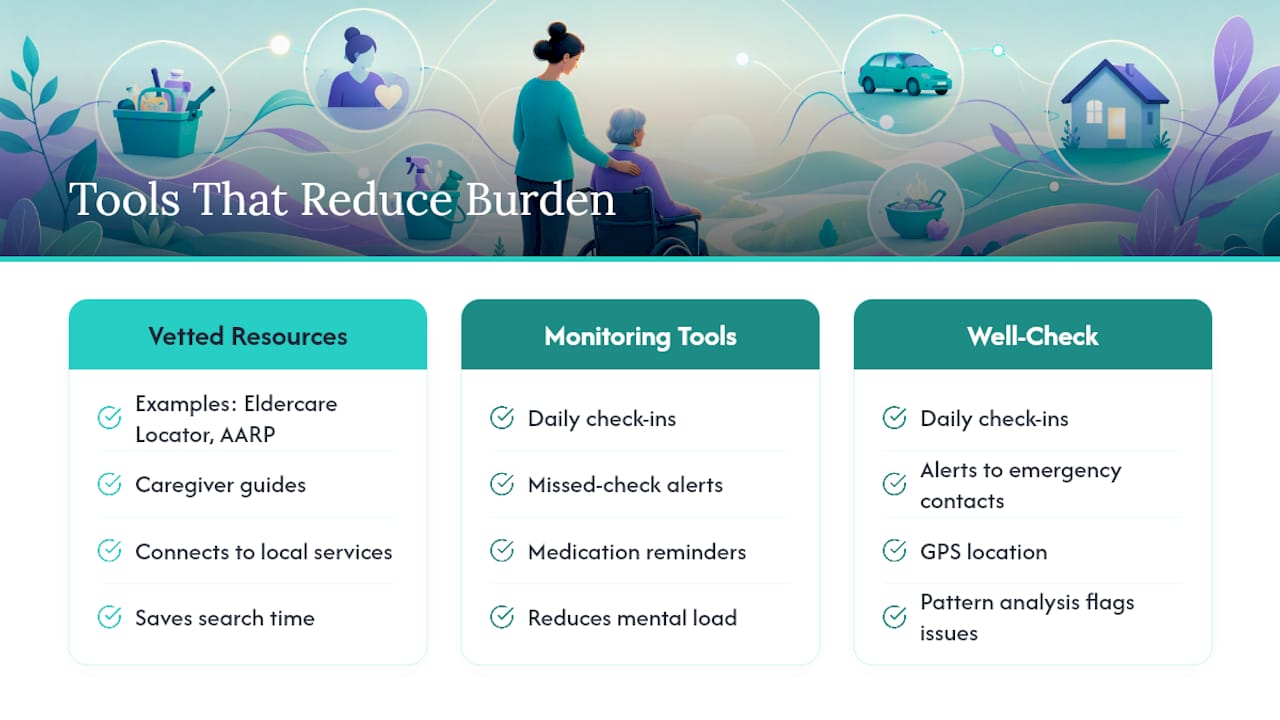
Good caregiver wellness programs and vetted resources save time you don’t have to spend searching. The Eldercare Locator connects you with local aging services, AARP publishes caregiver-specific guides, and the Rosalynn Carter Institute focuses specifically on caregiver support research and programs.
Monitoring tools solve a different problem: the mental load of constant checking. Daily check-in apps let a loved one confirm they’re okay with one tap, send automatic alerts to you if a check-in is missed, and remind them to take medication, without you having to call three times a day to make sure.
A missed check-in alert does the worrying for you, so a two-hour break can actually feel like a break instead of two hours of low-grade dread.
Well-Check builds this into one system: daily check-ins, missed-check alerts to your emergency contact network, medication reminders, GPS location, and smart caregiver analysis that flags unusual patterns before they become emergencies. It’s not a replacement for respite or therapy, but it’s a practical layer that makes both easier to actually use.
What Small Daily Habits Protect You Long Term?
Burnout prevention lives in the small stuff you can repeat without a calendar reminder.
- Take a 5 to 20 minute break between caregiving tasks, a short walk, water and a snack, or five slow breaths by an open window.
- Run the same 10-minute wind-down every night: dim lights, no phone, same bedtime.
- Batch similar tasks together, do all pharmacy calls, bill payments, or appointment scheduling in one sitting instead of scattering them through the week.
These habits take less time than scrolling your phone, and they compound the way compound interest does: small, boring, and reliable.
Where to Go for More Help
- Mayo Clinic: Caregiver stress and self-care
- NIH: Tips for caregivers
- Harvard Health: Relief for caregiver burnout
- Well-Check: How it works
Why “Just Take a Break” Isn’t Real Advice
Most caregiver burnout content stops at “practice self-care” and calls it a day. That advice isn’t wrong, it’s incomplete. Telling an exhausted caregiver to meditate more without addressing who watches Dad while she does it just adds guilt on top of exhaustion.

The research actually supports something more operational: treat your own health like a system with backups, not a feeling you manage through willpower. A master task list, a specific ask, a scheduled break with a real safety net, that combination does more than another article about the importance of sleep.
Where I think caregivers get it wrong is waiting for burnout to feel severe enough to justify asking for help. By the time you feel justified, you’re usually already past the point where a short break fixes it. Ask early. Delegate the boring stuff first. And if a $10-a-month app buys you a guilt-free two hours away from your phone, that’s not indulgence. That’s infrastructure.
— Brian
This article is general information, not a substitute for advice from a qualified doctor. Consult a qualified healthcare professional about your own circumstances before acting on anything here.