As our parents get older, keeping them safe becomes a priority, especially when we don’t live nearby. Whether your parent lives alone, manages a medical condition, or simply wants to maintain their independence, it’s natural to wonder how they’re doing throughout the day.
Fortunately, technology has made staying connected easier than ever. Today’s apps to monitor elderly parents offer features ranging from daily wellness check-ins and medication reminders to GPS location sharing, heart rate monitoring, and emergency notifications.
But not every app provides the same level of protection or peace of mind.
In this guide, we’ll explore five options for monitoring elderly parents remotely, the features that matter most, and how to choose the right solution for your family.
5 Best Apps to Monitor Elderly Parents Remotely
1. Well-Check — Best for Daily Wellness Check-Ins and Family Safety
For families who want more than simple location tracking, Well-Check offers a proactive approach to staying connected with aging parents.
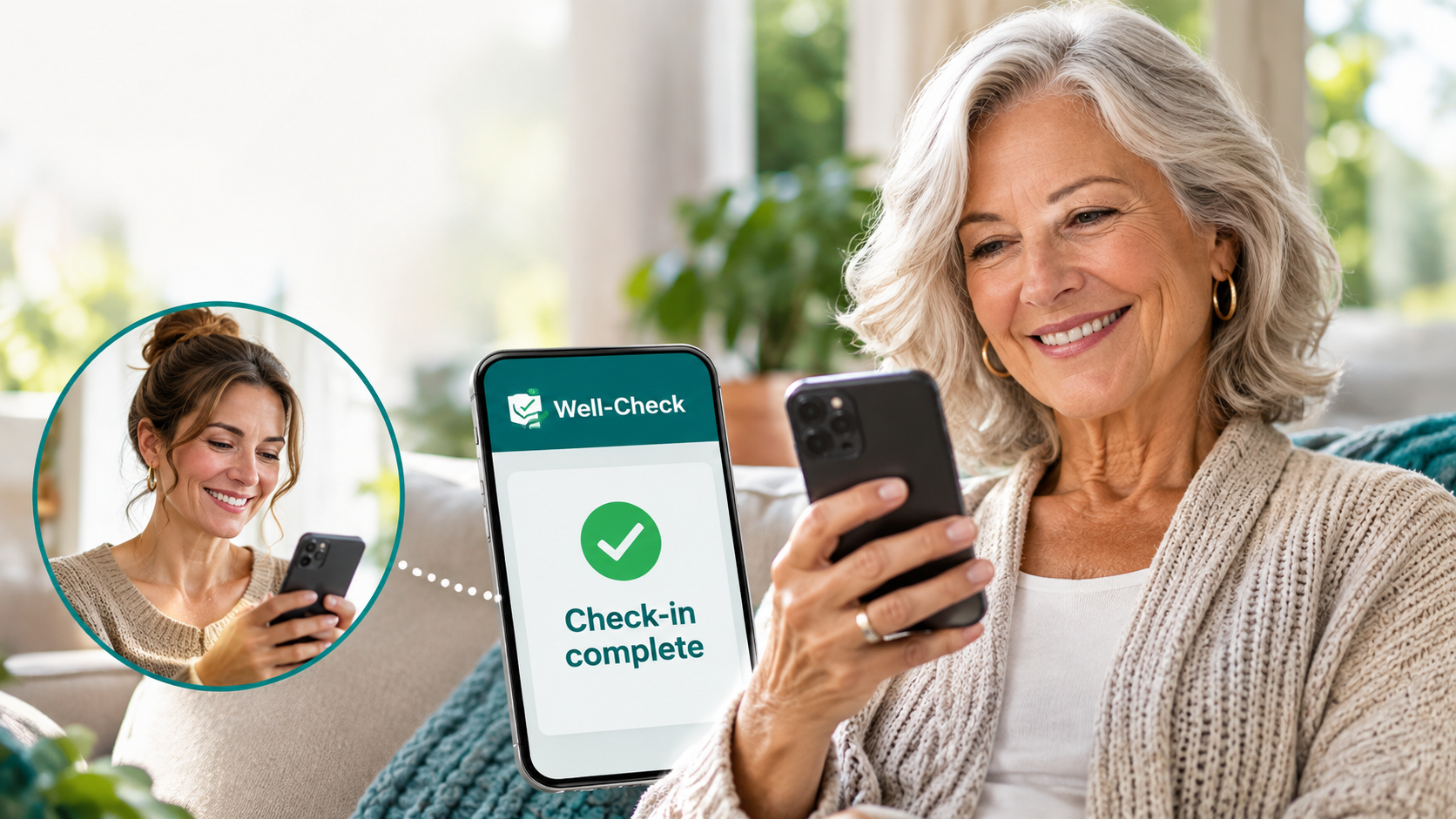
Rather than requiring family members to constantly call or text to make sure someone is okay, Well-Check allows users to schedule daily wellness check-ins. When a check-in is completed, loved ones can feel reassured. If a scheduled check-in is missed, designated contacts automatically receive a notification so they can follow up.
Well-Check combines several important safety and wellness features within one easy-to-use app.
Key features include:
-
Scheduled Daily Check-Ins: Parents confirm they’re okay with a simple tap.
-
Missed Check-In Alerts: Family members receive automatic notifications when scheduled check-ins aren’t completed.
-
Medication Reminders: Help aging parents stay on schedule with their medications.
-
Apple Watch Heart Rate Monitoring: Compatible health monitoring features provide additional wellness awareness.
-
GPS Location Awareness: Help families stay connected when loved ones are away from home.
-
Family Shield Network: Keep designated family members and trusted contacts informed.
-
Emergency Assistance Alerts: Allow users to notify their designated contacts when they need help.
One of Well-Check’s greatest advantages is its simplicity. Older adults don’t need to navigate complicated dashboards or manage multiple applications. They can confirm their well-being with a simple check-in while remaining independent.
Best for: Aging parents living alone, families separated by distance, and individuals who want proactive wellness monitoring without constant phone calls.
Learn more about how Well-Check works.
2. Life360 — Best for GPS Location Sharing
Life360 is widely used by families who want to stay informed about each other’s whereabouts.
With location sharing, place notifications, and driving-related features, Life360 can be useful for older adults who remain active, drive regularly, or travel independently.
However, location tracking alone doesn’t necessarily confirm whether someone is feeling well, has taken their medication, or needs assistance at home.
Best for: Families primarily interested in location awareness and driving-related safety features.
Life360+1
3. Medisafe — Best for Medication Management
Medisafe focuses on helping users manage medications and avoid missed doses.
The app provides scheduled medication reminders, dose tracking, and caregiver-sharing options. Its Medfriend feature can notify a designated caregiver when a medication isn’t marked as taken.
For older adults managing several prescriptions, this focused approach can be especially helpful.
However, medication tracking doesn’t replace broader daily wellness check-ins or location-based safety features.
Best for: Aging parents who take multiple medications and need help maintaining consistent routines.
Medisafe Help Center+1
4. Apple Find My — Best for Basic Location Awareness
Apple Find My is a convenient option for families already using iPhones.
With permission, family members can share their locations and help locate devices. It’s an easy starting point for older adults who are comfortable using Apple products.
However, Find My is primarily a location-sharing tool. It doesn’t provide scheduled wellness confirmations, medication management, or a dedicated missed check-in notification workflow.
Best for: Families who need basic location sharing without installing a specialized monitoring app.
5. Caring Village — Best for Family Care Coordination
Caring Village helps families organize caregiving responsibilities, maintain shared schedules, and coordinate assistance for loved ones.
For families with several people involved in caring for an aging parent, this type of application can simplify communication and reduce confusion about responsibilities.
Its primary strength is care coordination rather than proactive daily safety monitoring.
Best for: Families managing appointments, caregiving tasks, and shared responsibilities across multiple caregivers.
Caring Village+1
Comparing the Best Apps for Elderly Parent Monitoring
| App | Primary Strength | Best For |
|---|---|---|
| Well-Check | Daily wellness check-ins and missed check-in alerts | Overall family wellness and safety |
| Life360 | GPS location sharing | Location and driving awareness |
| Medisafe | Medication reminders | Medication management |
| Apple Find My | Basic location sharing | iPhone users |
| Caring Village | Shared caregiving organization | Family care coordination |
What Features Should You Look for in an Elderly Monitoring App?
Choosing an app isn’t simply about finding the one with the most features. It’s about identifying the concerns your family faces every day.
Daily wellness check-ins are particularly important for older adults living alone. A simple scheduled confirmation provides reassurance without requiring multiple phone calls throughout the day.
Automatic missed check-in alerts add another layer of protection. Instead of relying on a loved one to initiate communication, designated contacts can be notified when an expected check-in doesn’t happen.
Medication reminders can help older adults maintain their daily routines, especially when managing multiple prescriptions.
Location awareness can be useful for parents who drive, travel independently, or may become disoriented away from home.
Heart rate monitoring through compatible wearable devices may offer another source of wellness information, although it should never replace professional medical monitoring.
Above all, the app should be simple enough that your parent feels comfortable using it consistently.
How to Monitor Elderly Parents Without Taking Away Their Independence
One of the biggest concerns older adults have about monitoring technology is the feeling that they’re losing control over their lives.
The goal shouldn’t be to watch someone’s every move. It should be to provide reassurance while respecting their privacy and independence.
Start by having an open conversation with your parent about their needs. Explain how an app could help them stay independent while giving family members a reliable way to know they’re okay.
For many families, scheduled daily check-ins create a comfortable middle ground. Your parent remains in control of their routine, and you receive reassurance without needing to interrupt their day.
Why Well-Check Takes a Different Approach
Many monitoring apps focus on one specific concern, such as location tracking or medication management.
Well-Check was designed around a more personal question:
“How do I know my loved one is okay when I can’t physically be there?”
That question became especially meaningful to Well-Check founder Brian Miller when his mother was diagnosed with stage 4 metastatic ovarian cancer.
Living approximately two hours away, he understood the worry that comes with caring about someone you can’t check on in person every day.
That experience helped inspire Well-Check: an app designed to bridge the distance between families through scheduled check-ins, important reminders, and timely notifications.
Instead of constantly wondering whether someone is okay, families can establish a simple, reliable wellness routine.
Frequently Asked Questions
What is the best app to monitor elderly parents remotely?
The best app depends on your family’s needs. Well-Check is a strong option for daily wellness check-ins and missed check-in alerts, while Life360 focuses on location sharing and Medisafe specializes in medication management.
Can I monitor my elderly parent from another state?
Yes. With an internet-connected device, appropriate permissions, and a compatible app, you can receive wellness updates, check-in notifications, or shared location information even when you live hundreds of miles away.
How can I know if my elderly parent is okay without calling every day?
A daily wellness check-in app like Well-Check allows your parent to confirm their well-being through scheduled check-ins. If a check-in is missed, designated contacts receive an alert to follow up.
Can an app help elderly parents who live alone?
Yes. Apps with daily check-ins, reminders, and emergency contact alerts can add a layer of reassurance for people living independently. However, they don’t replace personal contact, professional care, or emergency services.
Stay Connected, Even When You’re Miles Apart
Caring for an aging parent can be challenging, particularly when distance, busy schedules, or medical concerns make daily communication difficult.
The right technology can make a meaningful difference.
With daily wellness check-ins, missed check-in alerts, medication reminders, and additional safety features, Well-Check helps families stay connected while supporting the independence of the people they love.
Because knowing they’re okay matters.
Explore Well-Check and discover a simpler way to stay connected with your loved ones.