A family safety plan is a short, agreed set of steps your household follows in a fire, storm, medical emergency, or any crisis that scatters people from their normal routine. The immediate next step is a short family meeting where you choose an out-of-area contact and sketch four things: how you’ll communicate, where you’ll meet, who has special needs, and how you’ll practice.
TL;DR:
- Families should regularly test evacuation routes and update contact and authorization details to ensure the plan remains effective during actual emergencies.
- Household inventories must include medications, mobility devices, pets, and language considerations, tailored to specific regional threats like hurricanes or wildfires.
- A written plan should be stored in multiple locations, including digital copies and printed cards, and kept simple enough for quick reference under stress.
- Automated check-in apps like Well-check are crucial for households with relatives living alone, offering GPS tracking, reminders, and alerts when check-ins are missed.
- Consistently reviewing and practicing the plan, including both local and outside-the-neighborhood meet points, reduces hesitation and confusion during crises.
Table of Contents
- How Do You Hold A Family Safety Plan Meeting?
- What Household Needs And Local Hazards Should You Plan For?
- What Belongs In Your Written Family Safety Plan?
- How Often Should You Test And Update Your Plan?
- When Does A Family Need A Monitoring Tool Like Well-check?
- What Families Get Wrong About Emergency Planning
- How Well-check Fills The Gap Paper Plans Can’t
- Official Templates Worth Downloading Today
- Sources
How Do You Hold A Family Safety Plan Meeting?
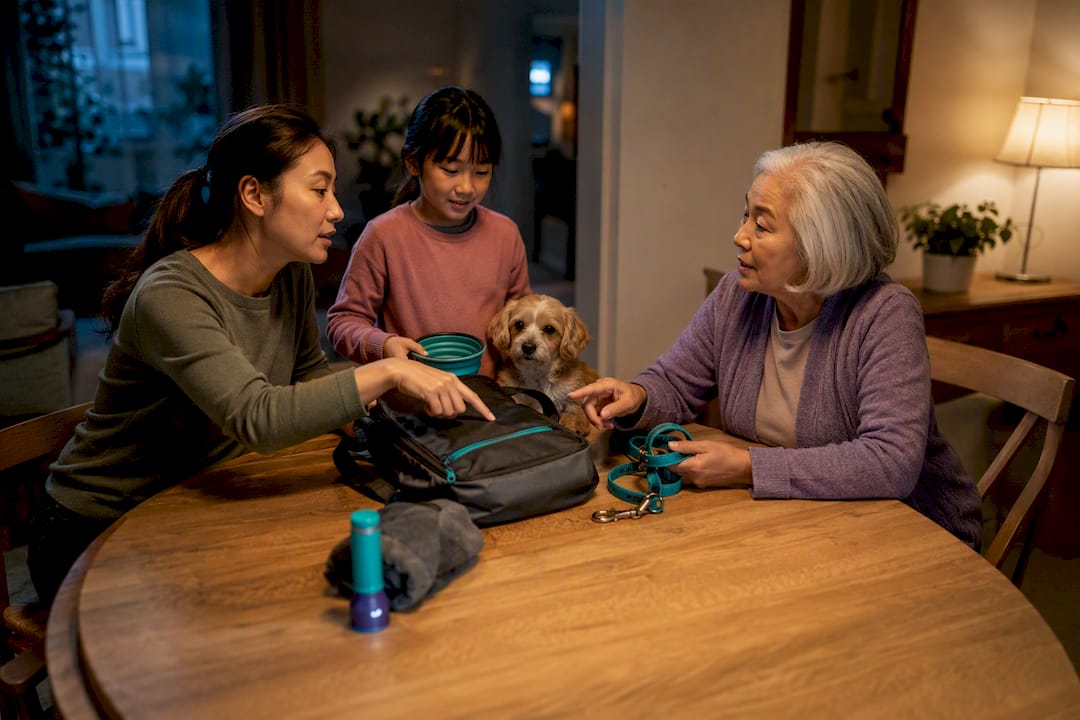
Get everyone in one room, including teenagers and any grandparent or neighbor who helps with daily care. This meeting doesn’t need a whiteboard or a binder. It needs 15 to 30 minutes and a phone to type notes into.
Start by assigning roles. Someone grabs the go bag. Someone gets the pets. Someone is responsible for younger kids or a relative who uses a wheelchair. Write these down, because in the actual moment, people freeze and default to whoever spoke last.
Then pick your out-of-area contact. Local phone circuits often jam during major disasters while long-distance connections stay open, so a relative two states away is more useful than one down the street, according to Ready. Agree on three ways to reach each other: a phone call, a text, and a group messaging app as backup.
Before the meeting ends, cover these:
- Who is the out-of-area contact, and does everyone have that number memorized or written down?
- Which neighbors or nearby relatives can help in the first hour if you can’t reach each other?
- Who is authorized to pick up your kids or dependents if you can’t get there yourself?
What Household Needs And Local Hazards Should You Plan For?
Every plan has to account for who actually lives in the house, not a generic version of your family. Take inventory of medications, medical devices, mobility aids, allergies, pets, and any language barriers that could slow down a 911 call or a shelter check-in.
FEMA’s planning guidance, known as CPG 101, specifically calls out older adults, people with disabilities, children, and pets as groups that get missed in typical household plans. That’s the gap you’re closing here.
Next, figure out what actually threatens your area. A family in coastal Florida is planning around hurricanes and storm surge. A family in a wildfire zone is planning around evacuation routes and air quality. That distinction decides whether your plan leans toward “get out fast” or “shelter in place.”
Build your inventory around:
- Medications and dosages, plus a list of prescribing doctors
- Mobility aids, hearing aids, or medical devices that need power or batteries
- Pets: carriers, food, and a pet-friendly shelter or hotel nearby
- Languages spoken at home, in case first responders need a translator
- School and daycare reunification policies, confirmed in advance
If anyone in the house is on ongoing medication, this is also a good moment to double-check your health insurance coverage actually matches your family’s needs before an emergency forces the issue.
Pro Tip: Call your kid’s school office directly and ask what their release policy looks like during a lockdown or evacuation. Most schools won’t release a child to anyone not already on file, even a grandparent, so get that paperwork filed now instead of during a crisis.
What Belongs In Your Written Family Safety Plan?
A plan that lives only in your head disappears the moment stress hits. Write it down. Ready.gov offers a fillable family communication card that fits in a wallet and covers phone numbers, emergency contacts, and authorized pick-up names in one glance.
Keep the one-page card simple: names, phone numbers, the out-of-area contact, and your two meeting spots. The full plan can live somewhere longer, with medical details, pet info, and insurance policy numbers.
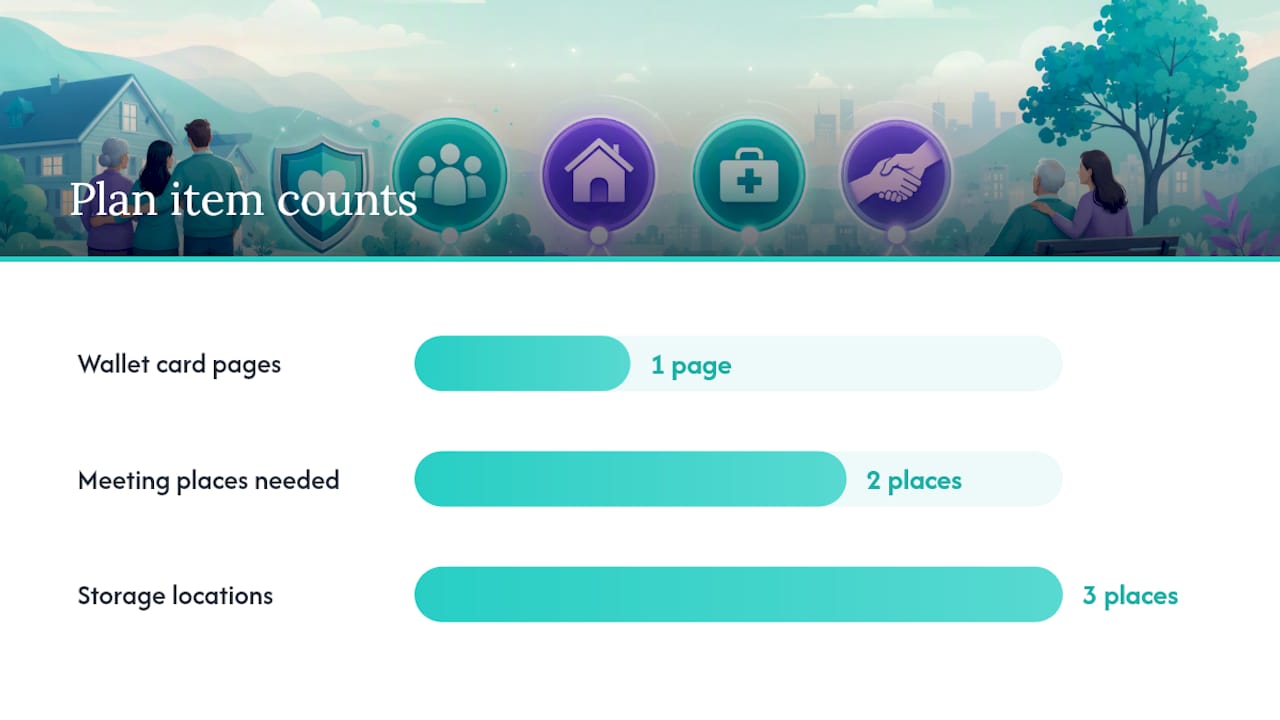
You need two meeting places, not one. One near your home, like a neighbor’s driveway or a specific tree, for a fast event like a kitchen fire. One outside the neighborhood, like a library or relative’s house, for something that makes your block unreachable, such as a gas leak or major flooding.
Store your plan in three places:
- A photo of the card on every family member’s phone
- A copy saved to a shared cloud folder or email draft
- A printed card in each car and one in a backpack or purse
How Often Should You Test And Update Your Plan?
A plan only works if muscle memory backs it up. Ready.gov and the American Red Cross both recommend testing your family’s setup regularly throughout the year, walking through both the near-home and outside-the-neighborhood meeting spots so nobody hesitates when it counts.
Run the drill like this:
- Announce a mock scenario, like “there’s smoke in the kitchen,” and have everyone grab their assigned item, whether that’s the go bag, the pet carrier, or a sibling.
- Confirm who drives which car and drive the primary evacuation route, then try the backup route in case a road is blocked, a step the Red Cross specifically recommends practicing.
- Send the test text to your out-of-area contact and confirm everyone knows how to reply.
Pair that with a biannual “maintenance day.” Test smoke detectors, rotate stored water and food in your stay box, refresh the medication list on your wallet card, and reconfirm school pick-up authorizations haven’t lapsed. Families who skip this end up with expired documents and dead batteries exactly when they need neither.
Rehearsals matter because they convert a plan on paper into something people do automatically, cutting the confusion and wasted seconds that come from trying to think clearly during a real emergency, a point Ready.gov makes directly.
When Does A Family Need A Monitoring Tool Like Well-check?
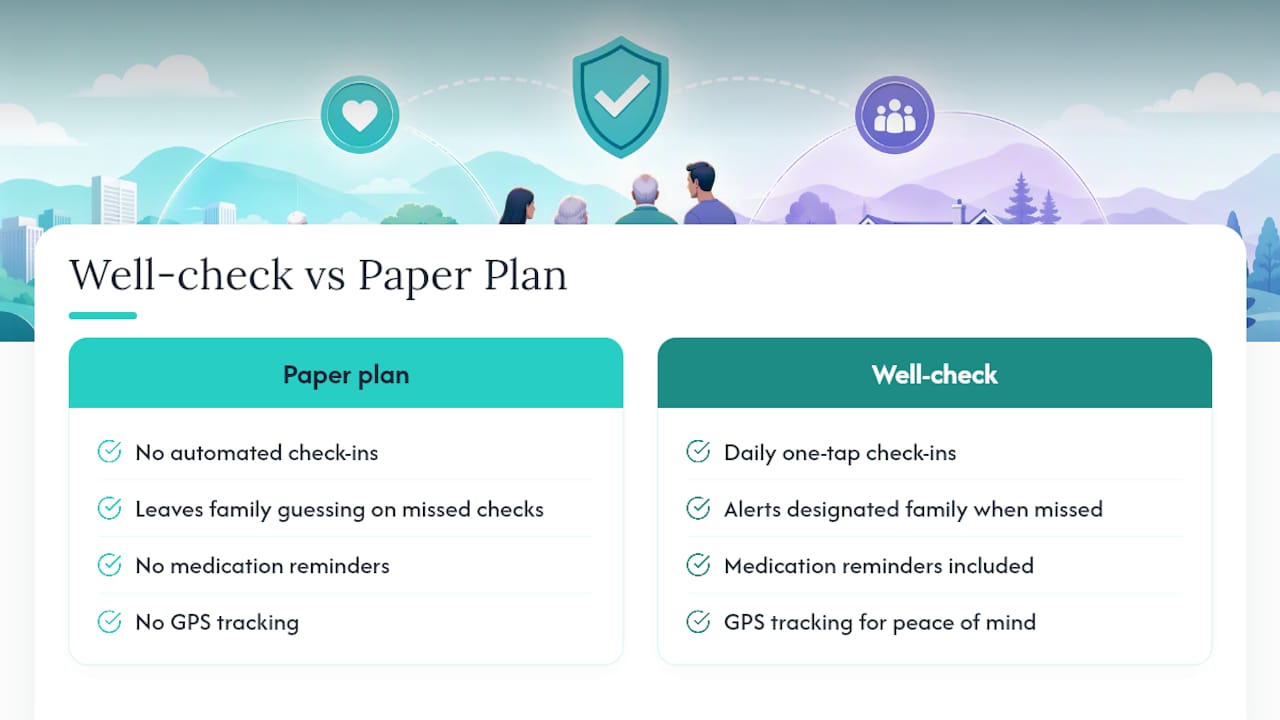
Paper plans work well for households under one roof. They break down when a parent or grandparent lives alone across town, or across the country, and a missed phone call could mean anything from a dead battery to a fall.
That’s the specific gap automated check-ins fill. Look for four features: a daily check-in the person can confirm with one tap, automatic alerts to family if a check-in gets missed, medication reminders, and GPS location if something goes wrong outside the home.
A community arrangement, like a neighbor who checks in daily, works fine if that person is reliable and always available. It gets shaky fast if the neighbor travels or the relationship changes.
Pro Tip: If your older relative already resists “checking in” by phone because it feels like nagging, a low-friction app confirmation often gets more consistent compliance than a daily call ever will.
What Families Get Wrong About Emergency Planning
The biggest mistake isn’t skipping the plan. It’s writing it once and never touching it again. Family composition changes, kids age out of car seats, grandparents move in, and the plan sitting in a drawer stops matching reality.
Three things fix most gaps in a single afternoon: confirm your out-of-area contact still has the right number, walk both meeting spots in person, and check that school pick-up authorizations are current.
— Brian
How Well-check Fills The Gap Paper Plans Can’t
Well-check is built for the exact scenario a written plan can’t cover on its own: a parent living alone, a sibling three time zones away, or a relative who insists they’re fine but hasn’t answered the phone in two days.
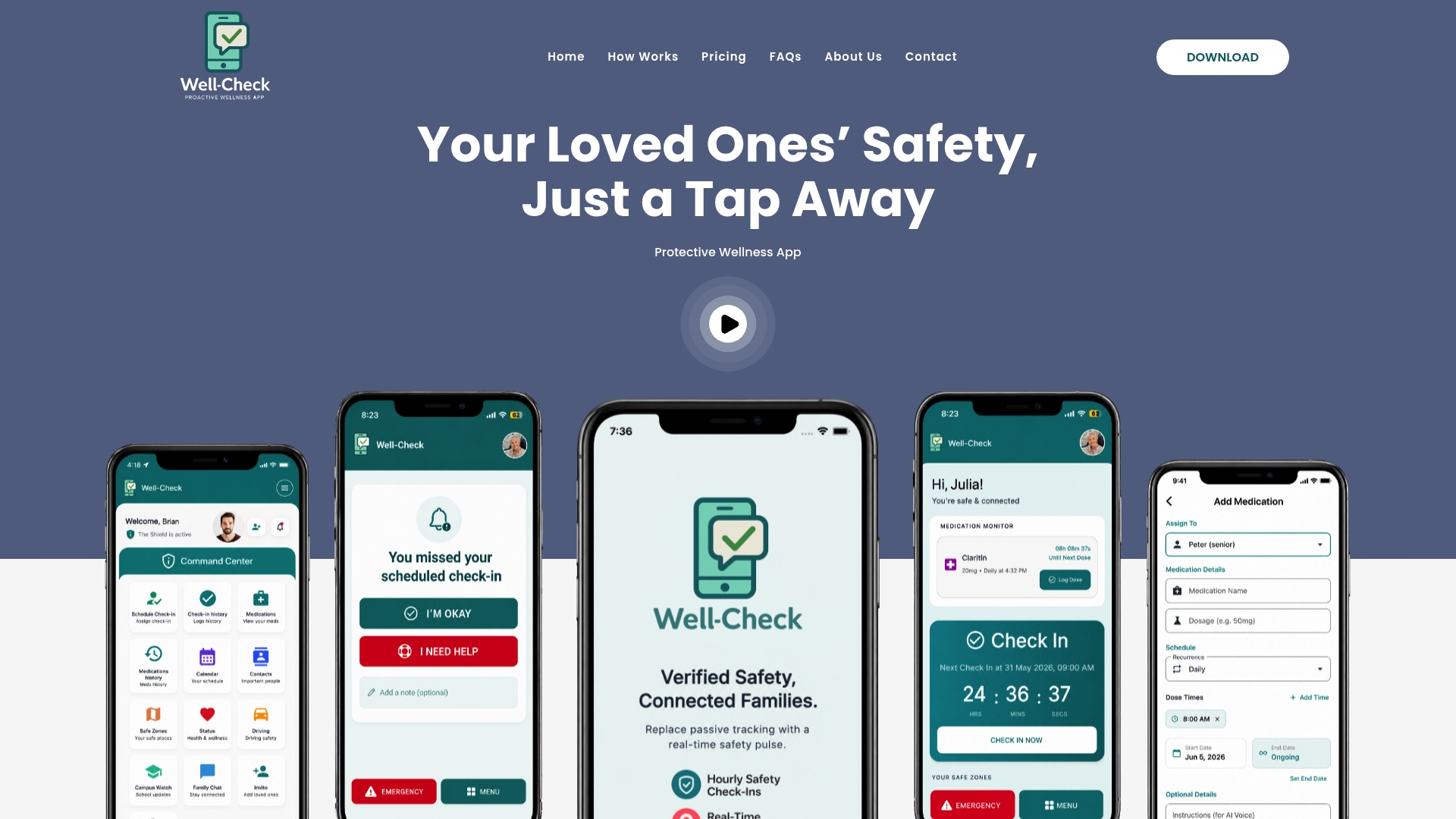
The app runs on daily check-ins your relative confirms with one tap, and if a check-in gets missed, it alerts the family members you’ve designated instead of leaving everyone guessing. Layer in medication reminders, GPS tracking for peace of mind, and an emergency contact network that mirrors the out-of-area contact structure already in your written plan, and you’ve closed the gap between “we have a plan” and “we know Mom’s okay today.”
It fits best for seniors living alone, frequent travelers checking in on a parent from the road, or families spread across cities who can’t do a daily phone call. See how Well-check works and start a trial from the Well-check homepage to add that layer to your family’s plan this week.
Official Templates Worth Downloading Today
Skip building forms from scratch. Ready.gov’s fillable family communication card covers contacts and meeting spots in a printable wallet size. The American Red Cross offers its own checklist for meeting places and reunification steps. For aligning your household plan with local emergency response, FEMA’s CPG 101 guidance explains how community planning factors in households like yours.