A travel check-in plan is a simple agreement between you and one or more people at home: how often you will report in, by what method, what you will share, and what they should do if you go quiet. It takes about 30 minutes to build and costs nothing. This guide walks through each decision, with worked examples for a solo trip, a hiking day, and an older parent traveling alone.
Note that “check-in” also means checking in for a flight. This article is about the other kind: the safety routine that keeps someone who loves you informed without turning your vacation into a series of status reports.
TL;DR
- Choose one primary contact and one backup, then agree on frequency, method, and a grace window for each check-in.
- Share your itinerary, lodging addresses, and flight details before you leave, and keep a paper copy of key numbers in case your phone dies.
- Write down what happens if a check-in is missed, with escalating steps and times, so nobody has to improvise while worried.
- Keep messages short and predictable. Frequent, long updates drain batteries and make the plan harder to keep.
- Test the plan at home first, especially if the person traveling or the person waiting is an older adult.
Table of Contents
- What a travel check-in plan actually is
- Step 1: Pick your contacts and give them roles
- Step 2: Agree on timing and method
- Step 3: Decide what to share
- Step 4: Build a backup that does not need power
- Step 5: Write the missed check-in protocol
- Step 6: Plan for poor connectivity and time zones
- If you need urgent help while away
- Planning a check-in routine for an older traveler
- Our perspective: simple beats clever
- Using Well-Check for travel check-ins
- A sample plan you can copy
- FAQ
- Sources
What a travel check-in plan actually is
The idea is not new. The National Park Service asks visitors to write a Trip Plan that captures the details of a trip in a park or wilderness area and share it with a trusted contact, so authorities can find the traveler if they do not return when expected. The same logic works for a city break, a business trip, or a month abroad.
A good plan answers five questions:
- Who is waiting to hear from you?
- When will you report in?
- How will you do it?
- What information do they hold?
- What happens if you miss a check-in?
Most people only think about the first one. The last one is the one that matters in an emergency.
Who should use one
Almost anyone who will be out of their usual routine benefits, but a plan is especially worth the effort for:
- Solo travelers, on any kind of trip.
- Hikers, paddlers, and anyone heading into areas with patchy coverage.
- Older adults traveling alone or living alone before and after a trip.
- Students studying or traveling away from campus.
- Business travelers who move between cities on tight schedules.
If you are traveling with a group, the same structure applies, with a designated leader acting as the single point of contact for people at home.
Step 1: Pick your contacts and give them roles
Choose one primary contact and one backup. The primary is the person who expects your messages. The backup steps in if the primary is unreachable, asleep in a different time zone, or simply on a flight of their own.
Pick people who will actually answer their phone, are calm under pressure, and know your life well enough to notice when something is off. A longer list is not better. Our guide to building a verified emergency contact list explains why three to five people, each confirmed in advance, works better than a dozen names nobody has agreed to.
Give each person a clear job:
- Primary contact: receives check-ins, notices a missed one, makes the first call.
- Backup contact: takes over if the primary does not respond, and holds a copy of your itinerary.
- Relay contact (optional): passes updates to the wider family so you only have to message once.
That last role matters more than it sounds. When a traveler is on limited data or battery, one person forwarding news to everyone else keeps the traveler from answering a dozen separate messages. For more on how roles prevent missed alerts, see who to list as emergency contacts.
Step 2: Agree on timing and method
The CDC’s travel guidance tells travelers to set reasonable expectations for check-in communications with family and friends. In practice, that means settling four things before you leave.
Frequency
Match it to the risk of the trip, not to anxiety.
| Trip type | Suggested rhythm |
|---|---|
| City break or business trip | One message each evening |
| Solo international trip | One message each morning or evening, plus a note when you change cities |
| Day hike or remote activity | A message at the start and one on return, with an expected return time |
| Multi-day backcountry trip | Daily if coverage allows, otherwise a fixed return deadline |
| Older adult traveling alone | A simple morning “I’m okay” and a note on arrival at each stop |
These are starting points, not rules. The right rhythm is the one you will keep up on your tiredest day of travel.
Method
Choose the channel your contact can operate reliably, not the one you find most convenient. A parent who ignores app notifications but always answers a phone call needs a text or a call, however much you like your messaging app. Name a second channel in case the first fails, such as a cellular text if Wi-Fi is down.
The grace window
Time zones, bad signal, and a dead battery will make you late sometimes. Agree on a window, for example 30 minutes past the usual time, before anyone treats a quiet phone as a problem. Without a window, false alarms pile up and people start ignoring them. That is the same reason we built a grace period into the app, which we explain in what a wellness check means for caregivers.
Keep it mechanical
The best check-in is boring: the same short message, at the same time, every day. “All good, hotel in Lisbon, dinner then bed” is enough. It takes ten seconds and leaves no room for confusion.
Step 3: Decide what to share
The CDC advises travelers to give family or friends their route and itinerary, including flight details and the accommodation address, and to share important documents with a friend or family member or keep them in a secure online location. Turn that into a one-page summary containing:
- Flight numbers, dates, and airports.
- The name, address, and phone number of every place you will sleep.
- Your planned activities, especially any remote or physically demanding ones.
- A phone number for your travel companion or group leader, if you have one.
- Your travel insurance policy number and the insurer’s emergency line.
- Allergies, medications, and conditions a responder would need to know.
- Copies of your passport photo page and any visas.
Tell your contact when the plan changes. A check-in plan with an outdated itinerary is worse than none, because it sends searchers to the wrong place.
Tell the hotel too
Allianz’s travel safety guidance suggests solo travelers let the hotel front desk know where they are going and when they expect to return before heading out. It is a free extra layer: someone on site who knows you are out.
Medical information
If you take medication or have a condition, put it in your phone’s emergency health record as well as on paper. Our walkthrough of filling in Medical ID on iPhone covers the fields that matter. If you travel with equipment that needs supplies, such as a CPAP machine, plan those supplies before you leave too; CPAP travel water delivery is one example of how to avoid hauling heavy jugs around.
Step 4: Build a backup that does not need power
Phones die, get stolen, and fall in lakes. Cal Poly’s travel safety office recommends keeping important information, including embassy contacts and emergency numbers, in a durable physical notebook as a backup to electronic devices.
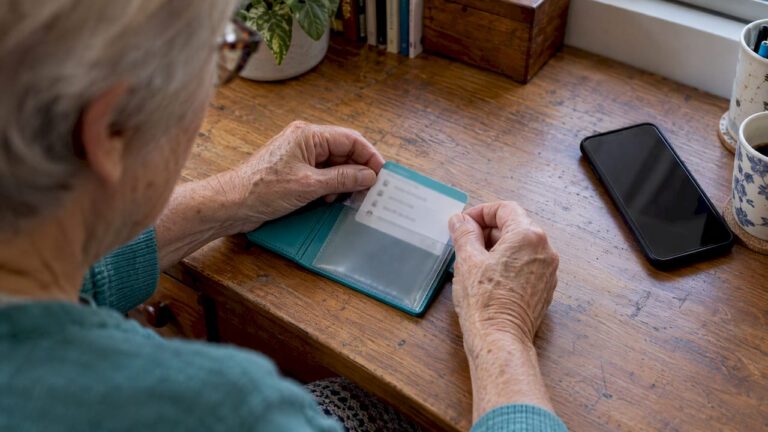
A small card in your wallet or passport holder should carry:
- Your primary and backup contacts, with country codes written out.
- Your accommodation address in the local language if possible.
- Your insurer’s emergency number and policy number.
- The local emergency number and the nearest embassy or consulate.
- Your allergies and key medications.
If you want a model for how compact this can be, our one-page safety plan for college students fits everything a responder needs on a single sheet, and the same layout works for travel.
Also download offline maps and save booking confirmations to your phone before you leave, so they open without a signal.
Step 5: Write the missed check-in protocol
This is the step most plans skip, and it is the reason to have a plan at all. Decide in advance what your contact does when you miss a check-in, so they are following a script rather than panicking.
The National Park Service gives a clear model for outdoor trips: if a visitor does not return from an activity by the expected time, the trusted contact tries the number in the Trip Plan, and if they cannot reach the visitor, they contact authorities and share the Trip Plan. Adapt that into a ladder with times:
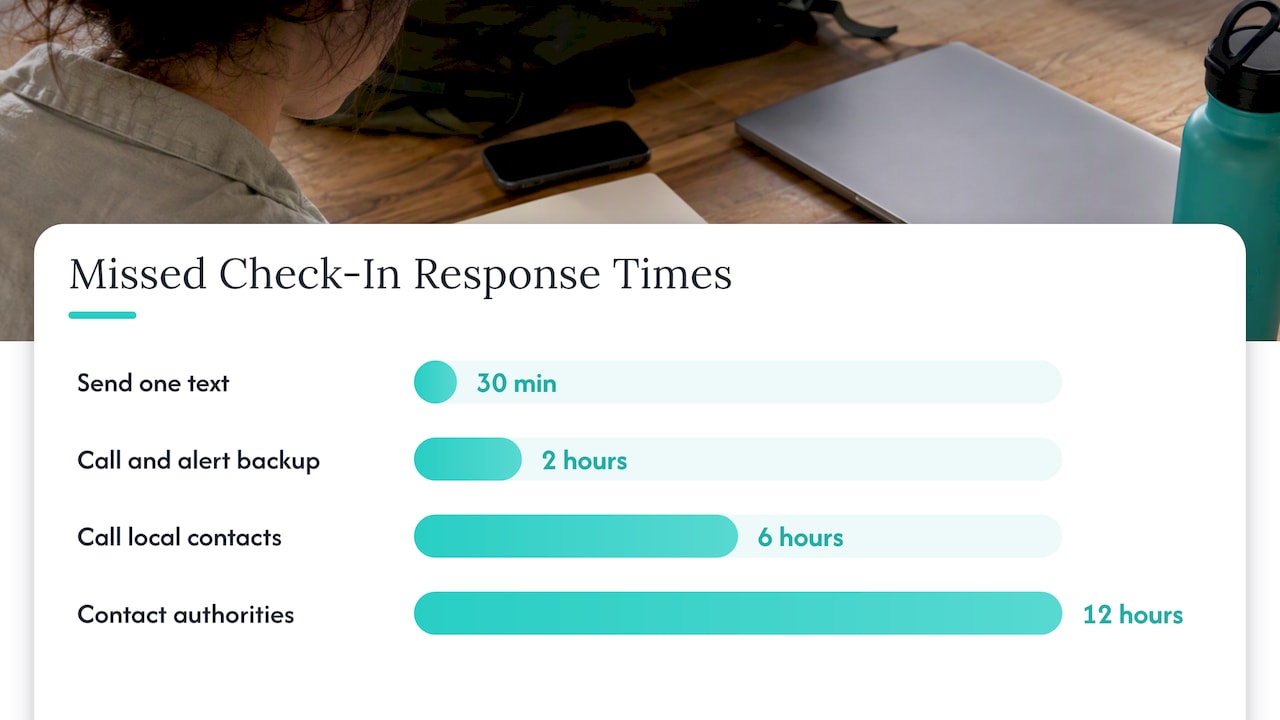
| Time past the check-in window | Action |
|---|---|
| 30 minutes | Send one text. Do not keep calling. |
| 2 hours | Call once, then message the backup contact and the relay. |
| 6 hours | Call the hotel, tour operator, or travel companion. |
| 12 hours | Contact local police, your insurer’s assistance line, and the nearest embassy or consulate. Share the itinerary summary. |
The times are an example, not an official standard. Make them shorter for riskier activities and longer for ordinary city travel. Adjust for time zones too: a missed evening check-in in Tokyo is the middle of the afternoon at home, but it may be 3 a.m. for the person waiting in California, and your plan should say whether they are expected to wake up for it.
One point from reliability research is worth stating plainly: repeated, frantic contact attempts can do harm, draining the traveler’s battery in a weak-signal area. One text, then wait. Our full missed check-in protocol and the four-tier escalation for families lay out what each person does at every stage.
Step 6: Plan for poor connectivity and time zones
Even a good plan meets bad coverage. Prepare for it:
- Use short text messages when signal is weak. They use less data and battery than calls or photos.
- Offer two channels, such as cellular text and a messaging app.
- Set the check-in in local time or home time, never both. Write it on the one-page summary.
- Agree on an “offline day” in advance for remote stretches, with a fixed deadline for the next message.
- Carry a battery pack and save charging for check-in time.
- Keep a relay contact so one person updates the rest of the family.
On leaving the country, a free U.S. Department of State program, the Smart Traveler Enrollment Program (STEP), sends U.S. travelers email alerts and updates from embassies and consulates for the places they are visiting. It is a useful addition for any international trip.
If you need urgent help while away
Write this down before you go, because it is hard to think clearly in a crisis. The usual order is:
- Get the help you need. Call local emergency services if there is danger.
- Contact your travel insurer’s assistance line.
- Tell your home contact what has happened and where you are.
- For a serious incident abroad, inform your country’s embassy or consulate.
That sequence is adapted from emergency planning guidance written for UK youth group trips, so the embassy named there is British. U.S. travelers would contact the nearest U.S. embassy or consulate.
On arrival at each destination, spend five minutes finding the nearest hospital or clinic, police station, and embassy. Cal Poly’s travel office recommends identifying these local resources at each stop, and it takes far less time than it would in the middle of an emergency.
Planning a check-in routine for an older traveler
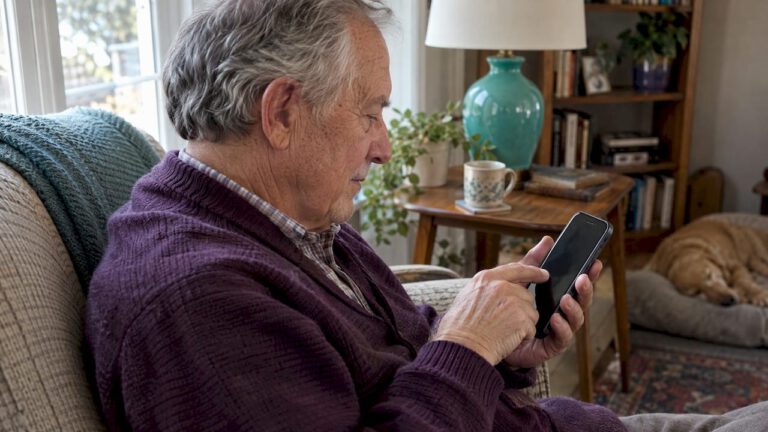
Older adults often travel independently and want to keep doing so. A check-in plan can support that without feeling like surveillance, as long as it is simple and agreed on together.
- Test it at home first. Run the routine for a week before the trip, in ordinary conditions, so you know it works.
- Keep instructions to one page in large type, with a printed contact list.
- Use one tap, not a typed message, when you can. “I’m okay” should not require a keyboard.
- Use a relay person so the traveler is not fielding calls from every relative.
- Agree on what is shared. Location sharing is a choice, not a default. Our GPS privacy playbook for caregivers covers the questions to settle before turning it on.
The dignity part is not decoration. A plan an older parent resents is a plan they will quietly stop following. If you are thinking about the wider picture at home, three moves to start a safety plan for seniors is a good first read, and our living alone safety checklist covers what stays behind while they are away.
Our perspective: simple beats clever
We build a daily check-in app, so we see every way a routine can fail. Almost none of the failures are technical. People set up an elaborate system, then drop it in week two because it asks too much of them. Or the person waiting does not know what a missed check-in should trigger, so they either overreact or do nothing.
Our view is that a check-in should take one tap, happen at a predictable time, and tell the right people only what they need to know. The traveler keeps their independence, and the family gets a clear signal when something is different from normal, rather than a stream of noise. That is why Well-Check is built around one-tap “I’m okay” confirmations, missed check-in alerts to a contact network you choose, and a design that tries to avoid intrusion.
The tool matters less than the agreement behind it. Whether you use an app, a text thread, or a paper note taped to the fridge, write down the five answers from the start of this guide and make sure everyone involved has read them.
— Brian
Using Well-Check for travel check-ins
If you would rather not run this by hand, our Travel Safety & Wellness Check-In App page explains how the app handles daily check-ins on the road. You confirm you are okay with one tap, your chosen contacts are alerted if a check-in is missed, and you can add medication reminders and optional GPS. Plans start at $5.99 per month for Essential and $7.99 per month for Complete; see the pricing plans for what each includes.
A sample plan you can copy
Here is a plan for a solo, one-week trip abroad, written the way you would hand it to your contacts.
- Primary contact: my sister. Backup: my friend Dana. Relay: my sister, who updates our parents.
- Check-in: one text each evening, between 7 and 9 p.m. local time. Format: “OK, [city], [tomorrow’s plan].”
- Grace window: two hours past 9 p.m. local time.
- Shared: itinerary PDF, hotel addresses, flight numbers, insurer’s emergency number.
- If I miss a check-in: one text after two hours. If no reply by morning, call my hotel. If still nothing after 12 hours total, contact local police and my insurer, and share the itinerary.
- Offline days: hiking on day four. I will message at the trailhead and on return, with no later than 8 p.m.
- Paper backup: wallet card with all numbers and my medication list.
Copy it, change the names, and send it to your contacts before you pack.
FAQ
How often should I check in while traveling?
For most trips, one short message a day is enough. Check in more often only when the activity is riskier, such as remote hiking, and less often when connectivity is limited, as long as you agree a firm deadline for your next message.
What should my contact do if I miss a check-in?
They should wait out the agreed grace window, then send a single text, and escalate step by step if there is no reply: backup contact, hotel or travel companion, then local authorities and your insurer. The National Park Service model is to try the number in the plan first and then contact authorities with the plan details.
What information should I share with my check-in contact?
Share your flight details, the address of each place you will stay, your planned activities, your insurance information, and any medical needs a responder should know. Update them whenever your plans change.
Is a travel check-in plan only for solo travelers?
No. Groups benefit too, with one leader acting as the contact for people at home. It is also useful for older relatives traveling independently, for students away from campus, and for anyone heading somewhere with unreliable coverage.
Sources
- Trip Plan, U.S. National Park Service
- Safety and Security Overseas, CDC Yellow Book
- Setting up a Safer Travels Plan, Cal Poly
- Tips for Creating a Travel Safety Plan, Allianz Partners
- Smart Traveler Enrollment Program, U.S. Department of State
- Emergency planning guidance for international trips, Girlguiding