The best boundary for location sharing is one the older adult helped write: it names who can see the location, when it is shared, what happens when it is paused, and when everyone agrees to override it. Write those four things down together, review them every few months, and keep the check-in habit (a call, a text, a visit) alive next to the technology. Below you will find the rules, the scripts and the emergency exceptions.
TL;DR
- Agree on location sharing with your parent, not for them. Research on older adults and their children finds that conflict and caregiver overreach drop when decisions reflect the older adult’s own preferences.
- Define four limits in writing: who sees the location, when it is on, how often it is checked, and who can see stored history.
- Make consent ongoing. Let the older adult pause, narrow or end sharing, and agree in advance what you will do instead.
- No tracker replaces contact. Pair location with regular check-ins, and know exactly when to call 911.
- Caregivers need boundaries too: you do not have to watch a map all day.
Table of Contents
- Why location sharing needs boundaries on both sides
- Start with the need, not the tool
- The four limits to agree on
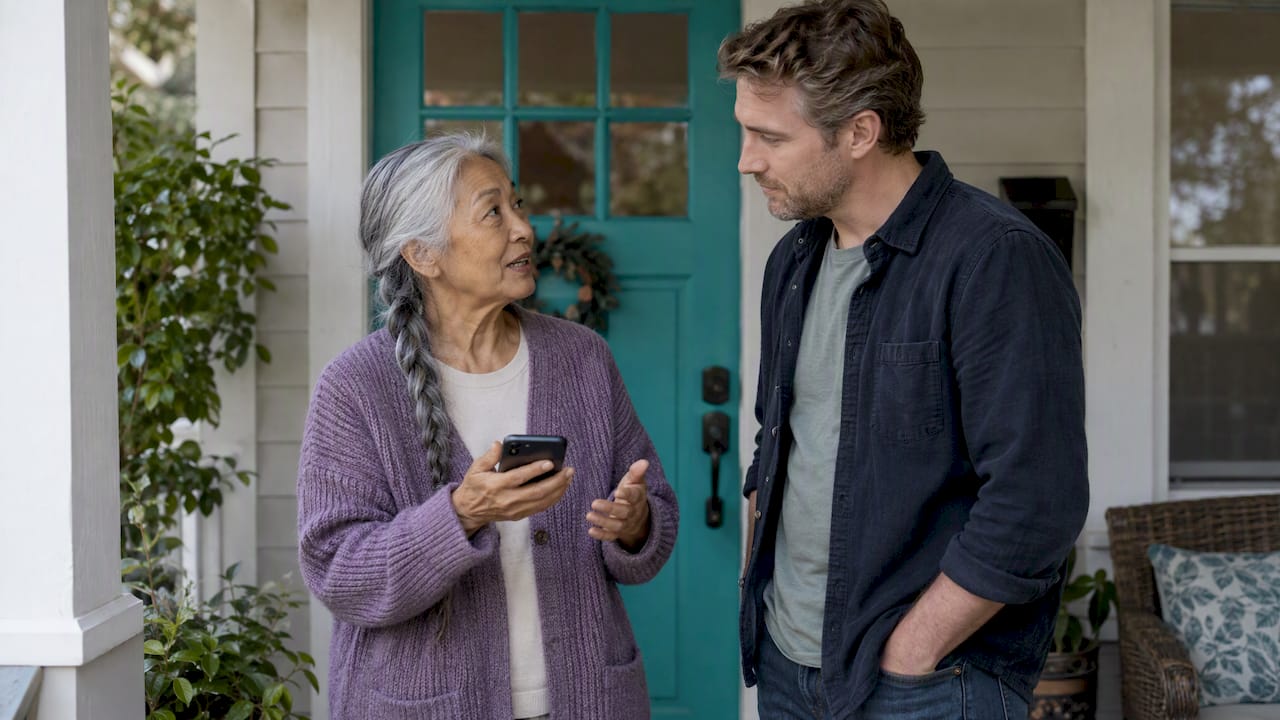
- How to have the conversation
- Letting your parent pause or stop sharing
- What not to monitor
- Boundaries for you, the caregiver
- What location sharing cannot do
- When boundaries yield: emergencies and unresponsive loved ones
- Our perspective
- Putting your agreement into practice with Well-Check
- A starter agreement you can adapt
- FAQ
- Sources
Why location sharing needs boundaries on both sides
Location sharing sits where two good things collide: your parent’s right to run their own life and your need to know they are safe. Neither side is wrong. Trouble starts when the tool arrives before the conversation.
For the older adult, a dot on a family member’s phone can feel like surveillance, even when it was meant as care. For the caregiver, an unchecked map can become a constant, low-grade job: refreshing, wondering, interpreting a stop at an unfamiliar address. Boundaries protect both. They keep the relationship from turning into monitoring, and they keep you from burning out on vigilance.
A study in The Gerontologist on why older adults and their children disagree about in-home monitoring technology points to shared decision-making as the way to head off conflict and caregiver overreach. In plain terms: the person being monitored should have a real say in what is monitored.
Privacy is also relational. Researcher Eike Buhr argues, in work on technologically assisted dementia care, that privacy and close relationships shape each other. A trusting relationship helps a person feel their privacy is respected. A tracker imposed against someone’s wishes can damage exactly that trust.
Start with the need, not the tool
Before you install anything, ask what problem you are solving. “I worry” is real, but it is not specific enough to set a boundary around. Try to name the situation:
- Mom walks alone in the morning and I want to know she got home.
- Dad has had a fall and I want an alert if he does not check in.
- Dad has dementia and has left the house at night.
- I live far away and cannot tell whether things are okay.
Each calls for a different level of monitoring. Scotland’s Mental Welfare Commission, in its good practice guide on decisions about technology, says digital monitoring should follow an outcome-focused assessment: meet the need without unduly restricting someone’s freedom, privacy or dignity. The same guide encourages caregivers to look at environmental, physical and psychological factors first, because they may address the cause of distress or wandering better than surveillance does.
That last point matters. A change in routine, new restlessness or withdrawal can have a treatable cause. Low mood, for example, is not a normal part of aging, and addressing it may do more for safety than any map. If the behavior worrying you is new, a conversation with the doctor comes before a new app.
The four limits to agree on
Once there is a genuine need, set limits on four dimensions. Dementia Support Australia’s guidance on GPS devices in dementia care asks caregivers to consider whether geofencing is needed, who will monitor the alerts, and who can access stored movement data. Those three questions, plus frequency, make a workable framework.
| Limit | The question to settle | Example of a clear agreement |
|---|---|---|
| Who | Which people can see the location? | Daughter and son only; not cousins, neighbors or friends of the family |
| When | Is it always on, or only in certain situations? | On during outings and overnight; off at home during the day |
| How often | How often does a caregiver look, and how fresh is the data? | Check only when a check-in is missed, not routinely |
| History | Is movement history stored, and who can read it? | No history kept, or visible to the older adult only |
A fifth, unwritten limit is purpose. Location is for safety, not for checking whether Dad went to the pharmacy or stopped at a friend’s house. If everyone agrees the data is only used when something seems wrong, an unusual stop is not a reason to call.
For a deeper template, our six-field agreement on location sharing etiquette turns these limits into a one-page document you can sign together.
How to have the conversation
Pick a calm moment, not right after a scare. Lead with your feelings and your need, then ask for theirs. A few openers that tend to work:
- “I’d sleep better if I knew you’d made it home safe. What would feel okay to you?”
- “I’m not trying to keep tabs on you. I’d like a way to know you’re fine without calling five times a day.”
- “You decide who sees it and when. Tell me what would feel like too much.”
Then listen. If the answer is “I don’t want it,” ask what worries them: being watched, being judged, losing independence, or the idea of the app itself. Often the objection is to a specific feature, such as constant tracking, rather than to staying in touch. Offering a lighter alternative, like a daily one-tap check-in instead of live location, can resolve it.
Our guide to asking for and agreeing on senior tracking consent walks through this talk in more detail, including what to do when the answer is no.
Consent is not a one-time signature
An older adult can say yes in March and want out by June. A 2026 paper on real-time location systems in care settings, published in the American Journal of Bioethics, recommends continuous consent mechanisms that let preferences change and be reconsidered. At home, that means putting a review on the calendar: every three months, ask whether the arrangement still feels right.
The same authors say people affected should be involved in decisions and supported in voicing concerns. If your parent has cognitive decline, involve them as far as their ability allows, and loop in their doctor or a care manager when capacity is in question.
Consent also has legal weight in some places. In England, the Care Quality Commission explains that under GDPR consent must be freely given, specific, informed and unambiguous, and can be withdrawn. In the United States, the rules vary by state and setting, and professional caregivers have their own obligations. If you work with a home care agency, the HIPAA texting and consent question is worth raising with them, since consent alone does not settle how health information may be shared.
Letting your parent pause or stop sharing
A boundary that cannot be used is not a boundary. Agree in advance how the older adult can pause sharing, and what you will do when they do.
A workable pause plan has three parts:
- A simple way to pause. One tap, a set duration (an hour, an afternoon), no explanation required.
- A substitute signal. If location is off, a check-in takes its place. “If your location is off, text me when you get home” keeps the connection without the map.
- A defined override. Agree on the narrow circumstances where you may act without location, such as a missed check-in followed by no answer to repeated calls.
The override matters because privacy has limits when safety is at stake. A missing-adults protocol from Northumbria in the UK, for example, says a person’s wish for privacy should be respected and their location not disclosed, unless there are safety concerns that justify sharing it. That is a UK police document, but the logic travels well: withdrawn consent is honored by default, and a genuine, evidence-based emergency is the exception.
If your parent turns sharing off and you feel panic, do not respond by looking for workarounds. Covert tracking can cross a line. Our piece on when location sharing becomes stalking explains why, and what to document and discuss instead.
What not to monitor
Location is one thing. Audio, video and detailed movement history are another. Spain’s data protection authority, in its 2026 guidance on cameras in homes of older people, notes that the home is specially protected and that dependence calls for extra caution. It suggests making monitoring more proportionate by activating it temporarily for a specific risk, such as after a fall, and by limiting the spaces watched. It also advises generally avoiding recording sound or conversations. That is Spanish regulatory guidance, not US law, but it is a sound ethical benchmark: the less intrusive option usually does the job.
In practice, this means:
- Prefer a check-in and a location pin over cameras.
- Never place monitoring in bathrooms or bedrooms.
- Do not record conversations.
- Keep stored history to a minimum, and tell your parent what is stored.
If you are choosing an app, our privacy nonnegotiables for senior GPS apps and our guide to protecting dignity in senior tracking list what to look for before you install.
Boundaries for you, the caregiver
Caregiver boundaries are not only about your parent’s privacy. They are also about your capacity. A map invites constant checking, and constant checking is its own kind of strain.
Set your own rules:
- Decide when you look. For instance, only after a missed check-in, not every time you feel uneasy.
- Share the load. If three siblings get alerts, agree who responds first, so no one assumes someone else did.
- Turn off what you do not need. Notifications for every arrival and departure create noise. Alerts only for exceptions create calm.
- Say no to scope creep. If a neighbor or relative asks for access, the answer comes from your parent, not from you.
Care staff face the same tension. Reporting on the ethics of location tracking in dementia care, Medical Xpress describes moral distress among staff caused partly by unclear guidance on what to do when a resident refuses a device but a family member has consented. Families can avoid creating that conflict by getting clear, written agreement on who decides, and by not overriding the person’s own refusal lightly.
It is also normal to feel torn. Research on families and professional caregivers has found that caregivers tend to put safety ahead of autonomy when they are responsible for the person’s safety. Knowing that is the default helps you check yourself: is this restriction really needed, or is it only the one that eases my worry?
What location sharing cannot do
The Alzheimer’s Association is direct on this: location tracking should be used alongside other safety measures and regular check-ins, because no system is 100% accurate. Some devices perform poorly indoors or show only a general area, and tracking does not equal a 24-hour companion.
If you want to understand the limits in practice, our explainers on reading GPS accuracy outdoors and how often location should update show why a dot can lag or drift, and why a higher refresh rate is not always better.
This is why we suggest the lightest tool that meets the need. For most older adults who live alone and are cognitively well, a daily check-in covers the real question (“are you okay today?”) with far less intrusion than a live map. Our guide on how many weekly check-ins seniors need helps you set a rhythm that works.
When boundaries yield: emergencies and unresponsive loved ones
Boundaries are for ordinary days. A genuine emergency is the agreed exception, and the plan should say so ahead of time.
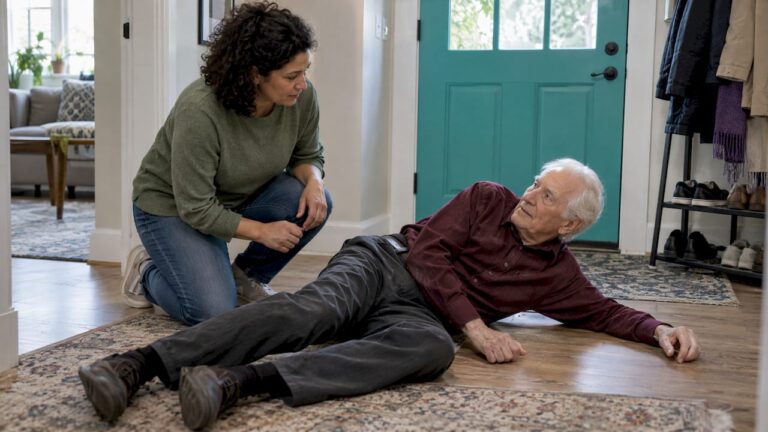
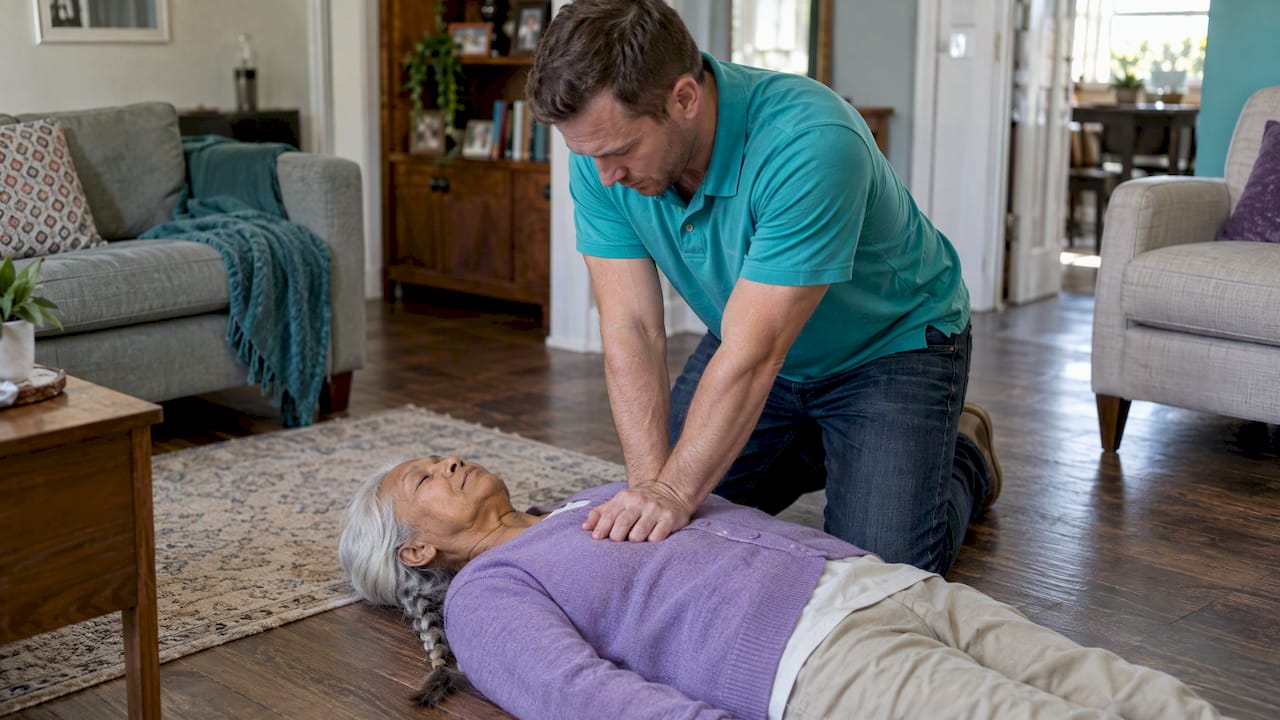
If someone is unresponsive. The American Red Cross advises checking responsiveness for no more than 10 seconds using shout-tap-shout. If the person does not respond, is not breathing or only gasping, or has life-threatening bleeding, call 911 immediately and give care within your training. If they are unresponsive and not breathing normally, start CPR and use an AED.
If you cannot reach them but are far away. Cleveland Clinic advises having nearby contacts lined up and a local police non-emergency number on hand, and notes that a welfare check can be requested when an older parent does not answer or may be in a medical crisis.
If a person with dementia is missing. Florida State University’s REACH program says to call 911 when the person is missing or the situation is unsafe, tell dispatchers the person has dementia, provide a recent photo and medical information, and answer responders’ questions calmly. Do not wait to see if they come back.
Write these steps into your agreement. Include the order of calls, the neighbor with a key, and the point at which location sharing may be used even if it was paused. Our missed check-in protocol lays out that sequence, and our page on what a wellness check means explains how the grace period works before an alert goes out.
Our perspective
We built Well-Check around a simple belief: older adults should be able to live independently without being watched. Most of the families we hear from do not want a map of their parent’s day. They want to know, once a day, that things are okay.
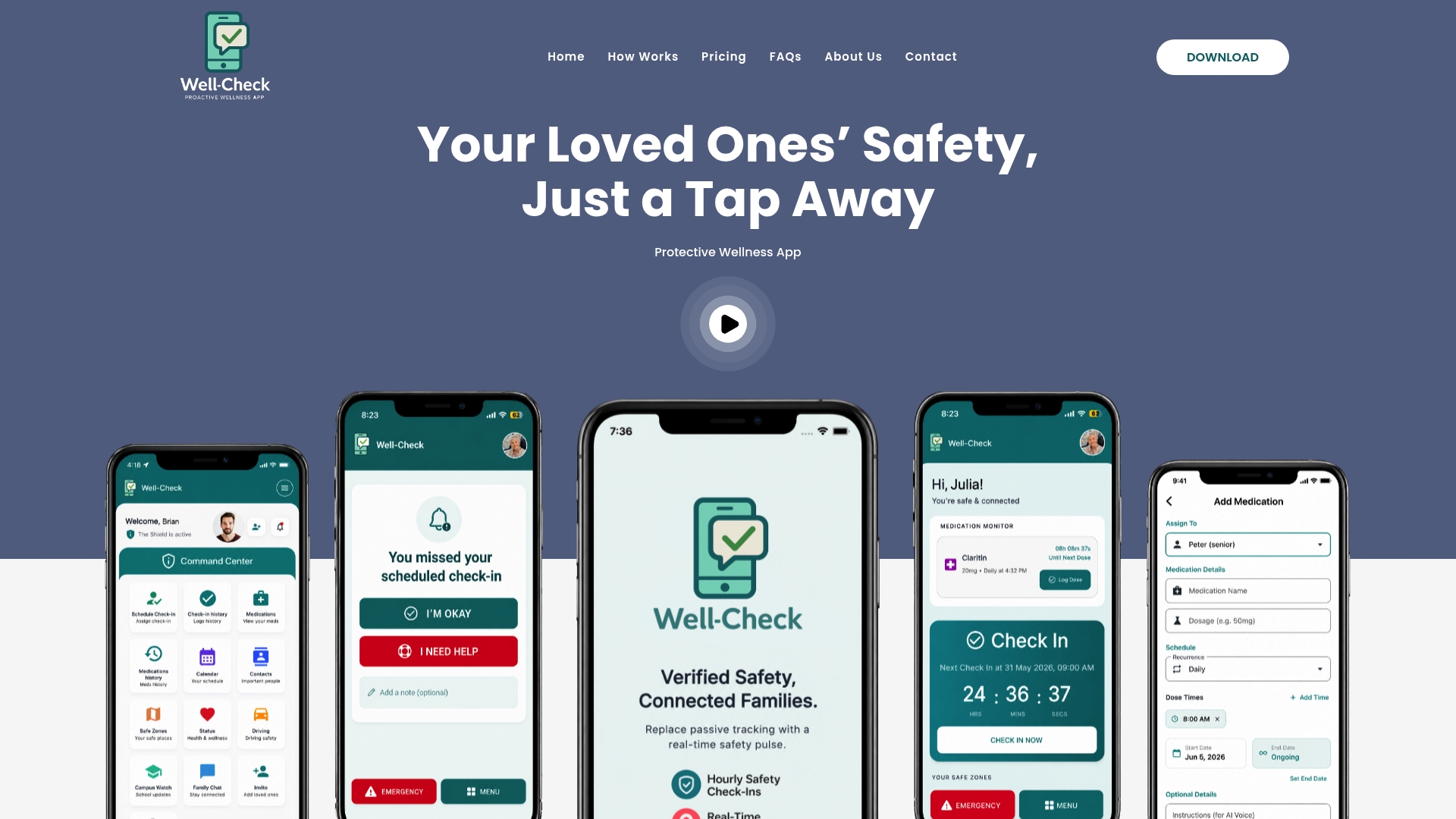
That is why the one-tap “I’m okay” check-in comes first in the app, and why contact networks are something the older adult helps shape. When a check-in is missed, the people on the list are told. Features like GPS and smart caregiver analysis exist to support that, not to turn a parent into a dot on a screen. Our approach is designed for simplicity and dignity, with as little intrusion as possible.
If you take one thing from this article, let it be the order of operations: have the conversation, agree the limits, choose the lightest tool that meets the need, and revisit it. A good boundary makes the technology easier to accept, and an accepted tool is the one that actually keeps people safe.
Brian
Putting your agreement into practice with Well-Check
If a daily check-in fits your situation, Well-Check gives you one-tap “I’m okay” confirmations, medication reminders, an emergency contact network, and alerts to the people your parent chose when a check-in is missed. GPS is available when you and your parent agree it is needed, and our smart caregiver analysis is designed to cut false alarms.
The Essential plan is $5.99 per month and the Complete plan is $7.99 per month. See what each includes on our pricing plans page, then sit down with your parent and decide together which features they want switched on.
A starter agreement you can adapt
Use this as a draft for your own family. Edit every line with your parent.
- Purpose: We use location and check-ins so that someone knows if something is wrong, not to track daily activities.
- People: Only [names] can see location. Anyone new needs [parent’s name] to approve.
- Times: Location is on [during outings / overnight / always]. [Parent] can pause it at any time for up to [duration].
- Frequency: We look at the map only after a missed check-in or when [parent] asks us to.
- Data: We keep [no history / history visible only to parent].
- Pause plan: If location is off, [parent] sends a text when home.
- Emergency: If a check-in is missed and two calls go unanswered within [time], [person] contacts [neighbor], then requests a welfare check, and we call 911 if there are signs of a medical emergency.
- Review: We revisit this agreement every three months or after any health change.
For wider planning, our senior safety checklist and caregiver roles and responsibilities guide help you divide tasks among family members.
FAQ
Is it okay to track my parent’s location without telling them?
We advise against it. Consent that is informed and ongoing is the standard that researchers and regulators describe, and secret tracking can destroy the trust you are trying to protect. If you are worried enough to consider it, that is a signal to have the conversation, or to talk with their doctor if you suspect memory problems.
What if my parent refuses location sharing?
Ask what exactly bothers them, then offer a lighter option such as a daily check-in, location only during outings, or sharing with one person. If they have dementia and safety risks are serious, involve their doctor or a care manager to assess what is proportionate, and keep them in the decision as much as possible.
How often should I check my parent’s location?
Only as often as you agreed. For most families that means after a missed check-in or when your parent is on a longer outing, not routinely. Checking constantly adds to your stress and can feel like surveillance to them.
When can I override a pause or a refusal?
When there is an immediate, evidence-based safety concern, such as no response after a missed check-in, signs of a medical crisis, or a missing person with dementia. Call 911 for emergencies or ask for a welfare check through the local non-emergency line. Agree on these exceptions in advance so the override is not a surprise.
Sources
- Why Older Adults and Their Children Disagree About In-Home Monitoring Technology, The Gerontologist
- Social aspects of privacy in technologically assisted dementia care
- Decisions about technology good practice guide, Mental Welfare Commission for Scotland
- GPS location devices in dementia care, Dementia Support Australia
- Ethical Tensions in the Use of Real-Time Location Systems, American Journal of Bioethics
- Find out if you need consent to use technology as part of someone’s care, CQC
- Missing Adults Protocol, Northumbria
- Orientaciones para la instalación y uso de videocámaras, AEPD
- Tracking with care: The ethics of using location tracking, Medical Xpress
- Technology Safety for Older Adults, Alzheimer’s Association
- First Aid for Someone Unresponsive and Breathing, American Red Cross
- How to Know When Parents Need Emergency Care, Cleveland Clinic
- Be Prepared for Emergent Situations Involving Persons with Dementia, FSU REACH
- HIPAA Texting Policy: Consent Alone Won’t Protect Home Care Teams
- Depression in Older Adults Is Not Normal Aging