
The best senior daily routine isn’t a rigid hour-by-hour schedule. It’s built around three fixed anchors, wake time, a main meal, and bedtime, with everything else flexed around energy and health that day. A sample day might read: wake at 7 AM, lunch at noon with medications, lights out by 9:30 PM, with walking, hydration, and social time filled in between.
TL;DR:
- Maintaining flexibility around wake time, main meal, and bedtime helps seniors adapt to changing energy levels and health conditions without disrupting routines.
- Consistent medication, hydration, and activity schedules tied to fixed anchors improve health outcomes and help prevent issues like sleep disruptions or medication missed doses.
- Short, daily movement sessions aligned with CDC and Stanford recommendations support aging healthily, even for those with limited mobility or cognitive challenges.
- Adjustments in routines should prioritize dignity and simplicity, using visual cues and caregiver involvement to accommodate cognitive or health declines.
- Technology tools like check-in apps can supplement routines by providing safety alerts and medication reminders, especially when caregivers cannot be present at all times.
Table of Contents
- Why a Structured Senior Daily Routine Matters
- Three Sample Daily Schedules You Can Copy Today
- How Wake Time, Meals, and Bedtime Anchor the Day
- Meeting Exercise, Nutrition, and Medication Targets Inside the Routine
- Adjusting the Routine for Cognitive or Health Changes
- A Caregiver Checklist for Building the Routine
- Test the Routine for a Week Before Committing
- Why I Think Routines Get Undersold
- Where an App Like Well-Check Fits Into a Daily Routine
- Sources
- FAQ
Why a Structured Senior Daily Routine Matters
A predictable schedule does more than fill hours. According to the National Institute on Aging, consistent daily routines improve medication adherence, support better sleep, and reduce anxiety, three problems that compound quickly when someone lives alone or manages a chronic condition.
The key word is flexible. A senior wellness routine works best as a loose scaffold, not a checklist enforced minute by minute. Anchors stay fixed; the activities between them can shift with mood, weather, or how someone feels that morning.
The payoff shows up in daily life:
- Medications get taken on schedule because they’re tied to a meal or a wake time, not memory alone
- Sleep quality improves when bedtime and wake time stay consistent, even on weekends
- Anxiety drops when the day has a known shape instead of feeling unpredictable
- Independence lasts longer, since a working routine is often what allows someone to keep aging in place safely
None of this requires a rigid system. It requires three fixed points and enough repetition that the brain and body start expecting them.
Three Sample Daily Schedules You Can Copy Today
Pick the template closest to the situation, then adjust timing to match personal habits. All three keep the same anchor logic: wake, main meal, bedtime.
-
Independent, active senior. Wake at 7 AM, hydrate and take morning medication, breakfast at 7:30. Mid-morning walk or light exercise from 9 to 9:30. Free time or hobbies until lunch at noon. Afternoon rest or reading from 1 to 2, then a social call, class, or errand from 2 to 4. Dinner at 5:30, evening wind-down (TV, puzzle, phone call) from 7, bedtime by 9:30.
-
Assisted or limited mobility. Wake at 7:30, caregiver checkpoint for hygiene and medication. Breakfast at 8. Short seated movement block, 10 to 15 minutes, midmorning, followed by a caregiver check-in. Lunch at noon paired with medications. Rest period from 1 to 2:30. A brief adaptive activity, chair exercises, folding laundry, or a puzzle, from 3 to 3:30. Dinner at 5:30, second caregiver checkpoint at 7 for evening medication, bedtime by 9.
-
Cognitive-supportive routine. Wake at 7, with a visual schedule card or whiteboard showing the day’s simple sequence. Breakfast at 7:30 with only two food choices offered, not five. A single predictable activity midmorning, watering plants, folding towels, done at the same time daily. Lunch at noon with the same caregiver present. Quiet time in the afternoon with familiar music or photos. Dinner at 5:30, a consistent bedtime ritual (same song, same lamp, same order of steps) starting at 8, lights out by 9.
Every template shares the same skeleton. Only the density of activity and level of caregiver involvement changes.
How Wake Time, Meals, and Bedtime Anchor the Day
The NIA’s guidance on aging in place centers on three fixed points: wake time, a primary meal (often lunch), and bedtime. Everything else in a seniors daily schedule gets built around those three markers, because they stabilize circadian rhythms and give the day a predictable shape even when nothing else is fixed.
Simple morning and evening rituals work as behavior triggers. Opening the curtains, drinking a glass of water, or getting dressed right after waking cues the brain that the day has started, and a consistent pre-bed sequence does the same for winding down.
Between the anchors, slot in the recurring building blocks that make up most of the day:
- Hydration at set times, not just when thirsty
- Hygiene and dressing right after waking
- Medications tied to a specific meal or anchor
- A short activity or exercise block
- At least one social or cognitive touchpoint
Naps, outings, and appointments should flex around the anchors, not replace them. A doctor’s visit can shift lunch by an hour without breaking the routine. A nap should end early enough to protect the bedtime anchor.
Meeting Exercise, Nutrition, and Medication Targets Inside the Routine
Exercise. The CDC recommends about 150 minutes of moderate aerobic activity per week for older adults, plus muscle-strengthening activities regularly. Broken into a daily senior exercise plan, that’s roughly 20 to 25 minutes a day, and it doesn’t need to happen in one block. Stanford Medicine notes that breaking walks into shorter increments, and adding simple balance moves like sit-to-stands or single-leg holds, helps people hit the target without exhausting themselves. For anyone with limited mobility, short chair-based routines offer a safer way to meet the same goal.
CDC guidance: Adults 65 and older should aim for 150 minutes of moderate aerobic activity weekly, plus muscle-strengthening exercise on two or more days.
Nutrition and hydration. Protein needs tend to run higher for older adults, often cited around 1.0 to 1.3 grams per kilogram of body weight daily, which for a 150-pound person works out to roughly 68 to 88 grams spread across meals like eggs at breakfast, chicken or beans at lunch, and fish or yogurt at dinner. Thirst signals weaken with age, so scheduled fluid intake works better than waiting to feel thirsty, a glass with each meal plus one midmorning and one midafternoon covers most daily hydration needs.
Medication. Anchor pills to anchors, not the clock. Morning meds go with breakfast, evening meds go with the bedtime ritual. A weekly pill organizer plus a phone alarm catches most missed doses before they happen.

Adjusting the Routine for Cognitive or Health Changes
When cognition, energy, or mobility shift, the routine needs to flex without falling apart. The Alzheimer’s Association’s daily care guidance is clear that the goal is balance, not filling every minute, and caregivers should adapt rather than force participation.
Practical adjustments that preserve dignity:
- Shorten activity windows and simplify choices to two options instead of five
- Use visual schedules and keep the same caregiver present at anchor times
- Expect variability day to day; treat it as normal, not failure
- Watch for repeated deviations from the routine, since research on automated monitoring shows that consistent changes in sleep timing, meal skipping, or activity level can be an early signal of a health shift worth mentioning to a doctor.
A Caregiver Checklist for Building the Routine
Building a senior wellness routine works better as a joint project than something imposed from outside.
- Sit down with the senior and co-design the schedule; buy-in matters more than perfection.
- Lock in the three anchors first: wake time, main meal, bedtime.
- Prep medication organizers and simple meal packs a few days ahead.
- Schedule one short daily movement block, even 10 minutes counts.
- Plan at least one social touchpoint daily, a call, a visit, a video chat.
- Use basic tools, phone alarms, wall calendars, or a checklist on the fridge.
Watch for red flags that the routine, or the person’s health, needs attention: missed meals or meds, a shifting sleep schedule, social withdrawal, or slipping hygiene habits.
Pro Tip: Keep a small notebook or shared note on your phone logging just three things daily, wake time, meds taken, and mood, for two weeks. Patterns show up faster than memory allows.
Test the Routine for a Week Before Committing
Run any new schedule for seven days before deciding it’s the right fit. Track three simple measures daily: the sleep window, whether medications were taken on time, and whether a short walk happened. Ask about mood and energy each evening, a quick “how did today feel?” is enough.

After the week, adjust anchor times or activity blocks based on what the notes show. If sleep stays disrupted, appetite drops, or mood stays low despite changes, that’s the point to bring in a doctor or therapist rather than keep adjusting alone.
Why I Think Routines Get Undersold
People treat routines as restrictive, something that limits spontaneity. I’d argue the opposite: a solid routine is what creates room for spontaneity, because the essentials are already handled. Start with one anchor this week. That’s enough.
— Brian
Where an App Like Well-Check Fits Into a Daily Routine
Building a solid senior daily routine is mostly a human project, co-designing it, tracking it, adjusting it. But the anchors that hold everything together, medication times and a daily check that someone is okay, are exactly where a small technology layer helps most. An app adds a daily check-in system that confirms a senior is safe with a one-tap “I’m okay,” sends medication reminders tied to the routine’s own anchors, and alerts family automatically if a check-in gets missed.
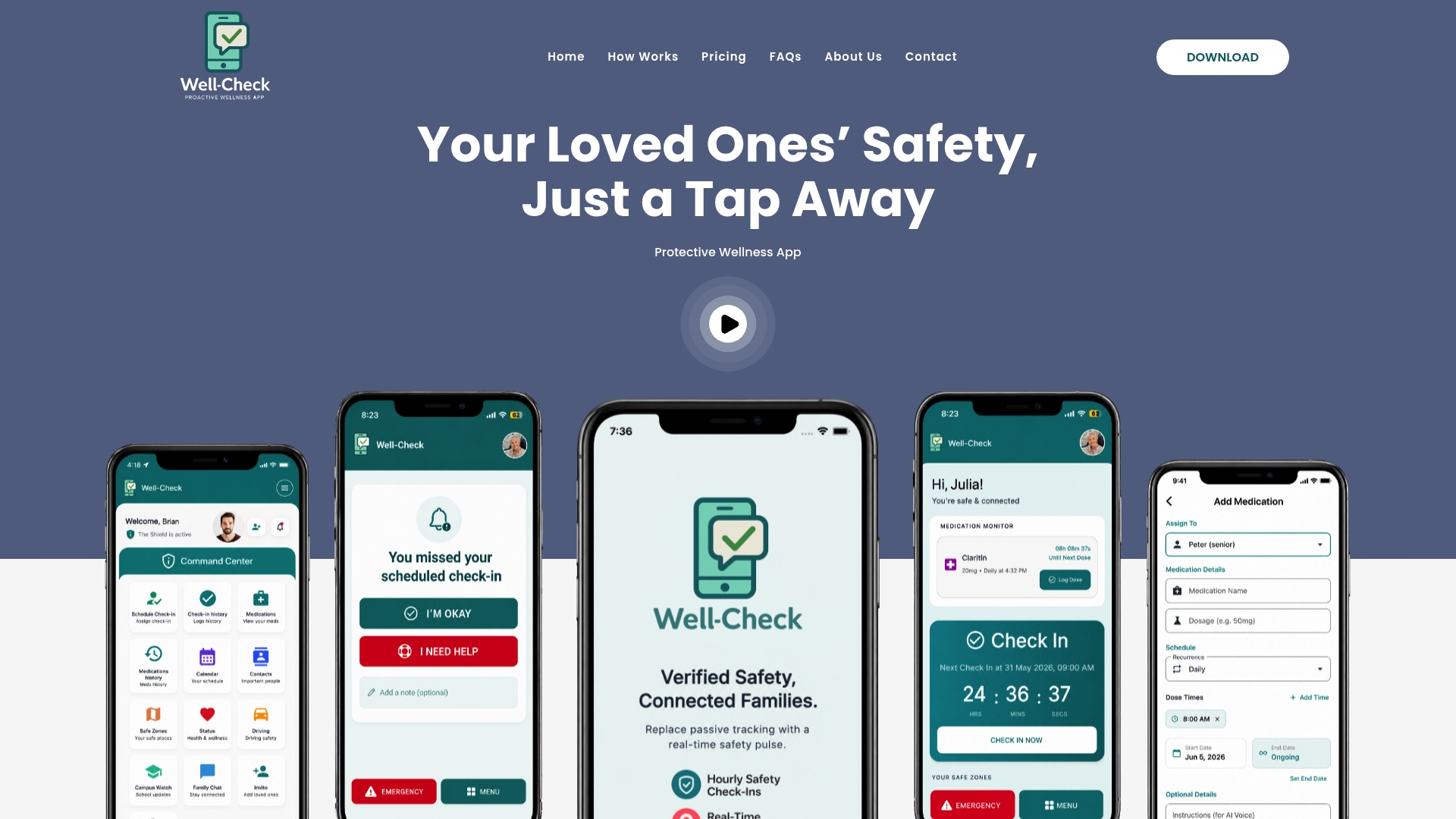
It’s not a replacement for the routine outlined above. It’s a backstop for the moments a caregiver can’t be present for every checkpoint. Managing missed-check alerts and GPS tracking through one interface can help catch problems earlier, which matters given that automated monitoring of routine deviations can flag changes before they become emergencies. If a tech-assisted layer sounds useful for your situation, see how Well-check works or check the available plans to find a fit.
Sources
- Physical Activity for Older Adults — CDC
- Daily care plan — Alzheimer’s Association
- Healthy habits for successful aging in your 60s and 70s — Stanford Medicine
FAQ
What should a 70-year-old do every day?
A 70-year-old benefits most from a routine built around three anchors, a consistent wake time, a main meal, and a fixed bedtime, filled in with short daily movement, hydration, medication timing, and at least one social or cognitive activity.
What is the biggest challenge in elderly care?
Consistency is often the hardest part, keeping medication schedules, meals, and sleep on track day after day, especially when a senior lives alone or has shifting energy and cognition.
What is the 40/70 rule for aging and caregiving?
The 40/70 rule suggests that it’s time to start honest conversations about aging, safety, and future care needs, before a crisis forces the issue.
What are five foods seniors should eat every day?
A daily plate benefits from a protein source (eggs, fish, or beans), leafy greens, whole grains, dairy or a fortified alternative for calcium, and water-rich fruit like berries or oranges to support hydration and nutrition together.