
A college student safety plan is a short, personalized written guide that tells you exactly what to do and who to call in an emergency. The fastest way to start is to write down one emergency contact and one safe place right now, even before you fill in anything else. You do not need to file a formal report to get support. Campus confidential advocates can help you build a plan without triggering an investigation.
TL;DR:
- Most colleges can provide support measures like housing changes, class adjustments, and no-contact directives without requiring a formal report.
- Building your safety plan in advance, including triggers, coping strategies, and support contacts, helps you respond faster and calmer during emergencies.
- Regularly reviewing and updating the plan ensures it remains effective, with recommended updates at least once per semester or after major life changes.
- Packing an emergency bag with essential documents, cash, and evidence, and storing a digital backup increases preparedness for sudden threats.
- Using tools like daily check-in apps can quickly alert trusted contacts if you need urgent help, supplementing your written safety plan.
Table of Contents
- What to include in your student safety plan checklist
- How to build and finalize your personalized plan step by step
- Adjusting your plan for dating violence, stalking, or a mental health crisis
- Getting campus support without filing a formal report
- Tools worth adding: escorts, check-in apps, and privacy settings
- Treating your plan as a living document, not a one-time task
- Quick emergency actions: what to do right now
- Why I think every student needs a one-page version of this
- Where a daily check-in app fits into your plan
- FAQ
- Sources
- Authoritative resources and hotlines
What to include in your student safety plan checklist
A usable safety plan is a worksheet, not an essay. According to UTRGV’s safety planning guide, the strongest plans are personalized documents that name specific risks and specific responses rather than generic advice. Pull the following fields into a notes app, a printed sheet, or both.
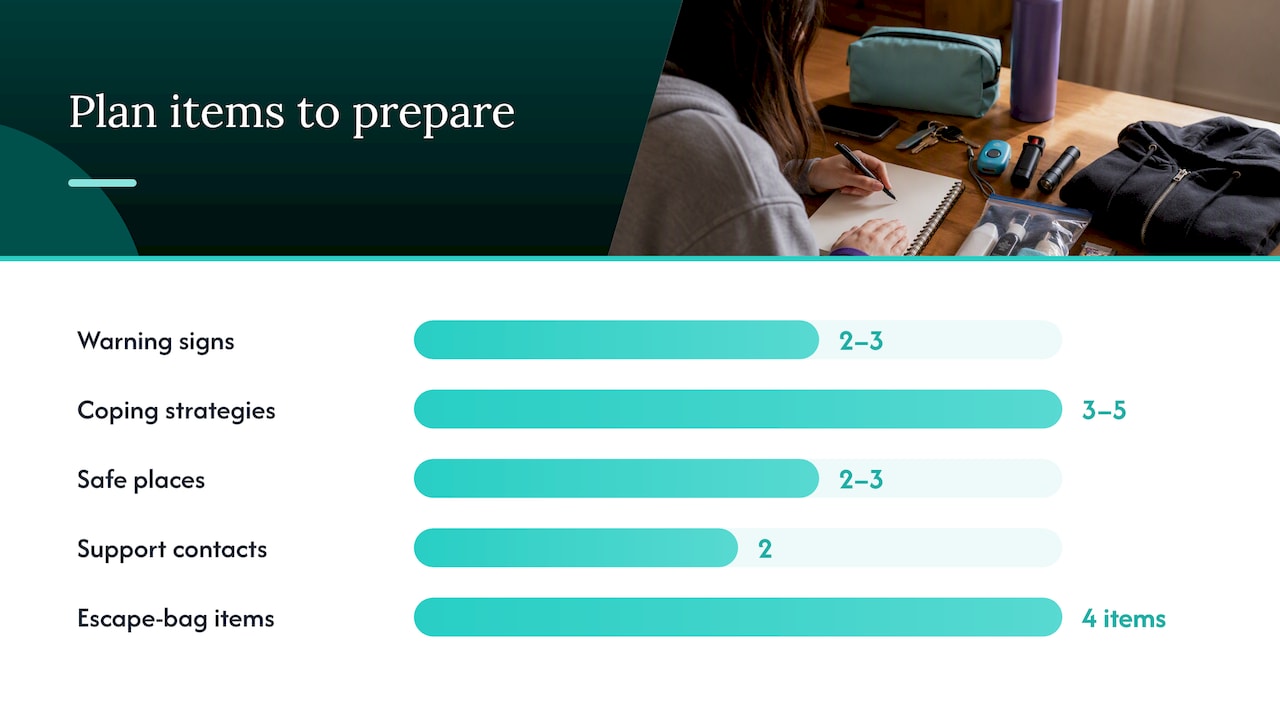
- Triggers and warning signs: short phrases describing what tends to precede a risky situation (a certain text, a specific location, a pattern of contact).
- Internal coping strategies: three to five go-to techniques like paced breathing, grounding through the senses, or physical distraction you can use within seconds.
- External supports: names and numbers, ranked by who you would call first, second, and third.
- Safe places and routes: two or three physical locations and the paths that get you there fastest.
- Escape bag contents: what goes in it and where it stays staged.
- Communication plan: a code word or phrase that signals “come get me” without alarming anyone nearby.
- Technology and privacy safeguards: which accounts need stronger locks and who should not have access to your location.
Fill these in roughly this order:
- List your triggers.
- Choose your coping strategies.
- Rank your support contacts.
- Mark your safe places on a map.
- Pack the bag.
- Set your code word and sharing rules.
Keep the finished version somewhere you can reach in under ten seconds: a pinned note, a photo in a locked album, or a folded sheet in your wallet.
How to build and finalize your personalized plan step by step
Filling out the checklist above is the easy part. Turning it into something you would actually use under stress takes a specific sequence.
- Identify your triggers first. Write two or three warning signs in plain language, not clinical terms. “He shows up outside my building unannounced” is more useful than “stalking behavior.”
- Pick three to five coping strategies and rehearse them before you need them. A breathing pattern you have never practiced will not help you at 2 a.m.
- Choose two or three safe places such as a 24-hour dining hall, a resident advisor’s office, or a campus library, and walk the routes to them in daylight so you already know the turns.
- Build your external support list with at least one on-campus contact and one off-campus trusted person. A roommate can reach you in minutes; a parent or friend from home can make calls you cannot make yourself in the moment.
- Assemble an escape bag and back up your documents both digitally and physically. Templates for college students commonly list cash, a spare phone charger, copies of identification, and any evidence like screenshots or photos, with a second copy stored somewhere other than your main residence.
- Set sharing rules, a code word, and a review date. Decide now who gets the full plan and who only gets the one-page summary.
Pro Tip: Store a photo of your plan in a password-protected notes app so it survives a lost phone, a dead battery, or a moment when you cannot think straight.
Advocacy guidance consistently frames this process as empowering rather than restrictive. Aurora at the University of Minnesota notes that building the plan matters almost as much as having it, because working through each scenario in advance makes you faster and calmer if it actually happens.
Adjusting your plan for dating violence, stalking, or a mental health crisis
A general plan covers the basics, but certain situations require their own addenda written directly into the document.
- Dating or sexual violence: preserve any evidence like texts, photos, or voicemails before deleting anything; ask your school about changing a class schedule or housing assignment; and contact a confidential advocate who can help with safety planning even if you are not ready to file a report.
- Stalking: log every contact attempt with dates and screenshots, tighten privacy settings on social accounts, vary your daily routine and routes, and notify campus safety so there is a record if the pattern escalates.
- Mental health crisis: list crisis line numbers, name the one person who can get you to an emergency room if needed, and write advance instructions for a roommate or advocate so they know exactly what to do if you cannot communicate clearly.
Each addendum should live in the same document as your general plan, clearly labeled, so you are not searching for scattered notes during an already stressful moment.
Getting campus support without filing a formal report
Most colleges can put help in place long before, or entirely separate from, a formal investigation. Supportive and interim measures commonly include:
- Changing your housing assignment or dorm room.
- Adjusting your class schedule to avoid contact with someone.
- Arranging campus escorts or transportation accommodations.
- Issuing a no-contact directive between you and another student.
Colleges are generally required to notify students of available supportive options regardless of whether they pursue a formal investigation, according to Department of Justice guidance on supportive measures. That means asking for an interim measure does not commit you to anything further.
Confidential advocates can request many of these accommodations on your behalf, which keeps your name out of the process if that is what you need. Campus police or a Title IX coordinator becomes the right contact once you want something formally documented or investigated, but reaching out to an advocate first is a lower-stakes way to understand your options before deciding.
Tools worth adding: escorts, check-in apps, and privacy settings
Technology should support your plan, not replace the human parts of it.
- Campus escort or virtual walk-home services let you request a companion or have someone track your walk in real time; most schools list these under campus safety or public safety pages.
- Scheduled check-in contacts work well if you set clear escalation steps in advance: who gets notified if you miss a check-in, and what they do next.
- Basic privacy steps matter more than people expect: lock down location sharing, block numbers that cause distress, and keep backups of anything you might need as evidence.
Pro Tip: Decide now whether a missed check-in should trigger a text, a phone call, or a visit, so your contact isn’t improvising under pressure.
When something feels immediately dangerous, call local emergency services first. Apps and escorts are useful for everyday risk reduction, not a substitute for 911 in an active threat.
Treating your plan as a living document, not a one-time task
A safety plan written during orientation week and never touched again stops matching your actual life. Cal Poly’s safety planning resources recommend revisiting the plan regularly and keeping both a secure digital copy and a physical one.
- Review and update contacts, routes, and triggers at least once a semester, or sooner after any major change like a new dorm or relationship.
- Share a one-page summary with one trusted contact and your campus confidential advocate so someone else knows the broad strokes.
- Build in a simple automated layer if it fits your routine: a scheduled daily check-in with a trusted contact, with a clear next step if that check-in is missed.
- Set boundaries up front about who sees what. A safety plan should give you more independence, not less.
Quick emergency actions: what to do right now
Memorize or print this short sequence for the moments when you cannot think through every step.
- Immediate danger: leave the area, get to a public place, call 911, and tell a trusted person where you are.
- Escalating but not immediate: document what happened, contact a campus advocate, and ask about interim measures.
- Self-harm risk: call a crisis hotline, reach your designated trusted contact, and have someone take you to the emergency room if needed.
Why I think every student needs a one-page version of this
I have seen enough safety plans buried in a notes app folder nobody opens again to believe the one-page version matters more than the long one. A plan you can glance at in ten seconds beats a thorough document you forget exists. Keep both: a detailed version for planning, a one-page cheat sheet in your phone and in your bag for the moment you actually need it.
One habit worth adopting immediately: a 60-second check-in with a trusted contact, once a week, same day and time. It costs almost nothing and it means someone always has a recent read on how you are doing.
— Brian
Where a daily check-in app fits into your plan
A written plan tells you what to do. A daily check-in adds a second layer: someone finds out quickly if something is wrong, even on an ordinary day when nothing dramatic has happened yet. That is the gap we built Well-Check to close, for students living off campus, studying abroad, or simply wanting a quieter safety net than calling a parent every night.
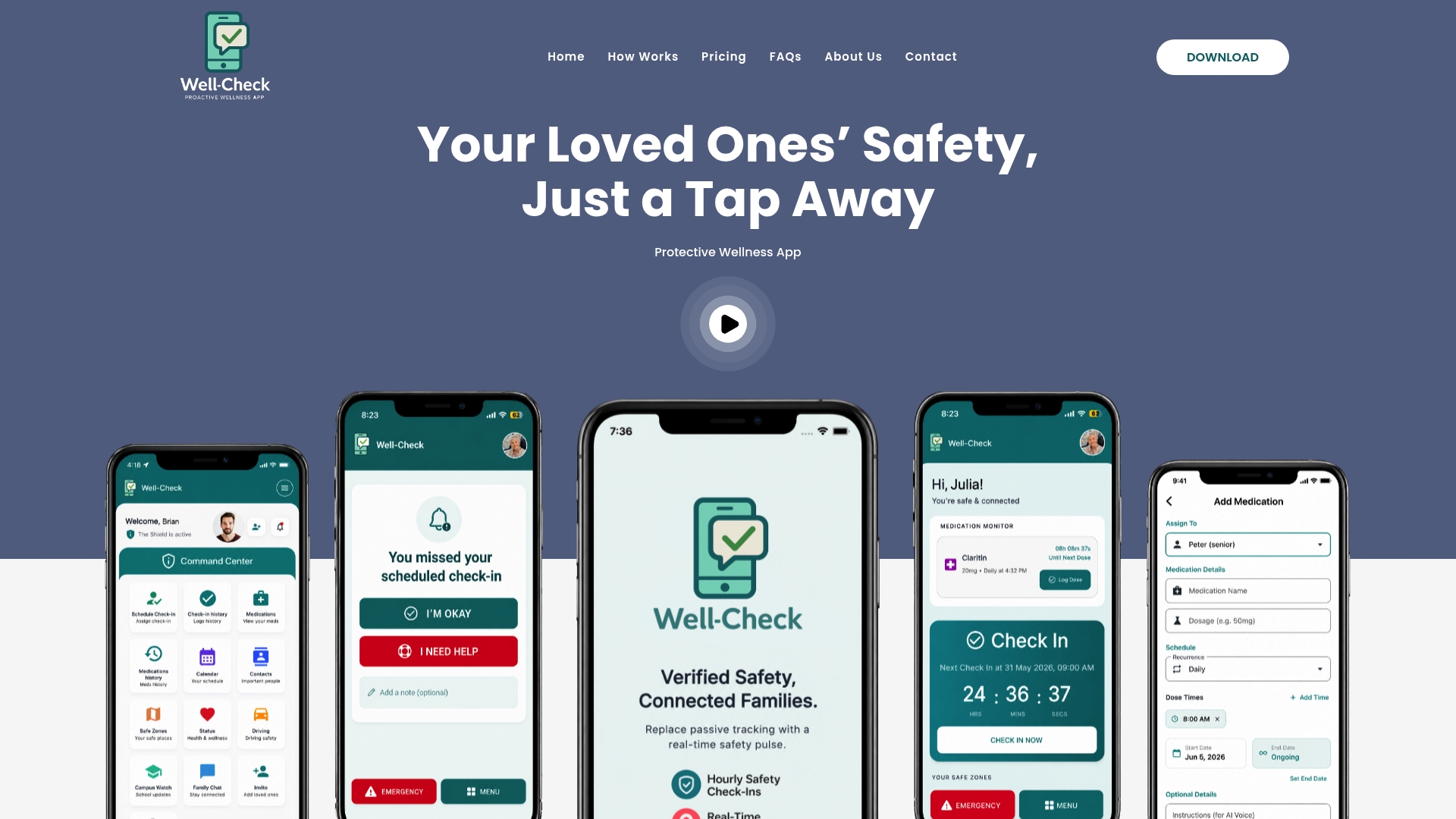
Our app centers on a one-tap daily check-in: you confirm you are okay, and if a check-in is missed, we automatically alert the emergency contacts you have added to your network. You can build that network the same way you built your support list for this plan, ranked by who should hear first. Optional GPS and medication reminders are available if desired.
A simple workflow looks like this:
- You check in once a night with a single tap.
- If you miss it, your designated contacts get notified automatically.
- Your first-ranked contact decides the next step, whether that is a text, a call, or a visit.
We offer two plans, Essential at $5.99 per month and Complete at $7.99 per month, both built around the same idea: independence for you, peace of mind for the people who care about you.
FAQ
What should be in a college student safety plan?
A college student safety plan should include your personal triggers, a few coping strategies, ranked emergency contacts, safe places and routes, an escape bag, and a communication plan with a code word. UTRGV’s safety plan template organizes these into a single personalized worksheet rather than generic advice.
Do I have to file a report to get help from my school?
No. You can work with a confidential advocate to build a safety plan and access supportive measures without filing a formal report. University of Washington’s sexual assault resources confirm advocates can help with planning regardless of whether you choose to report.
What interim measures can colleges offer while I decide what to do?
Schools commonly offer housing changes, class schedule adjustments, no-contact directives, and transportation accommodations. Department of Justice guidance notes that colleges generally must notify students of these options regardless of whether a formal investigation follows.
How often should I update my safety plan?
Review your plan at least once a semester, and sooner after any major life change like a new address or relationship. Cal Poly’s guidance recommends treating the plan as a living document you revisit regularly rather than a one-time task.
What should I pack in an emergency escape bag?
Pack identification copies, cash, a phone charger, and any evidence like screenshots or photos you may need later. Oregon State’s student safety plan template lists these staples and recommends storing a backup copy somewhere other than your main residence.
Sources
- Individual safety plan (UTRGV)
- Supportive measures and interim options (Justice/OVW)
- College safety planning (Loveisrespect / Aurora UMN)
- Safety planning (University of Washington sexual assault resources)
Authoritative resources and hotlines
- UTRGV safety plan template: a fillable worksheet for personal risk scenarios.
- DHS REMS higher-ed guide: institutional emergency planning context.
- Sylmar Treatment Center: crisis escalation and clinical support information.
- Supporting Wellness: campus advocate and counseling guidance.