Start with a calm, dignity-focused conversation and a targeted safety check, then try one low-pressure intervention before pushing further. Over the next 24 to 48 hours, offer a single small step, like a grocery delivery or a check-in call, and watch how your parent responds. If you see a fall, confusion about medication doses, or an unattended hazard like a stove left on, treat that as a signal to involve a doctor or emergency services right away.
TL;DR:
- Most resistance from aging parents stems from fear of losing independence and not stubbornness; validation and low-pressure options are essential.
- Clear signs such as missed medications, safety hazards, and social withdrawal should be documented with short logs for accurate assessment.
- Approaching conversations with “I” statements, offering choices, and involving neutral professionals can improve acceptance of help.
- Starting with small, non-invasive services or technology trials helps introduce assistance without overwhelming the parent, with measurable outcomes.
- Emergency situations require immediate action, and involving healthcare professionals and legal advisors is crucial when safety or capacity issues arise.
Table of Contents
- Why Aging Parents Resist Help
- Signs That Your Parent Actually Needs Help
- How to Talk So They’ll Listen
- Start Small: Low-Pressure Ways to Introduce Help
- When to Escalate: Medical, Legal, and Emergency Steps
- Protecting Your Own Health as a Caregiver
- A Note on Dignity From Someone Who’s Seen This Play Out
- A Discreet Way to Stay Connected Without Taking Over
- FAQ
- Sources
Why Aging Parents Resist Help
Most resistance comes from loss, not stubbornness. An older adult who refuses help is often protecting independence, privacy, or a sense of self that caregiving threatens. Grief over physical decline, fear of a nursing home, and stigma around needing assistance all feed into the same defensive response: “I’m fine.”
National Institute on Aging guidance frames these conversations around dignity, noting that refusal is a common caregiving challenge rooted in fear and loss of independence rather than simple defiance.
There’s a critical distinction families often miss: denial versus anosognosia. Denial is psychological, a parent knows something is wrong but doesn’t want to face it. Anosognosia is neurological, often tied to dementia or stroke, and means the brain literally cannot register the deficit. The Alzheimer’s Association explains that anosognosia differs from denial and cannot be resolved through reasoning or evidence. Arguing with someone who has anosognosia doesn’t just fail, it can escalate distress, because you’re asking them to see something their brain won’t let them see.
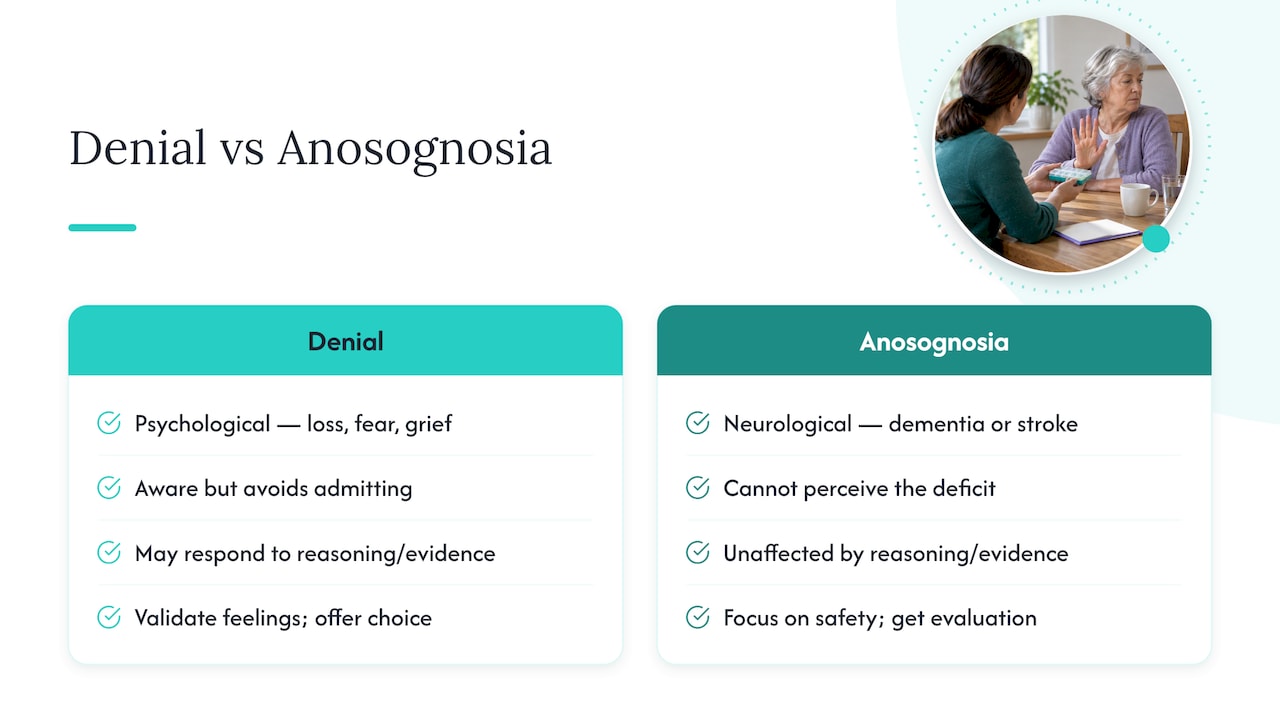
The fix for both is the same starting point: stop trying to win the argument. Validate the feeling behind the resistance, offer a choice instead of a directive, and avoid cornering a parent into admitting weakness. If the cause is anosognosia, plan around safety rather than persuasion, and get a clinical evaluation instead of repeating the same conversation.
Signs That Your Parent Actually Needs Help
Before deciding how hard to push, get specific about what you’re seeing. Vague worry (“Mom seems off”) is harder to act on than a documented pattern.
Watch for these categories of signs:
- Daily living gaps: skipped medications, missed meals, unpaid bills piling up, or noticeably poor hygiene.
- Cognitive and mood shifts: repeated memory lapses, getting lost in familiar places, or sudden withdrawal from activities they used to enjoy.
- Immediate safety flags: falls, near-miss driving incidents, or hazards left unattended, like a burner left on or spoiled food in the fridge.
- Social withdrawal: canceling visits, not answering calls, or avoiding friends they used to see regularly.
Keep a short log instead of relying on memory. A simple note with the date, what you observed, and how your parent reacted gives you (and any doctor you eventually consult) something concrete to work from. Three logged incidents in a month tell a clearer story than a single bad day. This record also matters later if a clinician asks what changed and when.
How to Talk So They’ll Listen
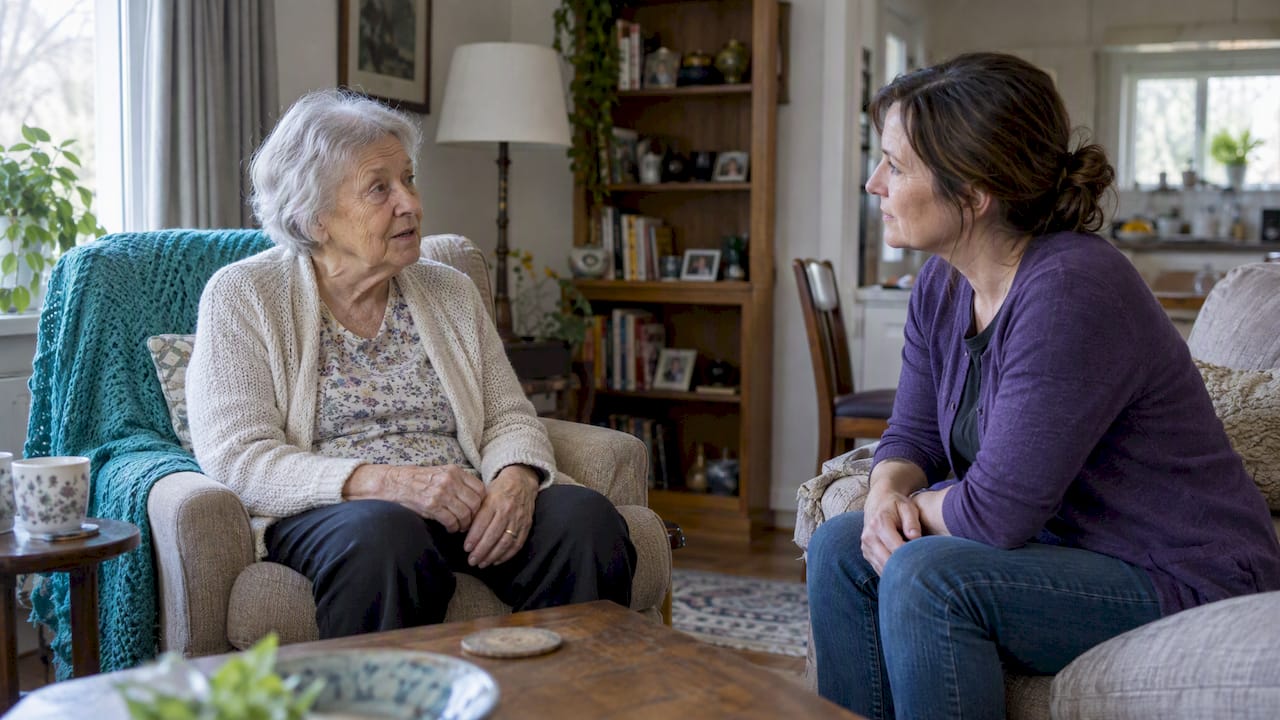
The words you choose matter less than the structure of the conversation. Lead with validation, not correction.
- Open with an “I” statement. Say “I’ve been worried since you missed your blood pressure medication twice this week,” not “You keep forgetting your pills.”
- Pick a calm, private moment. Avoid mealtimes, holidays, or right after a stressful event like a hospital visit.
- Offer two acceptable choices instead of one directive. “Would you rather try a pill organizer or a daily reminder call?” keeps control with your parent.
- Name the fear directly if you sense it. “I know you don’t want to lose your independence. This isn’t about taking that away.”
- Bring in a neutral third party when you hit a wall. A doctor or geriatric care manager can sometimes land a message that a son or daughter cannot.
The Alzheimer’s Association recommends framing support as a partnership rather than a persuasion campaign, prioritizing dignity over winning the point. That framing changes the whole conversation from “I need you to accept help” to “Let’s figure this out together.”
Pro Tip: Rehearse one short script before the conversation, like “I love you and I’m not trying to control anything, I just want to check one thing with you,” so you’re not improvising under stress.
Sample refusals and responses:
- Parent says, “I don’t need a babysitter.” Try: “This isn’t about babysitting, it’s about me worrying less so I can enjoy our time together.”
- Parent says, “I’ve always managed fine.” Try: “You have, and I want to help you keep managing, not take that away.”
If every attempt loops back to the same standoff, that’s your cue to bring in a geriatrician or care manager rather than repeating yourself a fourth time.
Start Small: Low-Pressure Ways to Introduce Help
The goal isn’t to solve everything at once. It’s to get one small, low-threat service in the door, then measure whether it helps.
- Start with the least intrusive option. Grocery or meal delivery, a weekly companion visit, or a short in-home aide visit two hours a week all feel less invasive than a live-in caregiver.
- Frame technology as independence, not surveillance. Daily check-in apps, medication reminders, and an emergency contact network let a parent stay in their own home while giving family a way to notice problems early.
- Run a two-to-four-week trial with a clear stop date. Tell your parent it’s temporary, which lowers resistance, then actually revisit it at the end.
- Track specific outcomes, not vague impressions. Did missed medications drop? Did meal frequency improve? Did mood seem better during calls?
- Match the intervention to what your parent values most. A parent who prizes privacy may prefer a check-in app over a visiting aide; one who’s lonely may respond better to a companion visitor.
A systematic review of loneliness interventions found that multicomponent and technology-assisted programs, including videoconferencing and daily contact tools, can reduce loneliness in older adults, which supports treating a short tech trial as a legitimate first step rather than a last resort.
When to Escalate: Medical, Legal, and Emergency Steps
Some situations move past persuasion and into professional territory. If you see a fall with injury, a medication overdose or dangerous omission, or a parent who can no longer recognize danger (leaving the stove on, wandering outside at night), call emergency services or get an urgent medical evaluation immediately.
For ongoing concerns, loop in a geriatrician, neuropsychologist, geriatric psychiatrist, or social worker, each can assess capacity and recommend next steps you can’t diagnose yourself. Before a clinical visit, bring your incident log, a list of medications, and specific questions, and ask a sibling or trusted friend to join as a second set of ears.
If your parent can no longer manage finances or medical decisions safely, ask a local elder law attorney about power of attorney, guardianship, or advance directives. These are jurisdiction-specific, so consult counsel where your parent lives rather than relying on general guidance.
Protecting Your Own Health as a Caregiver
Caregivers are sometimes called hidden patients, because the stress of caregiving can quietly damage their own health while all the attention goes to the person being cared for. The National Institute on Aging advises using respite services and outside support specifically because caregivers face real burnout risk.
Practical ways to protect yourself:
- Use respite care for even a few hours a week to reset.
- Split specific tasks among family, like “you handle Tuesday pharmacy pickups,” rather than a vague ask for “help.”
- Join a caregiver support group or talk to a counselor if guilt or exhaustion is building.
- Hire professional help when the workload exceeds what family can sustain, and check with local agencies on funding options.
A caregiver burnout guide outlines similar self-care strategies worth reviewing if exhaustion is setting in.
A Note on Dignity From Someone Who’s Seen This Play Out
Dignity isn’t a soft add-on to caregiving, it’s the whole strategy. I’ve seen a daughter get nowhere for months with direct requests, then succeed by framing a single reminder call as “helping me worry less,” which her father accepted immediately. For deeper guidance, the National Institute on Aging and Alzheimer’s Association both offer free, practical resources worth bookmarking.
— Brian
A Discreet Way to Stay Connected Without Taking Over
If your parent bristles at the word “monitoring,” reframe the offer around privacy and control instead of oversight. A wellness app can let someone living alone confirm they’re okay with a single tap, get medication reminders, and alert family only if a check-in is missed, without more invasive monitoring.
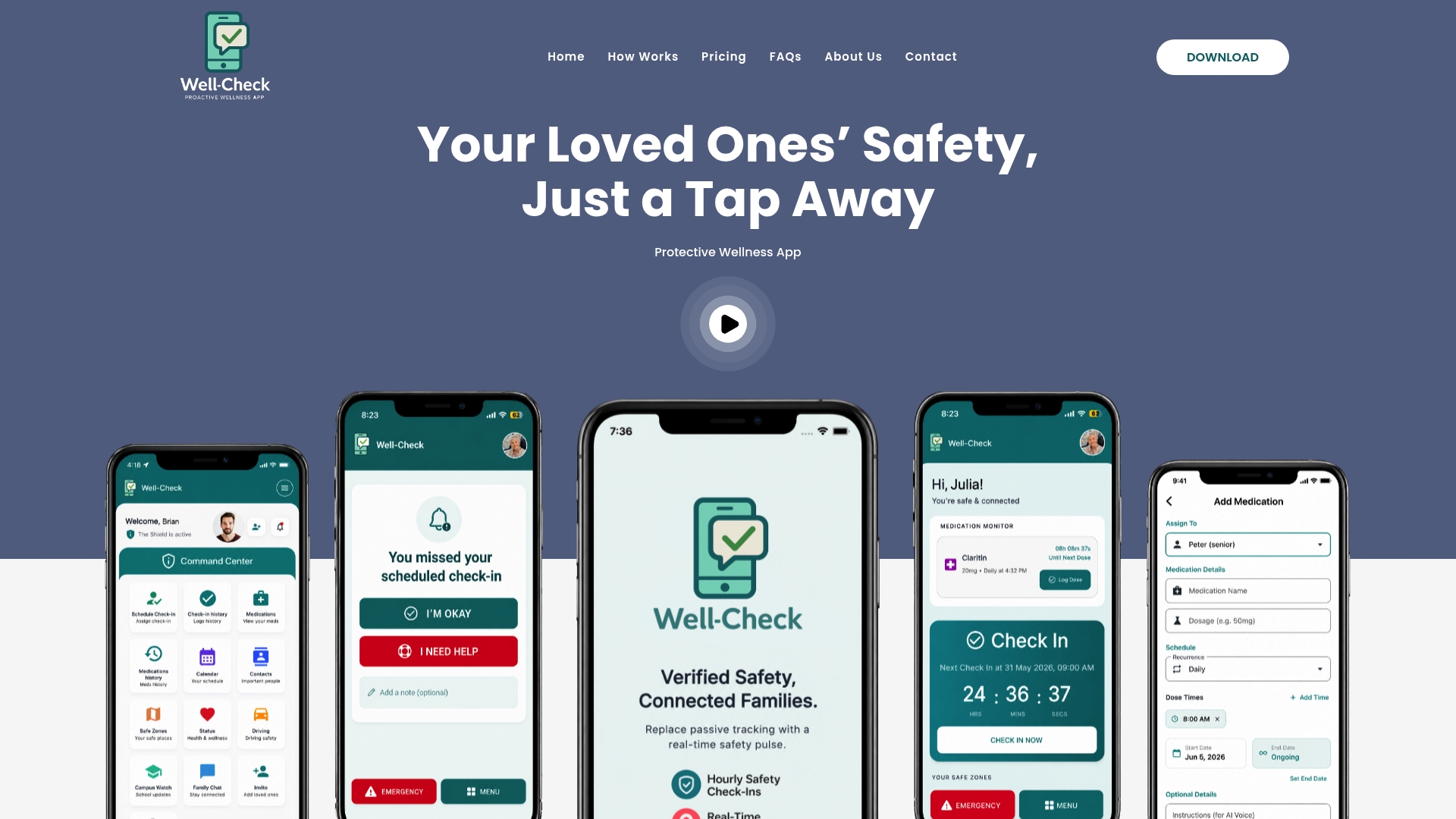
You can propose it as a short trial: “Try this for two weeks, it’s one tap a day, and if you hate it we’ll drop it.” That framing matches the low-pressure approach that works best with resistant parents, and it gives your parent the final say.
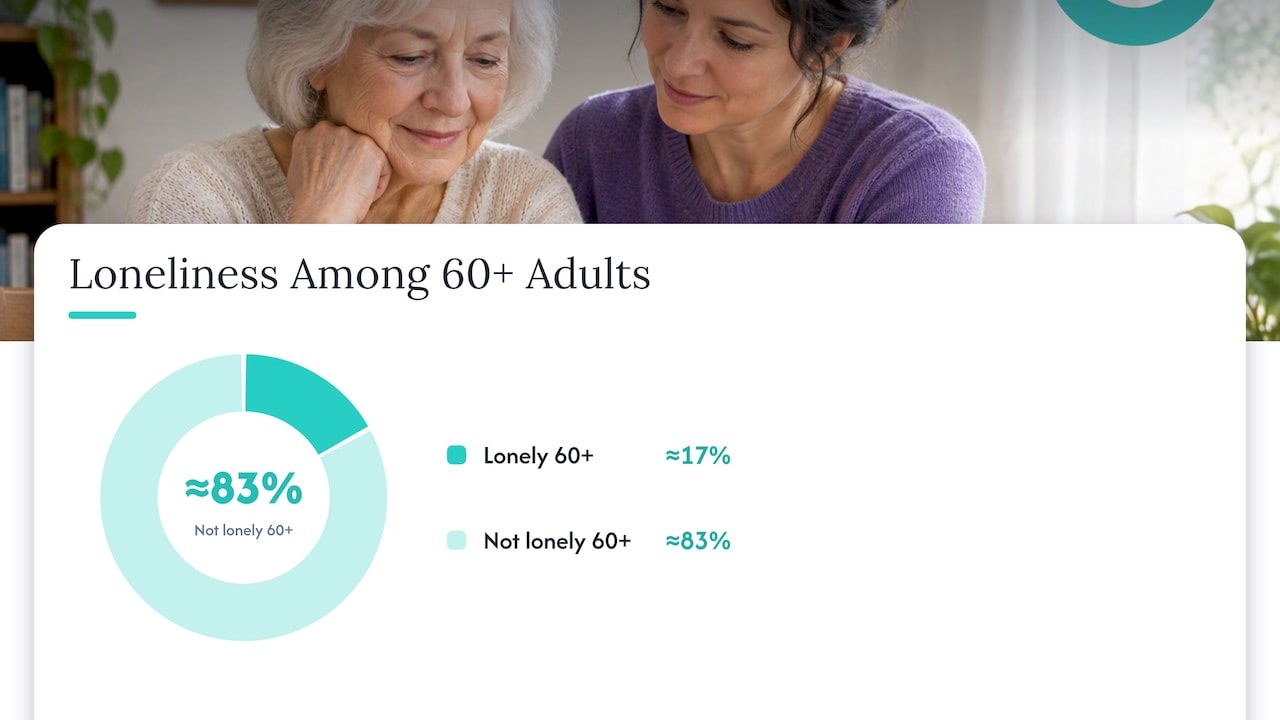
Worldwide, about one in six people aged 60 and older experience loneliness, a figure the World Health Organization ties to broader health risks for older adults living alone. A daily check-in habit, however small, gives both sides a reason to stay in touch.
| Plan | Price | Best for |
|---|---|---|
| Essential | publisher’s own published price | A simple daily check-in trial |
| Complete | publisher’s own published price | Added features like GPS tracking and caregiver analysis |
See the full pricing and plan details or learn how Well-Check works before suggesting it to your parent.
This article is general information, not a substitute for advice from a qualified doctor. Consult a qualified healthcare professional about your own circumstances before acting on anything here.
FAQ
How do you help an elderly parent who refuses help?
Start by validating their fear of losing independence rather than arguing the facts, then offer one small, low-pressure option like a check-in call or grocery delivery. If resistance continues, a neutral third party such as a doctor often succeeds where family members cannot, according to National Institute on Aging guidance.
What is the 40-70 rule for aging parents?
The 40-70 rule is an informal guideline suggesting adult children should start honest conversations about aging and care planning once they turn 40 or their parents turn 70, whichever comes first. It’s a general rule of thumb rather than a clinical standard, so treat it as a prompt to start talking early, not a fixed deadline.
What should I do if my elderly parent refuses medical treatment?
If the refusal involves an immediate safety risk, such as a medication overdose or a medical emergency, call for urgent care right away. For ongoing refusal without immediate danger, involve a geriatrician or social worker who can assess capacity and discuss options like a care partnership rather than a directive.
What should I do with an uncooperative elderly parent?
Focus on small, time-limited trials rather than one big ask, and measure specific outcomes like medication adherence or mood during each trial. Bringing in a neutral professional, such as a geriatric care manager, often breaks a standoff that family persuasion alone cannot.
Can technology really help reduce loneliness in seniors?
A systematic review found that technology-assisted tools, including videoconferencing and daily check-in systems, can reduce loneliness in older adults as part of broader support programs. Results vary by person, so pairing tech with human contact tends to work better than tech alone.