Caregivers manage a mix of hands-on and behind-the-scenes work: personal care (bathing, dressing, toileting), household support (meals, shopping, transportation), medication tracking, mobility assistance, home safety, medical coordination, emotional support, and paperwork. Getting this right depends less on doing everything yourself and more on knowing which tasks need training, where legal limits apply, and how to divide the load. The sections below break down each domain and show how to build a workable system.
TL;DR:
- Most caregiving tasks require knowing when to seek professional training or delegate to trained clinicians, especially for clinical or physical transfer procedures.
- Building a clear delegation system with assigned owners and backup for each task helps prevent confusion and ensures responsibilities are effectively managed.
- Routine safety tools like check-in apps support daily monitoring but do not replace hands-on tasks or clinical judgment necessary for medical or mobility support.
- Family caregivers typically provide an average of 27 hours of care weekly, with many performing complex medical and coordination tasks without formal training.
- Ensuring proper safety, medical boundaries, and shared ownership reduces caregiver burnout and improves the quality of long-term care management.
Table of Contents
- Understanding caregiver types and how duties shift by setting
- Core daily care: ADLs and IADLs explained with practical checks
- Medication and basic health management: what caregivers can and cannot do
- Mobility, transfers and fall prevention: everyday practices
- Home safety, nutrition and household management
- Care coordination, communication and documentation
- Emotional support, companionship and responding to behavioral changes
- Boundaries, legal issues and scope-of-practice limits
- Building a delegation framework: assign owners, not just tasks
- Getting trained: certifications and where to learn skills
- Preventing caregiver burnout and finding support
- Why clarity and shared ownership matter more than heroics
- Another option: reducing the daily monitoring load with check-in tools
- Primary sources to consult
- Sources
- FAQ
Understanding caregiver types and how duties shift by setting
Not every caregiver does the same job. A family member helping a parent stay in their own home faces a different set of tasks than a paid home health aide working scheduled shifts, or a relative coordinating care long-distance. Setting and condition change what “caregiving” actually requires day to day. Someone managing early-stage dementia might focus on reminders and supervision; someone caring for a person recovering from a stroke may handle physical transfers and clinical follow-up.
Before diving into specific tasks, it helps to place yourself in one of these categories:
- Family or unpaid caregiver: A relative or friend providing care without formal pay, often blending caregiving with a full-time job.
- Paid professional caregiver: A home health aide, personal care aide, or certified nursing assistant working under an agency or direct employer.
- Long-distance caregiver: Someone managing logistics, appointments, and check-ins remotely while a local person or aide handles daily tasks.
- Facility-based caregiver: Staff or family supplementing care in an assisted living or skilled nursing setting.
Family caregivers, according to the Administration for Community Living, provide an average of 27 hours of care per week, with nearly a quarter logging more than 40 hours. That workload alone explains why role clarity matters from the start.
Core daily care: ADLs and IADLs explained with practical checks
Activities of daily living (ADLs) are the personal care tasks most people picture when they think of caregiving. Instrumental activities of daily living (IADLs) are the logistical tasks that keep a household running. Both categories carry real skill requirements, even when they look simple.
- Bathing: Support balance and privacy, check water temperature, and watch for skin changes during washing.
- Dressing: Lay out clothing in the order it goes on, and let the person do as much as they can manage.
- Toileting: Assist with transfers to the toilet, and address incontinence needs promptly to prevent skin breakdown.
- Feeding: Watch for chewing or swallowing difficulty, and adjust food texture if needed.
- Meal preparation (IADL): Plan simple, consistent meals and track intake if weight loss is a concern.
- Shopping and errands (IADL): Keep a running list and consider grocery delivery for consistency.
- Housekeeping (IADL): Prioritize safety-related cleaning, like clearing walkways, over cosmetic tidiness.
- Transportation (IADL): Arrange rides to appointments and confirm the person can safely enter and exit vehicles.
Escalate to a trained aide or clinician when a task involves wound care, catheter management, or any physical transfer that risks injury to either person.
Pro Tip: Build a loose daily schedule around the person’s energy patterns, not the clock, and always narrate what you’re doing before you do it to preserve dignity and reduce anxiety.
Medication and basic health management: what caregivers can and cannot do
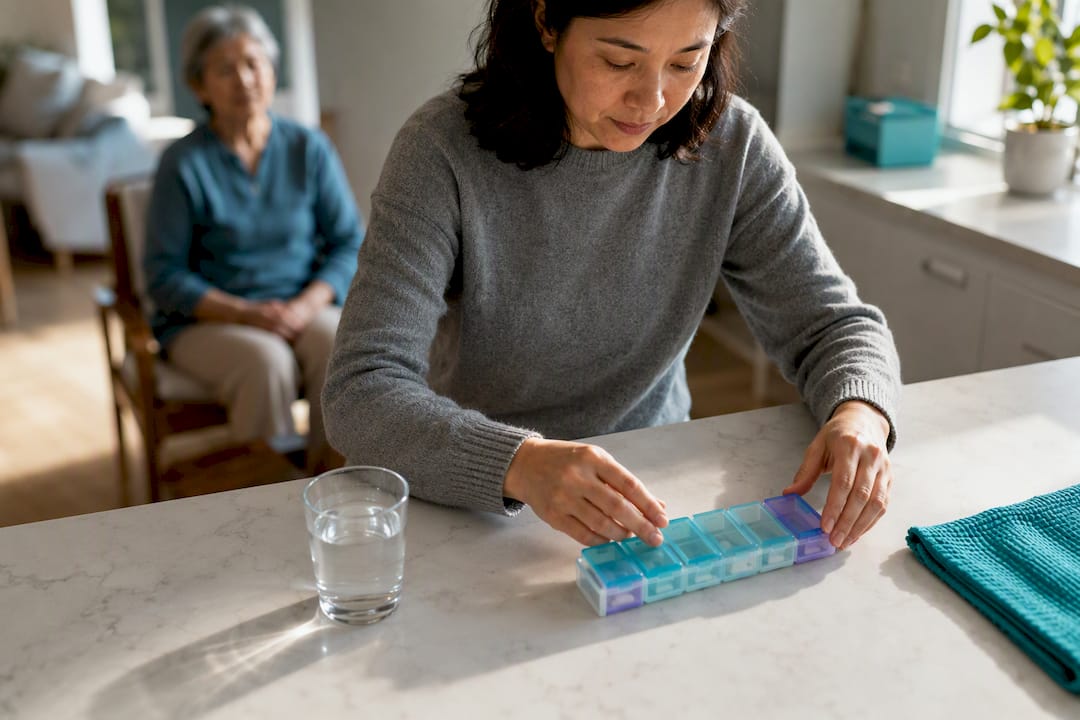
Medication support ranges from a simple reminder to full administration, and the line between them matters legally and clinically. Reminding someone to take a pill they self-administer is different from measuring and handing over a dose, which is different again from tasks like injections or wound irrigation that typically require delegation from a nurse.
- Prompting: Reminding the person it’s time for medication, without handling the pills.
- Supervised administration: Handing over pre-sorted medication and watching it get taken.
- Delegated clinical tasks: Procedures like insulin injections, which require training and, in many settings, formal delegation from a registered nurse under nurse delegation rules that require written consent, competence verification, and periodic supervision.
Keep one written medication list with names, doses, timing, and prescribing doctor, and log every dose given or missed. Report red flags immediately: new confusion, repeated falls, unstable vital signs, or sudden weight loss are documented escalation triggers in CDC caregiving research.
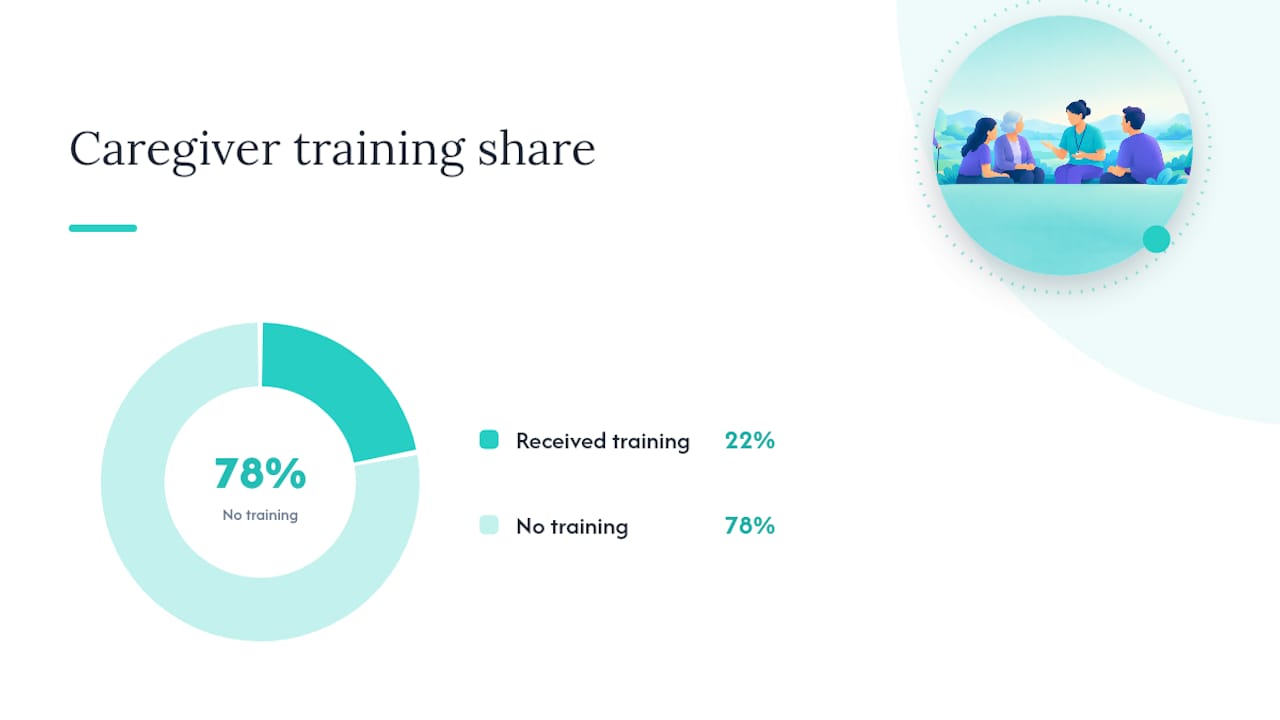
Only about 22% of family caregivers report receiving any training for the tasks they perform, according to the Administration for Community Living, which is a strong argument for asking a clinician to write out instructions rather than relying on memory. Readers who want structured background on medication oversight can review this medication management program overview.
Mobility, transfers and fall prevention: everyday practices
Helping someone move safely is one of the riskiest parts of caregiving for both people involved. Poor body mechanics during a transfer causes back injuries for caregivers and falls for the person receiving care.
- Use your legs, not your back, and keep the person close to your body during any transfer.
- Watch for signs a gait belt, walker, or hospital bed rail is needed rather than relying on your own strength alone.
- Ask for a physical therapy referral if transfers are becoming harder or the person’s balance is declining.
- Clear hazards immediately: loose rugs, poor lighting, and cluttered walkways cause a large share of home falls.
A short PT session on proper transfer technique often prevents months of strain-related injury for the caregiver.
Home safety, nutrition and household management
Keeping the household running safely is quieter work than personal care, but it prevents most emergencies before they start.
- Track basic nutrition signals: appetite changes, weight loss, and hydration, especially in hot weather.
- Support continence needs discreetly, using proper supplies and skin care to prevent irritation and preserve dignity.
- Store medications securely and away from look-alike household items.
- Fix lighting and clutter first, since dim hallways and loose cords are common, correctable fall risks.
Small household fixes often do more for safety than any single piece of medical equipment.
Care coordination, communication and documentation
Caregivers often function as the connective tissue between multiple doctors, pharmacies, and family members, and that role depends on good records more than good memory.
- Keep one running document with medications, allergies, diagnoses, and every provider’s contact information.
- Bring short, specific notes to appointments: new symptoms, changes in appetite or sleep, and questions in priority order.
- Ask for a written care plan rather than relying on verbal instructions given during a rushed visit.
- Log symptoms as they happen, not from memory the night before an appointment.
The National Strategy to Support Family Caregivers notes that family caregivers frequently perform complex medical tasks and coordination work well beyond basic ADLs, often without formal assessment of whether they’re prepared for it. That gap is exactly why a single, shared source of truth for medical information matters: it protects against dropped details during handoffs between family members, aides, and clinicians. Readers managing costs alongside care should also look at how Medicare coverage pairs with home care services to fund some of this coordination work.
Emotional support, companionship and responding to behavioral changes
Companionship is not a soft extra. Purposeful activities, conversation, and routine engagement reduce isolation and often improve mood and cognition more than passive supervision.
Simple options include shared meals, music from a person’s youth, short walks, or folding laundry together as a joint activity rather than a chore done alone. Watch for sudden withdrawal, irritability, or confusion that appears out of character, since these can signal depression, infection, or a medication reaction rather than normal aging. In dementia care, validate feelings rather than correcting facts: agreeing with the emotion behind a confused statement usually de-escalates distress faster than argument. Any sharp behavioral shift deserves a call to the person’s doctor rather than a wait-and-see approach.

Boundaries, legal issues and scope-of-practice limits
Knowing what you should not do is as important as knowing what you should. Written consent or legal authority, such as a health care proxy or power of attorney, is necessary before making major medical or financial decisions on someone’s behalf.
Refuse, without proper training or formal delegation, tasks like injections, wound care involving broken skin, or operating medical equipment you were never shown how to use. Nurse delegation guidance is explicit that a delegating registered nurse remains accountable and must provide written instructions and competence verification before handing off a clinical task, and caregivers should ask for that documentation rather than guessing at scope.
Document any concern about financial exploitation, neglect, or abuse in writing, with dates, and escalate to a supervisor, adult protective services, or law enforcement rather than handling it informally.
Building a delegation framework: assign owners, not just tasks
Most caregiving breakdowns come from unclear ownership, not lack of effort. A simple five-step framework fixes that.
- Inventory every task currently being done, from medication pickup to bill paying.
- Classify each by risk and urgency, separating clinical tasks from logistical ones.
- Assign an owner and a backup for each task, with a clear definition of “done.”
- Set guardrails for handoffs, so a backup knows exactly what to do when covering.
- Review the whole system monthly, adjusting as needs change.
This approach mirrors the family task delegation framework that many caregiving families use to reduce duplication and mental load. Technology fits naturally into step three: a scheduled daily check-in or medication reminder can serve as the “owner” for routine safety monitoring, freeing family members to focus on higher-risk tasks.
Pro Tip: Write the definition of done in one sentence per task, such as “medication log updated by 9 AM,” so nothing falls through during a handoff.
Getting trained: certifications and where to learn skills
Formal training ranges from a multi-week certified nursing assistant (CNA) or home health aide program to shorter practical courses on transfers, dementia communication, or medication safety, often offered through community colleges or hospital systems.
Before starting a paid caregiving job, ask an employer or agency about supervision frequency, refresher training schedules, and who to call for clinical questions. The National Institute on Aging recommends starting by learning about the specific condition you’re supporting and using the Eldercare Locator to find local training and respite resources. Since only about 22% of family caregivers report any formal training, according to ACL data, seeking out even a short course puts you ahead of most.
Preventing caregiver burnout and finding support
Caregiving takes a measurable toll. Watch for sustained fatigue, irritability, sleep disruption, and a sense of dread around caregiving tasks, since these are common early burnout signs.
- Schedule short, regular breaks rather than waiting for a crisis to force one.
- Join a caregiver support group, in person or online, to reduce isolation.
- Ask about respite care options through local agencies on aging.
- Check employer policies on FMLA or paid caregiving leave where available.
Public health data connect sustained caregiving stress to worse health outcomes, which is part of why evidence-based respite programs are recommended for caregivers who feel it’s up to them alone.
Pro Tip: Put your own medical and dental appointments on the calendar first each month, before filling in caregiving tasks around them.
Why clarity and shared ownership matter more than heroics
Caregiving rarely stays the same for long. A role that starts with occasional grocery runs can turn into daily medical management within a year, and most families never formally renegotiate who’s responsible for what when that happens.
The caregivers who hold up best aren’t the ones doing the most. They’re the ones who wrote down roles early, asked for training instead of guessing, and treated “asking for help” as a normal part of the job rather than a failure. Build a real care team, name the backups, and put it in writing.
— Brian
Another option: reducing the daily monitoring load with check-in tools
Caregivers spend real time just confirming someone is safe, on top of everything else on this list. That’s the specific gap a tool like Well-Check is built to fill: daily check-ins, medication reminders, missed check-in alerts to family, an emergency contact network, and GPS tracking, all handled through a simple, one-tap interface.
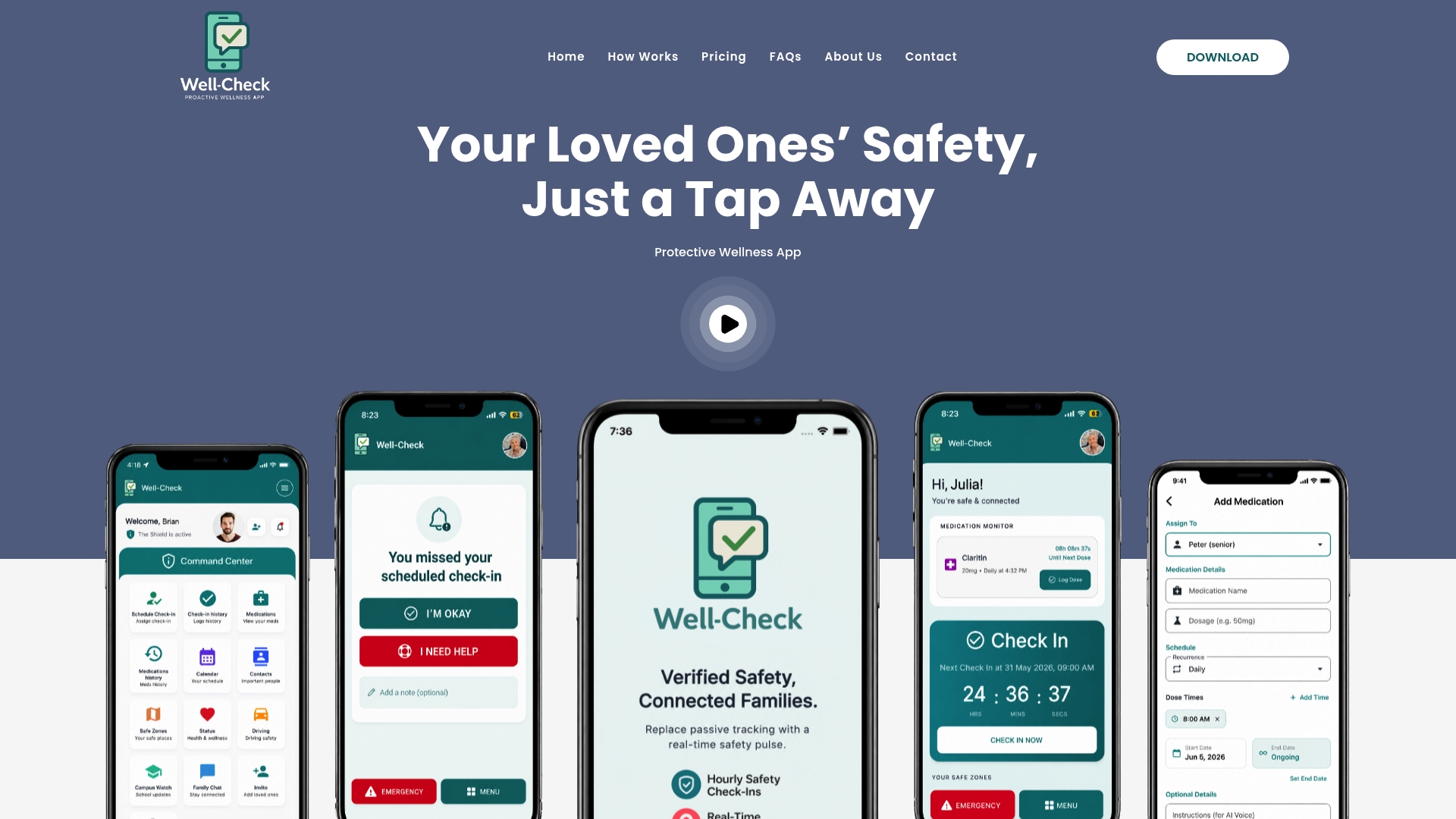
An app like this works well for routine safety monitoring and scheduled reminders, especially for a senior living alone or a long-distance family member who needs peace of mind between visits. It does not replace hands-on personal care, clinical judgment, or the physical support tasks covered earlier in this guide.
- Daily check-ins confirm someone is safe without a phone call every morning.
- Medication reminders support the prompting layer of medication management, not administration.
- Missed check-in alerts notify your care team automatically if something seems off.
| Well-Check feature | Caregiving task it supports |
|---|---|
| Daily check-ins | Routine safety confirmation |
| Medication reminders | Prompting layer of medication management |
| Missed check-in alerts | Early detection when something is wrong |
| GPS tracking | Locating a person who wanders or travels |
Well-Check offers an Essential plan and a Complete plan; details and current pricing are on the pricing page. Readers who want to see how the features fit together can review how Well-Check works before deciding if it fits their care setup.
Primary sources to consult
For deeper reading, the ACL’s caregiver support overview covers hours and training gaps, the CDC’s caregiver health data tracks health outcomes, and nurse delegation guidance explains legal limits on clinical tasks. The National Strategy to Support Family Caregivers outlines broader policy recommendations.
Sources
- ACL blog: ACL’s family and caregiver support programs helping family caregivers
- Changes in Health Indicators Among Caregivers — United States, 2015–2016 to 2021–2022 | MMWR
- 22-1736 Nurse delegation for nursing assistants and home care aides
FAQ
What are the duties and responsibilities of a caregiver?
Caregivers typically handle personal care (bathing, dressing, toileting), household tasks (meals, shopping, transportation), medication reminders, mobility assistance, and coordination with doctors. The exact mix depends on the person’s condition and whether the caregiver is a family member or a trained professional.
What is my role as a caregiver?
Your role depends on your relationship to the person, your training, and what’s already covered by other family members or paid help. A written task inventory with a clear owner and backup for each duty, as described in the delegation framework above, is the fastest way to define it clearly.
What are the roles of caregiving?
Caregiving roles generally fall into personal care, household management, medical coordination, emotional support, and administrative tasks like appointments and paperwork. ACL data shows family caregivers average 27 hours of care per week across these roles.
What are your main duties and responsibilities of a carer?
A carer’s main duties usually include help with daily activities like bathing and dressing, managing medications, supporting mobility, and communicating with healthcare providers on the person’s behalf. Formal training for these duties remains uneven, since only about 22% of family caregivers report receiving any, according to the Administration for Community Living.


[…] 5 Steps: Caregiver Roles and Responsibilities + Check Ins for Families […]
[…] decide together, early, who gets the alert, who calls 911 and who stays by the phone. Our guide to caregiver roles and responsibilities lays that division of labor out, and our 45-minute family meeting plan helps relatives who live far […]