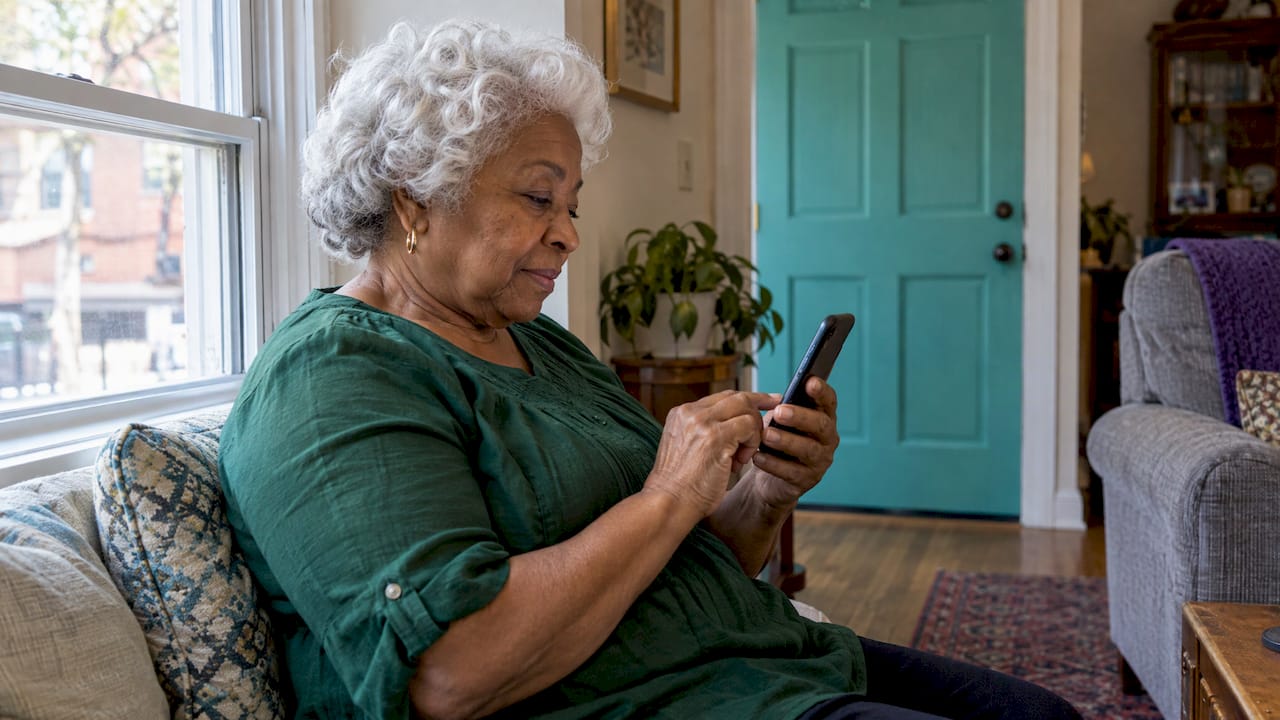
A predictable daily check-in eases anxiety on both sides of the phone. The person living alone knows someone will notice if something goes wrong. The person who worries stops running “what if” scenarios at 3 p.m. because the answer arrives on its own: an “I’m okay.” The check-in works best when it is small, regular and agreed in advance, so nobody feels watched and nobody has to wonder. That is the idea behind Well-Check, our one-tap daily check-in app: the routine takes a second, and a missed check-in alerts the emergency contacts you chose.
This guide explains why check-ins calm worry, what the research shows, how to build a routine that protects dignity, and when anxiety or silence is a signal to bring in a professional.
TL;DR
- Worry grows in the gaps. A check-in at a set time replaces guessing with a clear signal, for the older adult and for family.
- Research on daily check-ins for older adults living alone points to lower anxiety and a lower sense of carrying everything alone.
- Keep it light: one tap, the same time each day, agreed by the person being checked on.
- Decide in advance who is notified and what happens after a missed check-in, so a quiet day never turns into panic.
- Persistent anxiety, withdrawal or hopelessness calls for a doctor or a crisis line, not more check-ins.
Table of Contents
- Why check-ins ease anxiety on both sides
- What makes a check-in calming instead of stressful
- How to build an anxiety-reducing check-in routine
- Where Well-Check fits into the routine
- Check-ins for the worrier: managing your own anxiety
- When a check-in is not enough
- A word from us
- Start with one tap a day
- FAQ
- Sources
Why check-ins ease anxiety on both sides
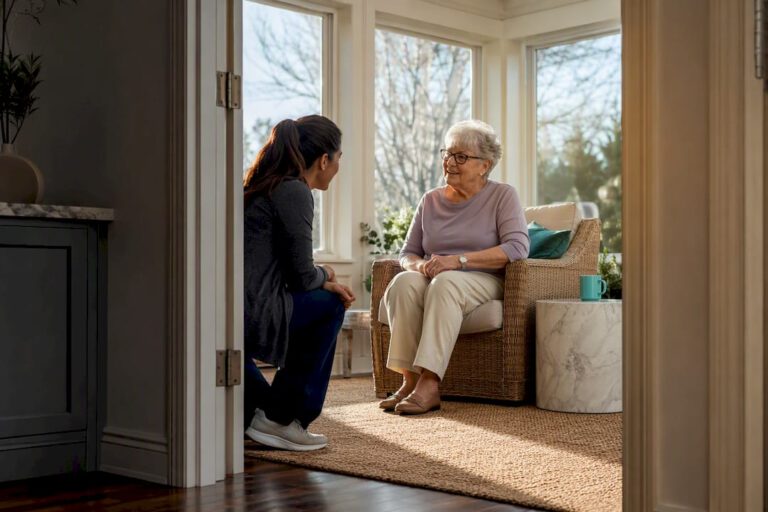
Two kinds of worry sit behind this search. One belongs to the older adult, who may feel that a fall or a bad night would go unnoticed. The other belongs to the family, who cannot call every hour and cannot stop imagining the worst.
The scale is not small. According to the National Alzheimer’s and Dementia Resource Center, 27% of US adults 65 and older, about 15.2 million people, were living alone in the community in the 2021 Profile of Older Americans. The same report documents living alone as a risk factor for developing dementia. Millions of families are therefore managing distance and uncertainty at once.
A check-in works on anxiety because anxiety feeds on unanswered questions. “Is Mom up yet? Did Dad take his pills? Why hasn’t she called?” A fixed daily signal answers the first question before it is asked. When the signal arrives, the worry ends. When it doesn’t, there is a plan, and a plan is far calmer than improvising.
What the research says
A 2025 pilot study in JMIR Aging followed 100 vulnerable older adults in South Korea through a six-month program. It combined daily smart-speaker check-ins, an emergency response system and AI well-being calls. Anxiety scores on the GAD-7 scale fell from 2.97 to 2.18 (P=.008), and depression scores on the PHQ-9 fell from 5.68 to 4.02 (P<.001). Quality of life improved too, and 96% of participants completed the program, with a median of 184 days of engagement.
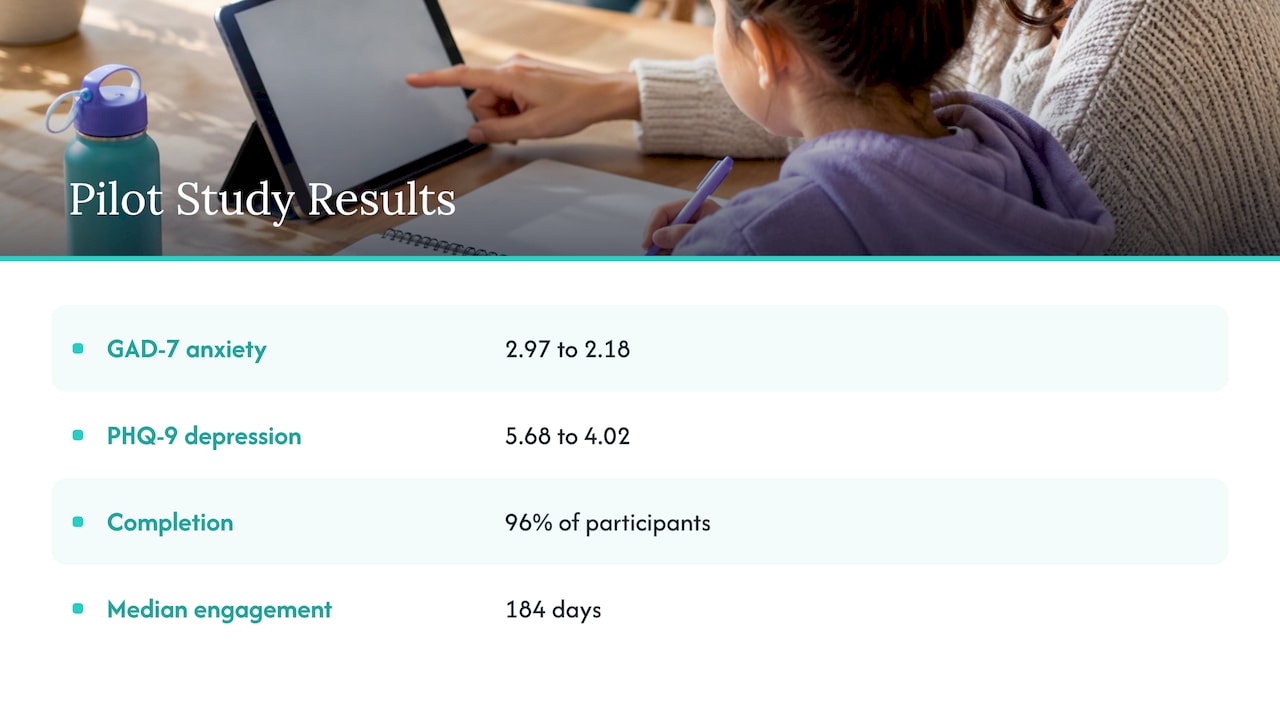
The study also looked at caregivers. Their perception of being the sole support provider dropped significantly (P=.003). That is the family-side effect many readers feel: the check-in is shared, so the weight is shared.
This was a pilot with its own technology, so it shows what regular, structured contact can do rather than what any single product delivers. Still, the pattern is clear: a daily rhythm of contact, with a safety net behind it, is associated with calmer older adults.
US federal guidance points the same way. The LTCFEDS Care Navigator says an active care circle gives seniors enhanced safety through more regular check-ins by phone and visits, along with less loneliness. It adds that family caregivers get respite and less stress and guilt. It even suggests tasks such as verbally checking in on your loved one daily and visually checking in every few days.
What makes a check-in calming instead of stressful
Not every check-in soothes. A call that feels like an inspection can raise anxiety, especially for a parent who values independence. Four qualities separate the calming kind from the intrusive kind.
It is predictable
The same time every day removes decision-making. NICE guidance on older people’s independence and mental wellbeing (the NG32 guideline, UK) recommends that wellbeing activities take place at regular times and in a regular location. The principle carries over to a daily check-in: when it becomes a habit like morning coffee, it stops feeling like an event.
It is low effort
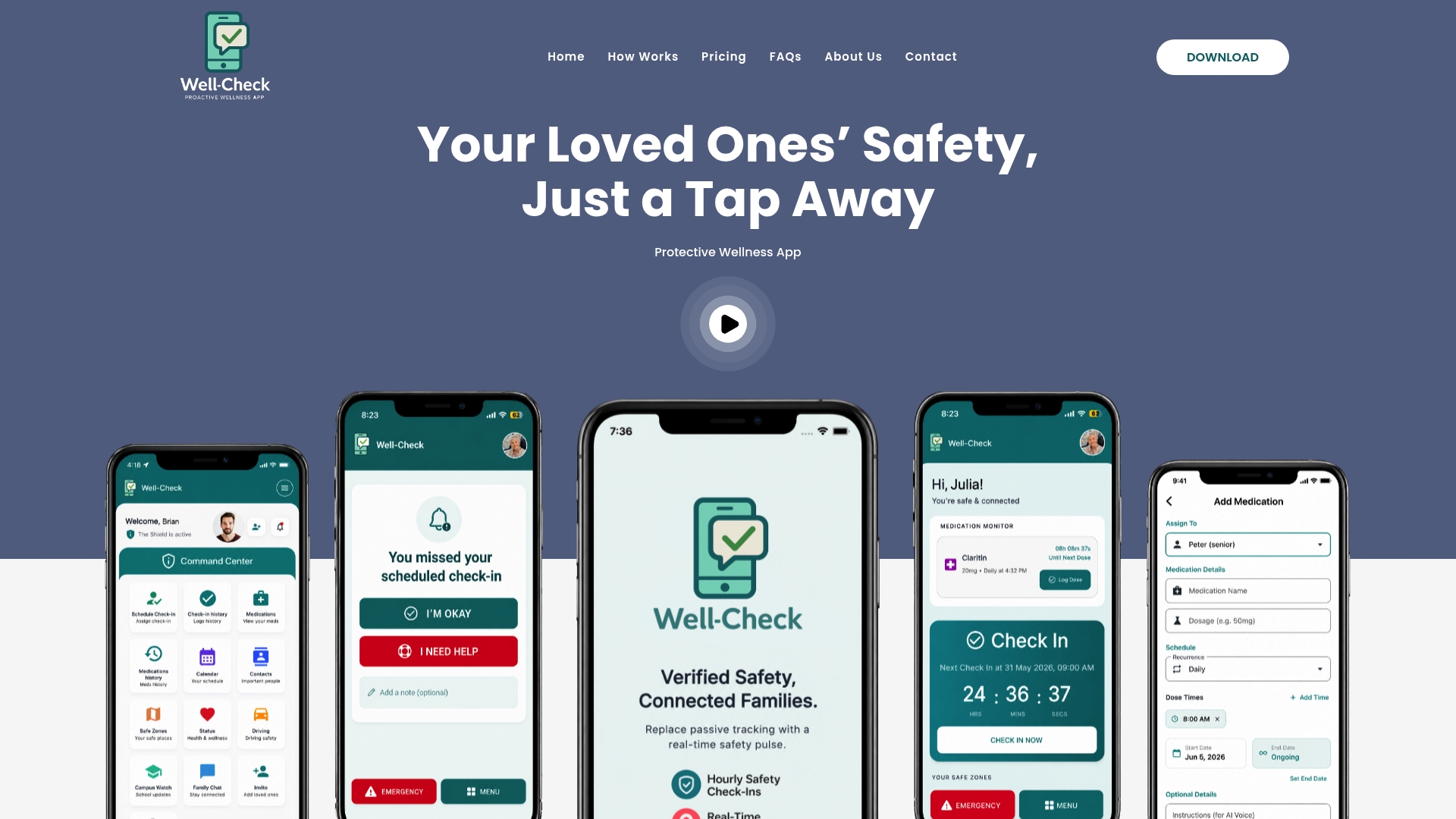
If confirming you’re fine takes a login, a menu and three questions, it will be skipped. A single tap on an “I’m okay” button keeps the habit alive on tired days. Well-Check is built around one-tap check-ins and “I’m okay” confirmations, with a simple interface made for exactly this.
It is agreed, not imposed
The older adult should choose the time, the people who are notified, and what the check-in covers. Dignity is the difference between “my kids care” and “my kids are monitoring me.” Our approach centers on independence without surveillance, with customizable contact networks and minimal intrusion.
It has a known next step
Peace of mind comes less from the check-in itself than from knowing what happens when one is missed. Who gets the alert? Who calls first? Who goes over? Writing that down turns a vague dread into a short procedure. Our guide to the missed check-in protocol walks through it step by step, and the article on welfare checks for families explains when to escalate to a call for outside help.
How to build an anxiety-reducing check-in routine
Here is a routine a family can set up in an afternoon.
- Talk first. Raise it as a way to ease everyone’s mind, not as a verdict on capability. A gentle opener works: say you want to know how they’re going, and that you’re there if they want to talk. Australia’s Medicare Mental Health Check In service suggests exactly this kind of low-pressure start, followed by listening without interrupting and allowing silence.
- Pick a time that fits their day. Late morning suits many people: they are up, but not yet out. Avoid a time that coincides with their naps or medications, unless the check-in is meant to double as a reminder.
- Choose the signal. A daily one-tap confirmation covers most days. Add a real conversation a few times a week so the check-in does not become purely mechanical. Our article on how often to check in on seniors explains how to balance personal contact with automation.
- Build the contact network. List three to five people, with clear roles: first to call, second to call, one to visit. See how to build a verified emergency contact list. One person alone is a single point of failure, and a single worried person tends to become the family’s anxiety center.
- Define a missed check-in. Decide how long the family waits, who calls, and when someone goes over in person. The shared rule prevents both overreaction and dangerous delay.
- Add what helps the day run smoothly. Medication reminders reduce one common source of worry. Our guide to scheduling medication reminders covers how to set them up so they are relied on.
- Review after two weeks. Ask the older adult what feels right. Adjust the time, the contacts, the tone.
For a printable version of these decisions, the senior safety checklist can be completed in one sitting.
Where Well-Check fits into the routine
A routine only calms people if it keeps running without effort. Each step above is a point where good intentions tend to fade: someone forgets to call, someone forgets a pill, someone isn’t sure whether silence means anything.
Well-Check handles the repetitive parts. The older adult confirms they’re okay with a tap. If a check-in is missed, the app alerts the emergency contacts, so the family doesn’t have to keep watching the clock. You can build an emergency contact network of the people you trust, use advanced scheduling to match the daily rhythm, and rely on unlimited check-ins. Medication reminders sit in the same app. Where a family chooses it, GPS tracking and smart caregiver analysis add context for the people who are responsible for support. Our guide on GPS tracking and consent covers how to agree on it openly.
The design goal is simple: the person living alone keeps their independence and dignity, and the family gets a reliable signal instead of constant worry.
Check-ins for the worrier: managing your own anxiety
Families are often so focused on the parent that they forget their own stress. The UK Department for Work and Pensions’ prototype practical guide for carers (an England government prototype, not official advice) tells carers to check in with themselves too. Its suggestions are quick fixes such as a ten-minute break, a walk or a call to a friend, and sharing care with family, friends and neighbors. It stresses that this isn’t selfish and helps everyone stay healthy.
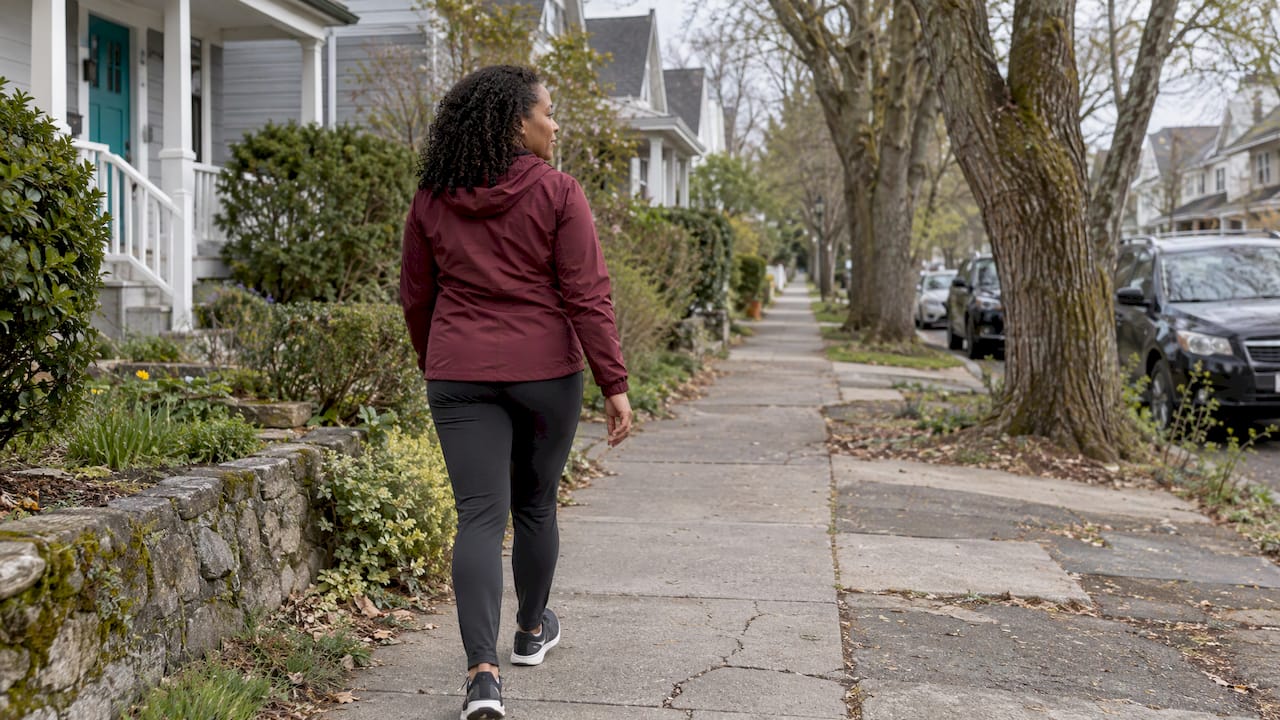
When the daily signal is automated, you free up headspace for that. You no longer need to keep a mental tab open all day.
A 60-second check-in for the moment worry spikes
If the worry rises anyway, a short mindful check-in can steady you. UMass Memorial Health describes three steps:
- Scan your body from toes to head and notice sensations and thoughts without getting caught up in them.
- Focus on the physical sensations of breathing to anchor yourself in the present.
- Expand your awareness to your whole body and your surroundings.
It takes about a minute and can be done at a desk or in a parked car. For more ways to turn this into a habit, a mindfulness checklist for building habits that stick offers practical techniques for moving attention from worry to the present.
When a check-in is not enough
Check-ins ease everyday worry. They do not replace care when anxiety is more than everyday. Signs it may be time to help someone seek professional support, as listed by the Medicare Mental Health Check In service in Australia, include struggling to cope day to day, withdrawing from people or activities, persistent low mood or anxiety, expressing hopelessness, sudden changes in behavior, or mentioning thoughts of self-harm. A kind way to raise it is to say you think talking to a doctor could really help, and to offer to go along.
Age UK’s healthy living guide (England, 2026) says that if someone has felt out of sorts for a few weeks or more, they may be experiencing depression and should speak to their doctor. It adds that getting support sooner means feeling better sooner. To prepare for that conversation, this piece on communicating mental health needs to a provider can help someone describe what they are feeling.
In the United States, the National Alliance on Mental Illness crisis guide (2025) advises:
- If there is no immediate danger, call a mental health professional.
- If emergency intervention is needed but there are no weapons, serious injuries or violence, call or text 988, the Suicide & Crisis Lifeline, available 24/7.
- If the situation is dangerous, call 911, and ask for officers trained in crisis intervention.
For a missed check-in that may be a physical emergency rather than an emotional one, follow the steps in our welfare check guide.
A word from us
We built Well-Check around a simple belief: safety should not cost anyone their dignity. Most of the anxiety around an older parent living alone comes from not knowing, and not knowing is fixable without hovering.
That is why the app is designed for simplicity. One tap says “I’m okay.” A missed check-in alerts the emergency contacts the person chose. Medication reminders, advanced scheduling and unlimited check-ins keep the rhythm steady, and GPS tracking and smart caregiver analysis give families more context when they want it.
A good check-in routine should feel like a shared habit, not a surveillance system. When the older adult sets the terms and the family shares the load across a contact network, both sides get what they actually wanted: independence for one, peace of mind for the other.
Brian
Start with one tap a day
If you want the routine described above without the daily juggling, Well-Check offers two plans: Essential at $5.99 per month and Complete at $7.99 per month. Both are built around the daily check-in, and you can compare them on the pricing page.
If you are choosing for a parent, our older adult check-in app page shows how the app supports independence, and the onboarding tests for senior isolation solutions help you set it up well from day one.
FAQ
Can daily check-ins really reduce anxiety?
The evidence is encouraging. In a 2025 pilot study of 100 older adults in South Korea, a program that included daily check-ins was followed by a significant drop in anxiety and depression scores over six months. Families in the study’s caregiver group also felt less like the sole source of support.
Will my parent feel monitored or patronized?
Not if they choose the time, the contacts and the format. Present it as a shared habit that spares everyone from guessing. A one-tap confirmation asks very little of them, and it keeps the conversation about independence rather than supervision.
How often should we check in?
A daily signal gives the steadiest peace of mind, with a few real conversations each week for connection. Federal care circle guidance suggests verbal check-ins daily and visual check-ins every few days. Our check-in frequency guide helps you decide where automation fits.
What if my parent misses a check-in?
A single miss is usually a forgotten tap, not an emergency. Agree in advance who calls first, how long to wait, and when someone goes in person. The missed check-in protocol lays out those steps, and a dangerous situation calls for 911.
What if the anxiety does not go away?
Persistent anxiety, withdrawal or hopelessness deserves a conversation with a doctor or mental health professional. In the US, you can call or text 988 at any hour for crisis support. Check-ins are a supportive habit, not a treatment.
Sources
- National Alzheimer’s and Dementia Resource Center: Promising Programs and Services for People Living Alone
- JMIR Aging: Voice-Based Remote Care Program for Vulnerable Older Adults
- LTCFEDS Care Navigator: Building Your Care Circle
- NICE NG32: Older people, independence and mental wellbeing
- Medicare Mental Health Check In: How to support someone you care about
- UK DWP: Supporting loved ones with health or care needs (prototype guide)
- UMass Memorial Health: A Mindful Check-in
- Age UK: Healthy living guide
- NAMI: Navigating a Mental Health Crisis (2025)
- Mindfulness Checklist: Build Habits That Stick
- How to Communicate Mental Health Needs to Your Provider

[…] Anxiety Relief From Check-Ins: A Calmer Routine for Families […]