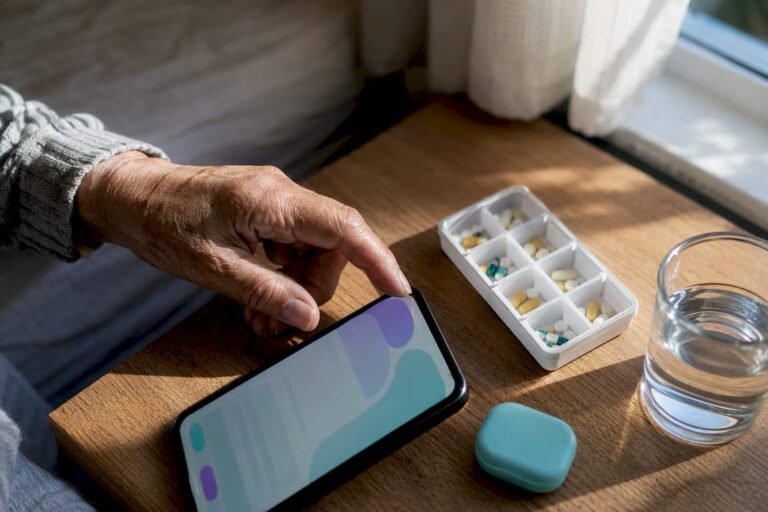

A medication interaction happens when something changes the way a medicine works in your body. That something can be another medicine, a supplement, a food or drink, or a health condition you have. The risk grows with the number of medicines you take, and people 65 and older take more medicines than any other age group. The best protection is a current written list of everything taken, one pharmacist or doctor who reviews it, and taking each medicine as directed every day. That last part is where a daily routine, with reminders and a family member who knows when a day goes wrong, makes a real difference. Well-Check sends medication reminders and alerts your emergency contacts when a check-in is missed.
TL;DR
- An interaction can make a medicine work too weakly, too strongly, or cause new side effects. Medicines, supplements, foods, alcohol and conditions can all be involved.
- Older adults are at higher risk because the body handles medicines differently with age, and because they often take several at once (this is called polypharmacy).
- Keep one written list of every prescription, over-the-counter product, vitamin and herbal, and share it with your doctor and pharmacist at every visit.
- Never stop a prescribed medicine on your own. Call your doctor or pharmacist about side effects or worries.
- Reminders and daily check-ins help medicines get taken on schedule, and help family notice when something is off.
Table of Contents
- What a medication interaction is
- Medicines, supplements, foods and alcohol
- Why older adults face more risk
- Warning signs to take seriously
- A routine that lowers the risk
- Where daily check-ins and reminders fit
- Our perspective
- Well-Check plans
- FAQ
- Sources
What a medication interaction is
The U.S. National Library of Medicine defines a drug interaction as a change in how a drug acts when it is taken with certain other drugs, foods or supplements, or when you have certain medical conditions. Examples include aspirin with blood thinners, statins with grapefruit, and aspirin in someone with a stomach ulcer. The result can be a medicine that works less well, works too strongly, or causes side effects.
The FDA’s guidance for older adults sorts interactions into four everyday types:
| Type | What it means | Example from the FDA |
|---|---|---|
| Drug-drug | Two medicines affect each other | Aspirin with a prescription blood thinner such as warfarin |
| Drug-condition | A medicine is a problem because of a health condition | A nasal decongestant in someone with high blood pressure or asthma |
| Drug-food | Food changes how a medicine is absorbed or used | Certain foods affecting absorption or nutrients |
| Drug-alcohol | Alcohol mixed with a medicine | Tiredness and slowed reactions |
Not every interaction is bad. The UK’s NHS Specialist Pharmacy Service notes that some interactions are harmless or even beneficial, and that some medicines can still be used together when the doctor adds monitoring or adjusts a dose. That is why you never decide alone to drop one of two medicines. The prescriber weighs it.
How interactions work, in plain words
Clinicians describe two mechanisms, according to the Merck Manual. In one, a medicine changes how sensitive the body is to another medicine. In the other, a medicine changes how another is absorbed, moved around the body, broken down or cleared out. Either way, the effect is usually a stronger or weaker version of what the drug already does, for a longer or shorter time.
Medicines, supplements, foods and alcohol
Most people think of two prescriptions clashing. In practice, the less obvious items cause surprises.
Supplements and herbals. Cleveland Clinic names St. John’s wort as one of the riskiest supplements: taken with SSRI antidepressants, it can lead to a life-threatening condition called serotonin syndrome. The same page says garlic extracts can cause excess bleeding with warfarin or other blood thinners.
Foods and drinks. The same Cleveland Clinic article explains that a sudden jump in vitamin K intake can stop warfarin from working properly and raise the risk of clots. It adds that dairy can interact with levothyroxine, bisphosphonates and some antibiotics. Australia’s NPS explains that grapefruit affects an enzyme that breaks down many medicines, so more medicine can enter the body and act too strongly.

If you take a bone-strengthening medicine, it is worth knowing what bisphosphonate side effects look like and when to call your prescriber.
Alcohol. The FDA notes that mixing alcohol with some medicines can cause tiredness and slowed reactions. The NPS adds that the effect depends on the medicine, the amount of alcohol, and personal factors, and that women and older people are more likely to be affected.
Over-the-counter products. The FDA’s consumer page gives a simple example: a sedating sleep medicine combined with an antihistamine for allergies can slow reactions and make driving or using machinery dangerous. Cold, allergy, sleep and pain products count as medicines. Put them on the list.
Health conditions. Cleveland Clinic lists conditions that raise drug-condition risk: bladder control problems, diabetes, enlarged prostate, glaucoma, high or low blood pressure, insomnia and stomach ulcers. A new diagnosis is a good moment to ask the pharmacist to recheck everything you take.
Medicines with a narrow margin of safety
The Merck Manual says clinically significant interactions are often predictable, and that they matter most for drugs with a narrow margin of safety. It names digoxin, lithium, theophylline and warfarin among them. The American Family Physician review of interactions in primary care adds that certain antibiotics, including trimethoprim/sulfamethoxazole, metronidazole and fluconazole, are the most likely to significantly change the effect of warfarin. If you or a parent take any of these, mention it every time a new prescription is written, including a short antibiotic course.
Why older adults face more risk
Three things combine.
- The body changes. The FDA says age-related changes create a bigger risk of interactions among older adults. The NPS says older people, and people with chronic illness, may not handle medicines as well.
- More medicines. The National Institute on Aging describes polypharmacy as the use of multiple drugs to treat health conditions, and says it is a growing concern because people 65 and older take more medicines than any other age group. A 2020 review defines it as five or more medicines and links it to higher risk of hospital admissions, falls and early death.
- More prescribers. Several specialists may each prescribe sensibly, yet nobody sees the whole picture unless the list is shared.
The College of Family Physicians of Canada states that the number of medicines prescribed to older adults is the leading factor behind adverse drug reactions that lead to hospitalization. The NPS notes interactions are most likely to cause trouble when you start a medicine, stop one or change a dose. Those are the moments to watch most closely.
The fall connection
The CDC’s STEADI program links medication review directly to fall prevention. Its Safe Medication Review Framework tells clinicians to screen for medicines that may raise fall risk, assess the person’s goals and side effects, build a plan to stop, switch or reduce doses where possible, and educate the patient and caregiver. If a parent seems dizzy, drowsy or unsteady, a medication review belongs in the conversation with their doctor.
Warning signs to take seriously
The NIA says side effects range from minor, such as headache or dry mouth, to life-threatening, such as severe bleeding or liver and kidney damage. Some appear when you start a medicine and fade with time, others continue. Signs worth noting include new drowsiness, confusion, dizziness, unusual bruising or bleeding, stomach pain, or a change in how someone usually acts after any medicine change.
What to do:
- Call the prescriber or pharmacist right away with the details, including when the symptom began and what changed.
- Do not stop the medicine yourself. The NIA and FDA both say to talk with your health care provider first.
- Write symptoms down so you can report them accurately.
- For severe symptoms, such as severe bleeding, trouble breathing, fainting or sudden confusion, call 911.
A routine that lowers the risk
The advice from the FDA, NIA and primary care researchers is consistent. Here is how it becomes a weekly habit.
Step 1: Keep one complete list
The FDA advises keeping a written list of your health conditions and your medicines, and telling your care team about all medicines, supplements, vitamins, herbals and topical products. For each item, write the name, dose, reason for taking it and any special instructions. Keep a copy in your wallet or phone, and one with a family member. For a practical guide to organizing this at home, see this walkthrough on managing medication at home.
Step 2: Use one pharmacy where you can
A single pharmacy can see everything you fill in one place. Ask the pharmacist to review your full list, including over-the-counter products, whenever something is added. The FDA also suggests asking for the package insert, which lists potential interactions.
Step 3: Ask the right questions at each new prescription
The NIA suggests asking whether the new medicine could cause problems with the others you take, and whether it is safe to stop it abruptly. Also ask whether each regular medicine is still working and still needed. Reviews like this are how doctors reduce unnecessary medicines. A 2020 deprescribing review notes that stopping some symptom-relief drugs should be trialed rather than treated as final, and that slow tapering matters for some medicines. That is a decision for the prescriber, never for you alone.
Step 4: Take medicines exactly as labeled
The NIA says never to take a bigger dose thinking it will help more, since that could be dangerous or deadly. It suggests tying doses to meals, using calendars, weekly pill boxes or reminder apps, taking medicine in the light rather than the dark, being honest about alcohol and tobacco, and never sharing medicines prescribed to someone else.
Step 5: Bring someone along
The NIA also recommends bringing a friend or relative to appointments. The College of Family Physicians of Canada says clinicians should discuss quality of life and personal values and use shared decision-making. A second set of ears helps you remember what was said, and makes it easier to speak up if a medicine is no longer useful or wanted.
Step 6: Know the checklists clinicians use
The American Geriatrics Society’s 2023 Beers Criteria is a list of potentially inappropriate medications for adults 65 and older. It is meant to support, not replace, decisions between you and your clinician. You can ask your doctor whether any of your medicines appear on it.
Where daily check-ins and reminders fit
A correct medication list only helps if the medicines are taken as planned, and if someone notices when a day goes sideways. A missed dose, a doubled dose, or a morning when a parent does not respond can all matter. This is the part of the routine that happens between appointments.
Our guides on medication adherence strategies at home and setting medication reminders show how to build reminders around real routines. If a check-in is missed, our missed check-in protocol explains what to do step by step. Building a verified emergency contact list means the right people hear about it quickly.
Our perspective
Medication safety is mostly ordinary habits done every day, and ordinary habits are what break when someone lives alone. A list sits in a drawer. A reminder gets ignored. A family finds out about a rough week days later.
That is why we built Well-Check around dignity and simplicity. A one-tap “I’m okay” confirms the day started well, medication reminders keep doses on schedule, and if a check-in is missed, the emergency contacts your loved one chose are alerted. It does not turn a parent into a patient under watch. It gives them independence, and gives you a way to know that the day is on track.
We do not replace the pharmacist or the doctor who reviews the list. We make the daily part, the part that happens at home, easier to keep steady.
Brian
Well-Check plans
Well-Check offers daily check-ins, medication reminders, missed check-in alerts to your emergency contacts, a customizable contact network and GPS tracking. The Essential plan is $5.99 per month and the Complete plan is $7.99 per month. You can compare them on the pricing page.
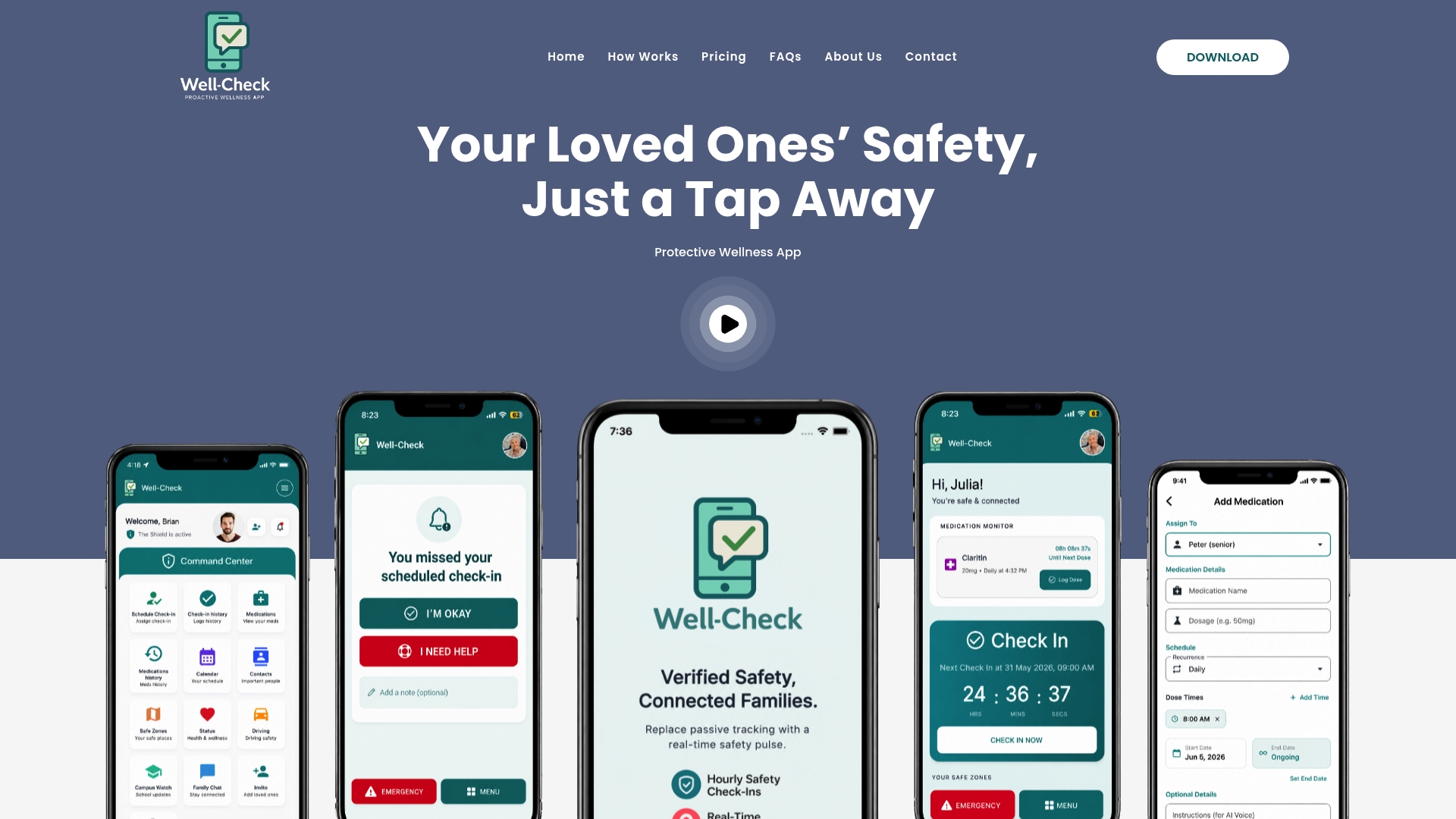
If you are setting this up for a parent, start with the reminders for the medicines that matter most, then add the contacts who should hear if a check-in is missed.
FAQ
Which two drugs cannot be taken together?
There is no single pair. Common examples from health authorities include aspirin with a prescription blood thinner such as warfarin, and St. John’s wort with SSRI antidepressants. Many combinations are used safely with monitoring, so ask your pharmacist to check your own full list rather than guessing.
What is polypharmacy, and is it always a problem?
Polypharmacy means using multiple medicines to treat health conditions, often defined as five or more. Many people need every one of them. The concern is that more medicines raise the chance of side effects and interactions, so each should be reviewed regularly with your doctor.
Do supplements and foods really matter?
Yes. Supplements such as St. John’s wort and garlic extracts, foods such as grapefruit, vitamin K-rich greens and dairy, and alcohol can change how certain medicines work. Include them when you tell your doctor and pharmacist what you take.
What should I do if I think a medicine is causing a problem?
Call your doctor or pharmacist right away and describe the symptoms. Do not stop a prescribed medicine on your own. For severe symptoms such as serious bleeding, trouble breathing or fainting, call 911.
Sources
- Drug Reactions, MedlinePlus
- As You Age: You and Your Medicines, FDA
- Drug Interactions: What You Should Know, FDA
- Taking Medicines Safely as You Age, National Institute on Aging
- Understanding drug interactions, NHS Specialist Pharmacy Service
- Drug Interactions, Merck Manual
- Drug Interactions: What You Should Know, Cleveland Clinic
- Clinically Relevant Drug-Drug Interactions in Primary Care, American Family Physician
- Considerations for optimal prescribing in older adults, Canadian Family Physician
- Deprescribing in older people, 2020 review
- Safe Medication Review Framework, CDC STEADI
- AGS 2023 updated Beers Criteria