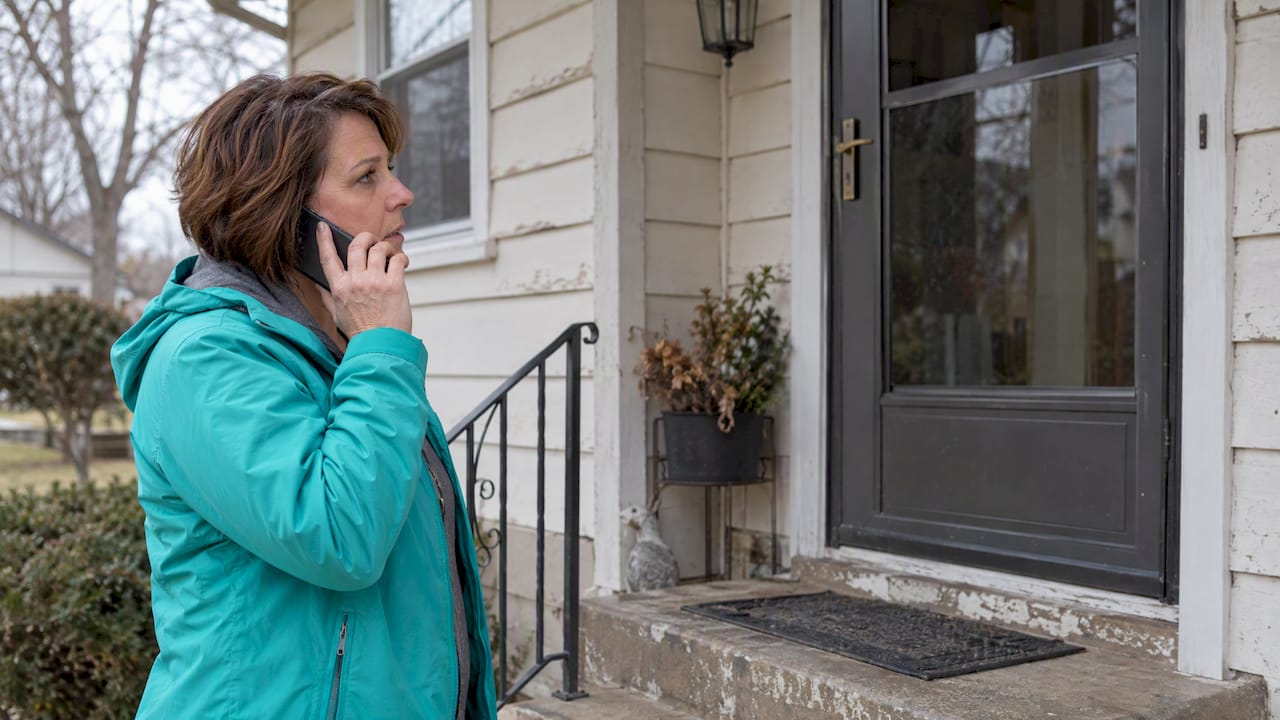
Call 911 the moment you believe someone is unconscious, struggling to breathe, or has expressed intent to harm themselves right now. For situations that feel urgent but not life-threatening, such as a prolonged unexplained absence from someone who is vulnerable, call your local non-emergency line and ask for a welfare check. Stay near your phone after you call since dispatch may need more details.
TL;DR:
- After one missed evening check in from someone usually reliable, wait a few hours and try other contact methods; escalate if the silence continues.
- Give dispatch the person’s full name, exact address, last contact, relevant medications or conditions, and the specific observations prompting concern; these details guide response.
- Mention mental health history or recent suicidal statements; dispatch may route the call to a specialized crisis team rather than standard patrol.
- Officers usually try knocking and calling first; forced entry depends on facts at the scene and an objective basis to believe someone needs immediate aid.
Table of Contents
- What Is a Welfare Check and Who Responds?
- When Should You Request a Welfare Check?
- What to Say When You Call for a Welfare Check
- What Officers Can and Cannot Do Legally
- What Happens During and After a Welfare Check
- How Well-Check Supports Routine Monitoring
- Privacy and Confidentiality When You Request a Check
- Family Members vs. Neighbors: Does It Change the Response?
- When a Welfare Check Isn’t the Right Tool
- Preparing an Older Adult for the Idea of a Welfare Check
- Choosing Action Over Doubt
- Let Well-Check Ease the Waiting Between Visits
- FAQ
- Sources
What Is a Welfare Check and Who Responds?
A welfare check, sometimes called a wellness check, is an in-person visit by responders to confirm that a specific person is safe. It is not a phone call or a wait-and-see measure. Someone physically goes to the location, makes contact, and assesses the situation on the spot.
Who shows up depends on the agency and the details you provide when you call. Local police typically handle most requests, but other responders step in depending on context according to UC Davis Police, which lists common reasons for a check and notes that specialized teams exist for certain situations:
- Municipal or county police officers for general welfare requests
- Campus or university public-safety officers when the person is a student or lives on campus
- Mobile crisis or co-responder teams when mental health concerns are part of the picture
The goal is always the same: confirm the person is physically safe and connect them to medical or mental-health help if they need it.
When Should You Request a Welfare Check?
Not every worry calls for the same response. Sorting your concern into one of three tiers helps you act at the right speed.
- Call 911 immediately if you believe someone has lost consciousness, is having severe trouble breathing, or has expressed a clear, current intent to hurt themselves. These fall under recognized emergency care criteria that call for immediate transport rather than a routine check.
- Call your non-emergency line for an in-person check today if someone has gone silent far longer than their normal habits suggest, has missed critical medications they depend on, or shows a sudden, visible change in behavior that worries people close to them.
- Monitor with a short watch-period if the concern is a single missed evening check-in from someone who is usually reliable but has had a one-off lapse before. Give it a few hours and try other contact methods first, then escalate if the silence continues.
If someone has expressed suicidal thoughts, immediate help is available through the 988 Suicide & Crisis Lifeline alongside a 911 call when danger appears imminent.
The clearest decision rule is this: if you have objective, concerning facts, such as a visible pill bottle, a note, an open door, an unusual smell, or a car in the driveway with no answer at the house, act sooner rather than later. Specific, articulable facts are exactly what move a request from “wait and see” to “send someone now.”
What to Say When You Call for a Welfare Check
Who you call depends on urgency. Dial 911 for immediate danger. For everything else, use your local non-emergency number, or campus safety or a mobile crisis line if the person is a student or already connected to behavioral health services.
Dispatchers rely on specific facts to figure out how urgent your request is and who should respond according to Sacramento Police Department policy on conducting welfare checks. Have this ready before you dial:
- The person’s full name and exact address, including apartment or unit number
- A physical description and any vehicle details if relevant
- When you last had contact and how (phone, text, in person)
- Known medications, medical conditions, or disabilities
- The specific facts prompting your concern, stated plainly
- Your name, relationship to the person, and a callback number
Mentioning a mental-health history or recent suicidal statements is not oversharing. It can shift the response from a standard patrol visit to a specialized crisis or co-responder team better equipped for the situation, a distinction UC Davis Police also notes in describing how agencies route these calls.
Pro Tip: Keep a running note on your phone with the person’s address, medications, and emergency contacts so you can read facts to dispatch instead of trying to recall them under stress.
What Officers Can and Cannot Do Legally
Officers generally need either consent or a warrant to enter someone’s home, but welfare checks often involve an exception. Under the emergency aid doctrine, officers may enter without a warrant when they have an objective, reasonable basis to believe someone inside needs immediate help, a standard described in the IACP model policy on welfare checks.
A few things are worth understanding before you call:
- Officers typically attempt non-forced contact first: knocking, calling out, checking windows, and trying to reach the person by phone.
- The decision to force entry rests on the totality of facts known at the scene, not on a caller’s request alone.
- Your job is to supply the objective facts you know. Let responding officers apply their own training and policy to decide on entry.
Asking dispatch to “break the door down” will not speed things up; preparing with a comprehensive home discharge equipment checklist can help caregivers coordinate medical support effectively. Giving them a clear, factual picture will.
What Happens During and After a Welfare Check
Once officers arrive, the process usually follows a predictable pattern:
- They attempt phone contact, knock, and announce themselves
- They look for visible signs of medical distress through windows or open doors
- They call EMS immediately if they see anything suggesting a medical emergency
Three outcomes are most common: the person is found safe, the person is found in distress and transported for care, or officers get no response and document the visit for follow-up, sometimes leaving a notice or referral for other services. Agencies vary in how quickly they call back, so if you have not heard anything after a reasonable window, calling the non-emergency line back for an update is appropriate.
How Well-Check Supports Routine Monitoring
Daily check-ins, missed-check alerts, medication reminders, an emergency contact network, and GPS fallback give families a running picture of someone’s safety without a daily phone call. When a single check-in is missed but recent activity looks normal, that pattern often means a routine follow-up call is enough, not a dispatch request.
Acute signs, such as a missed check-in paired with unusual silence everywhere else or a known medical emergency, still call for an in-person welfare check. In that case, a time-stamped missed check-in or last-active timestamp from the Well-Check app gives dispatch an objective, specific fact rather than a vague “I have a bad feeling.”
Privacy and Confidentiality When You Request a Check
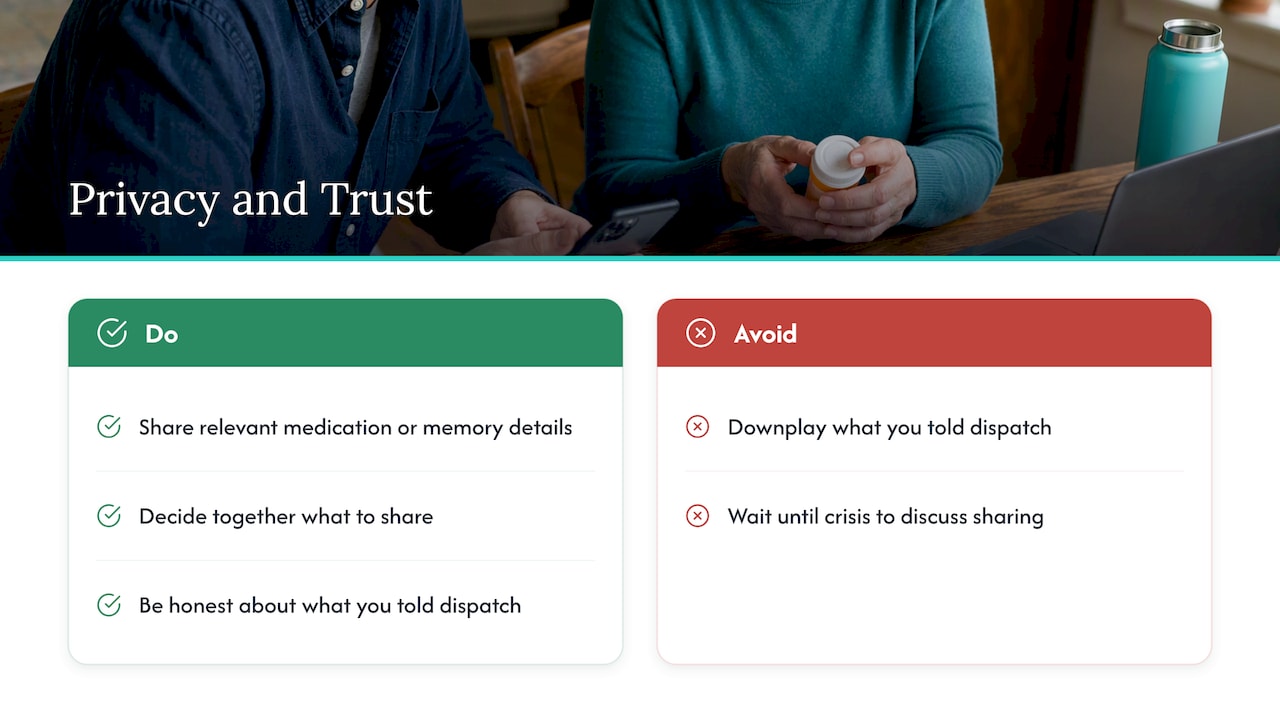
Calling for a welfare check means sharing personal details, including medical history, living situation, and your relationship to the person, with dispatch and responding officers. That information is used to assess risk and decide who responds, not shared publicly, though it may become part of a police record depending on local policy.
If you are worried about overstepping, remember that the purpose of a welfare check is safety, not surveillance. Giving dispatch a medication list or a note about memory issues is relevant information, not a breach of someone’s dignity. Where privacy concerns come up most is in ongoing monitoring arrangements rather than a single emergency call. Families using daily check-in tools benefit from deciding together, when possible, what information is shared and with whom, which is a different conversation worth having before a crisis rather than during one, as outlined in a caregivers’ privacy guide for senior monitoring apps.
If the person being checked on later asks what was shared, being honest about exactly what you told dispatch, and why, tends to preserve trust better than downplaying the call.
Family Members vs. Neighbors: Does It Change the Response?
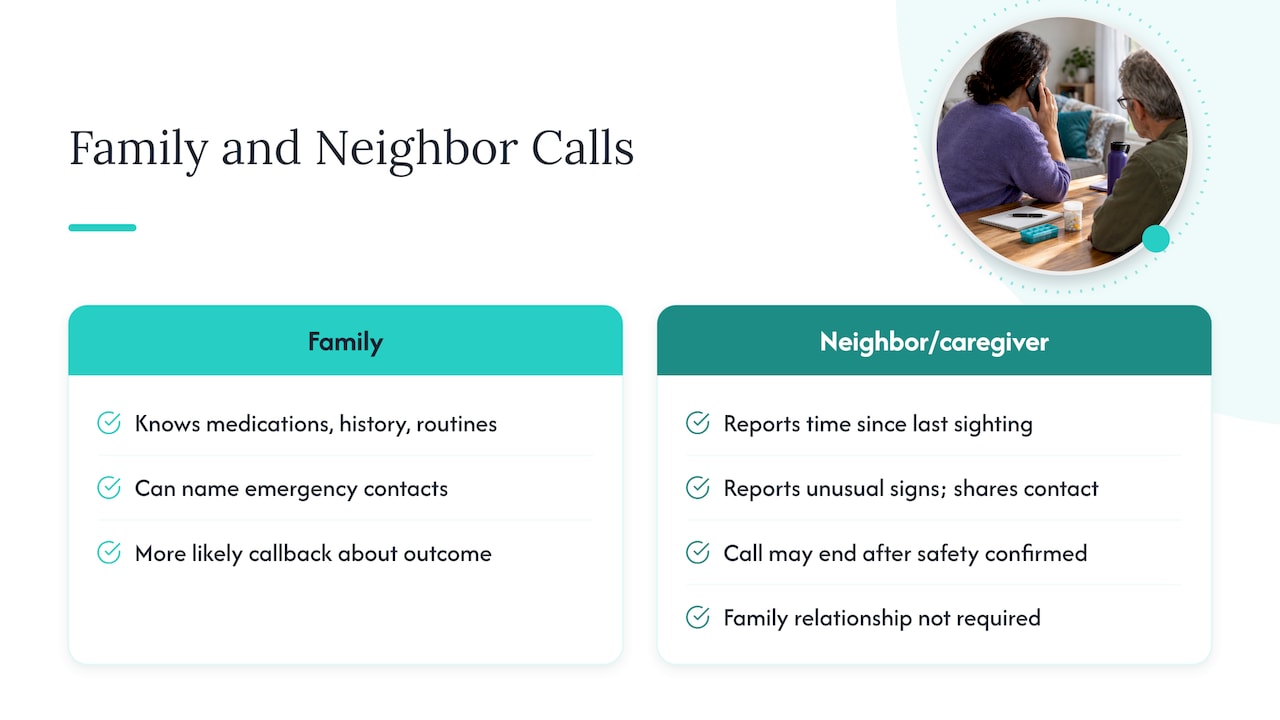
Anyone can request a welfare check, but the information a caller has access to often shapes how the request unfolds. A family member usually knows medications, medical history, daily routines, and other emergency contacts, which gives dispatch a fuller picture and can speed up an appropriate response.
A concerned neighbor or caregiver without that background can still request a check using what they do know: how long it has been since they saw the person, anything unusual observed (mail piling up, lights on for days, a pet left outside), and their own contact information. Dispatch does not require a family relationship to act. What matters is specific, observable facts, not the caller’s relationship to the person.
Where the difference shows up most is in follow-up. Agencies are more likely to call back a family member with details about the outcome, since they often need to coordinate next steps like transport or care. A neighbor’s call may simply end once officers confirm the person is safe, without further contact.
When a Welfare Check Isn’t the Right Tool
Not every worry needs a dispatch call. If the concern is ongoing loneliness, mild confusion, or a pattern of missed calls without any acute red flags, other resources often fit better:
- A primary care provider or care manager who already knows the person’s health history
- Local Area Agency on Aging or senior services programs for welfare checks that are social rather than emergency in nature
- A trusted neighbor or building manager who can do an informal in-person check
- Daily check-in tools that catch missed contact early, before it becomes a crisis
Choosing the right tool at the right moment matters more than defaulting to 911 for every concern, and it keeps emergency resources available for situations that truly need them.
Preparing an Older Adult for the Idea of a Welfare Check
Bringing up welfare checks before one ever happens tends to reduce anxiety dramatically. Framing it as a safety net rather than surveillance matters: explain that a check only happens if contact is lost unexpectedly, not as a judgment on their independence.
A few things help this conversation land well:
- Explain the specific trigger (a missed check-in, no answer for an unusual length of time) rather than leaving it vague
- Let them help choose who gets contacted first and what information is shared
- Walk through what an actual visit looks like, including that officers knock and identify themselves
Having this conversation once, calmly, tends to prevent confusion or fear later if a check ever does happen, as suggested in a guide to starting a safety plan with an older adult.
Choosing Action Over Doubt
I’d rather someone call and find everything is fine than hesitate while something is genuinely wrong. Write down what you noticed, the time, and what felt off, then make the call. Agencies would rather field a good-faith request that turns out to be nothing than never hear from a worried caller at all.
— Brian
Let Well-Check Ease the Waiting Between Visits
We built Well-Check so families are not left guessing between emergencies: daily check-ins, missed-check alerts, medication reminders, and an emergency contact network give you a clear, current picture of how someone is doing. When something does look off, that same timestamped data becomes useful evidence for a dispatch call.
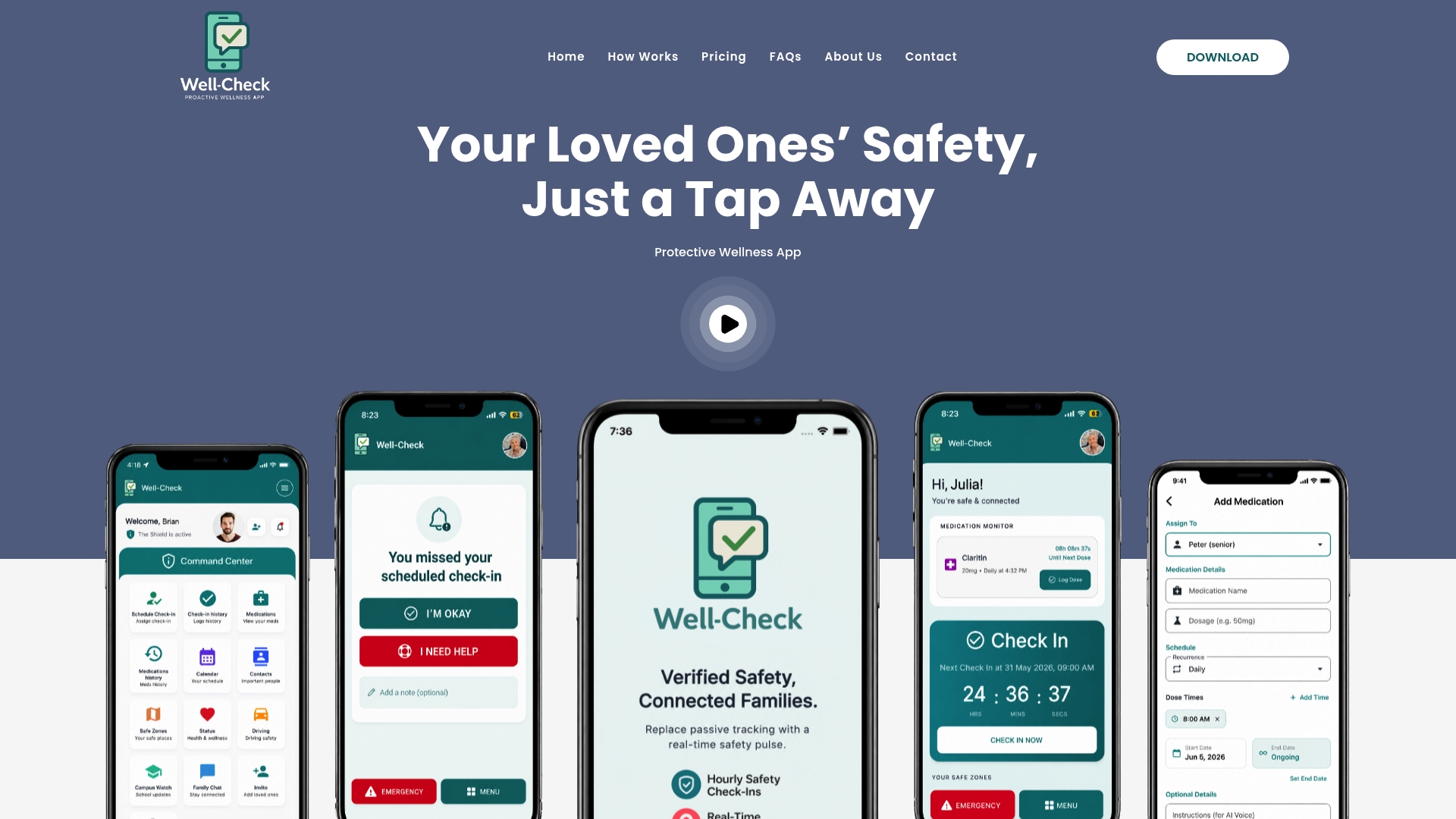
We offer monthly subscription plans with different feature sets; current details are available on our pricing page.
This article is general information, not a substitute for advice from a qualified doctor. Consult a qualified healthcare professional about your own circumstances before acting on anything here.
FAQ
When should I call and request a welfare check on someone?
Call for a welfare check when you have specific, concerning facts, such as an unusually long silence from someone who is normally reliable, missed medications, or a clear change in behavior. For life-threatening signs like unconsciousness or expressed suicidal intent, call 911 immediately rather than a non-emergency line.
What happens after you call for a welfare check?
An officer or responder goes to the location, attempts contact by phone or knocking, and checks for visible signs of distress. Outcomes range from confirming the person is safe to arranging medical transport, or leaving a follow-up notice if no one answers, according to IACP model policy.
Can you get in trouble for calling a wellness check?
Calling in good faith with honest concerns is appropriate and expected; agencies generally prefer to be notified rather than left unaware of a potential problem. Issues only arise around deliberately false reports, which is different from a genuine, mistaken worry.
What are the requirements for a welfare check?
There is no formal eligibility requirement to request one: anyone with a genuine concern can call. What matters most is providing dispatch with specific facts, such as the person’s name, address, last contact, and the exact reason for concern, so they can determine the right response as described in Sacramento Police Department’s welfare check policy.
Sources
- City of Sacramento police policy: Conducting Welfare Checks (GO 582.01)
- UC Davis Police: Welfare check
- IACP model policy: Welfare Checks (2023)
- MedlinePlus: When to seek emergency care