
The strategies with the best evidence behind them are simple ones. Simplify the regimen, tie each dose to something you already do every day, keep one accurate medication list, use reminders that suit the person, and bring in a pharmacist when things get complicated. No single tactic works for everyone. The approach that sticks is the one matched to why doses are being missed in the first place.
This guide is for people who take medicines themselves and for families helping a parent or partner. It covers the reasons people slip, the interventions that research supports, how to format a medication list, how to pick a reminder method, and how to help without taking over.
TL;DR
- Find the reason first. Forgetting is the most common one, but cost, side effects, confusing instructions and complicated schedules matter too.
- Simplify and anchor: fewer daily dose times, and each dose linked to a meal or routine task.
- Keep one dated medication list with every prescription, over-the-counter medicine, vitamin and supplement, and bring it to every appointment.
- Match the reminder (alarm, call, pill organizer, app) to the person’s routine and preferences, and let them stay in charge.
- Ask a pharmacist to review the regimen, especially when there are many medicines.
Table of Contents
- Why people miss doses
- Medication adherence strategies with evidence behind them
- Build a medication list that works
- Choose a reminder method that fits the routine
- Support a parent without taking over
- Our perspective on reminders and dignity
- Put reminders and check-ins in one place
- FAQ
- Sources
Why people miss doses
Missing doses is common, and it is rarely about carelessness alone. The MSD Manual notes that only about half of the people who leave a doctor’s office with a prescription take the medicine as directed, and that forgetfulness is the reason people give most often.
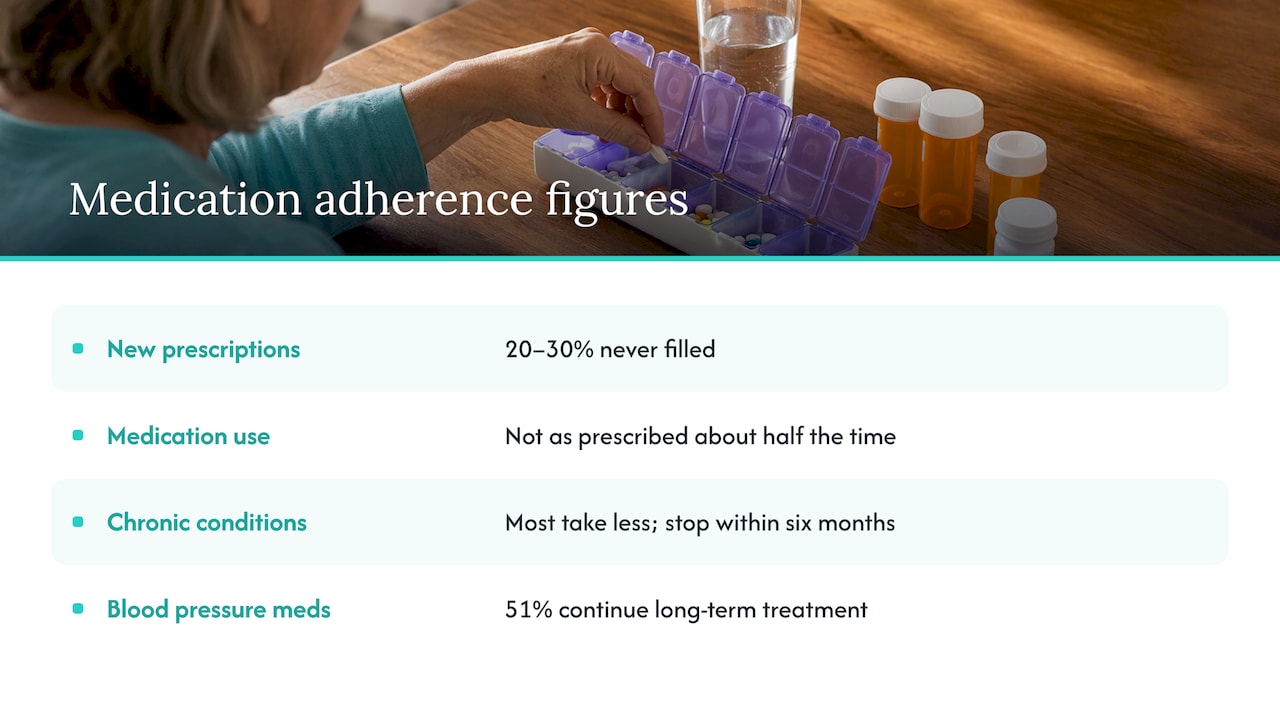
The U.S. FDA puts the scale in numbers: 20 to 30 percent of new prescriptions are never filled, and medication is not taken as prescribed about half the time. For chronic conditions, most patients take less than prescribed or stop within six months. Only 51 percent of people taking blood pressure medicine keep taking it over long-term treatment.
The usual barriers
The MSD Manual lists a wide spread of causes: misunderstanding instructions, side effects, unpleasant taste or smell, restrictions that are inconvenient, complex or frequent dosing, a belief that the medicine is unnecessary or cannot help, fear of dependence, expense, apathy, physical obstacles such as trouble opening bottles, and distrust of health professionals.
The CDC adds practical factors: cost, busy schedules, how easy it is to book appointments, knowing when and how often to take each medicine, and whether refills can be synced and automated. Poor access to care or pharmacies, low trust, and little say in decisions make each of these worse.
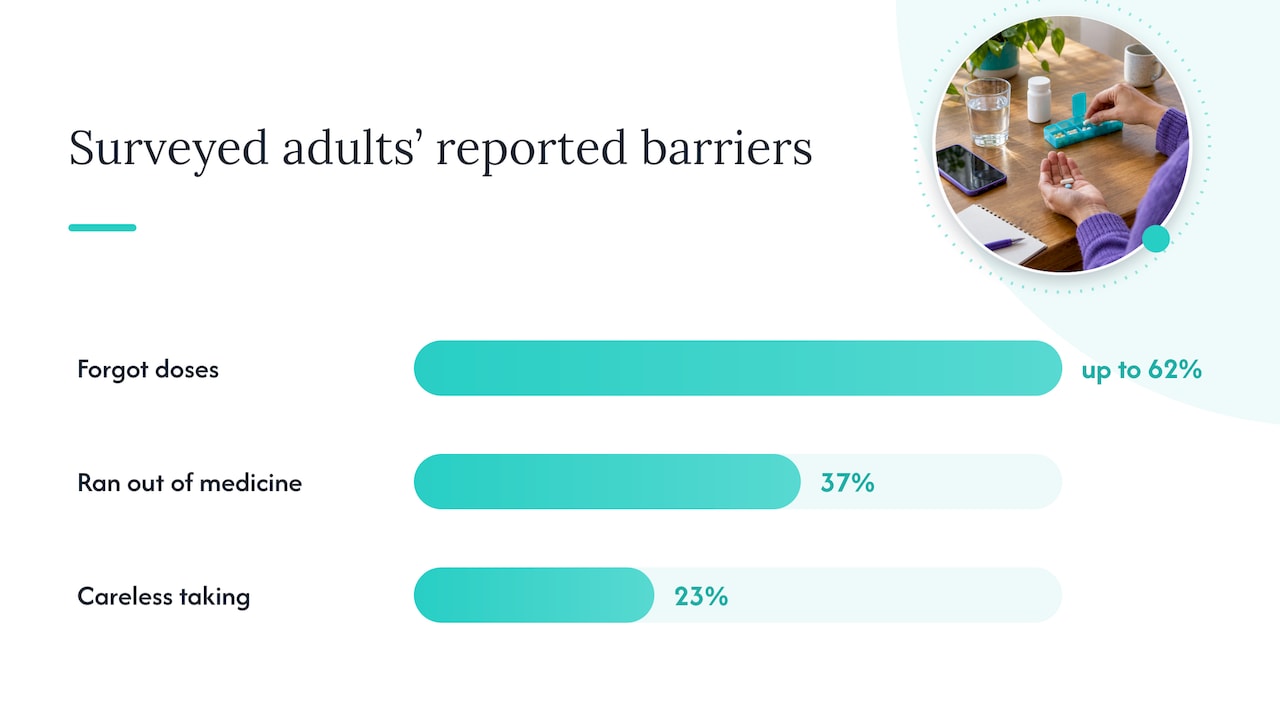
A 2025 review reports that in a survey of about 24,000 U.S. adults with chronic disease, up to 62% said they forgot, 37% ran out of medicine and 23% said they were careless about taking it. The same review points out that fear of side effects is a common reason across many conditions, and that people sometimes blame unrelated aches on their regular medicines.
Older adults face extra complexity
A 2022 meta-analysis found adherence to long-term regimens of roughly 50% in older adults. Among older adults taking four or more medicines a day, 74.1% named regimen complexity as the main barrier, and 68.3% of patients over 60 did not know the names of the medicines they took.
That last number matters for families. If a parent cannot name what they take, they cannot explain it to a new doctor or spot a mix-up. A good medication list fixes part of that.
Medication adherence strategies with evidence behind them
There is no magic bullet. An overview of systematic reviews found that patient education and counseling had positive effects, that interventions delivered by pharmacists and nurses did better than those delivered by general practitioners, and that no single strategy improved adherence in every setting. The World Health Organization’s long-term therapy report reaches a similar view: multiple approaches tailored to the person and the cause of non-adherence have the greatest impact.
A 2025 umbrella review identified eight types of effective patient-directed interventions:
- Using pharmacists to deliver interventions
- Face-to-face interventions
- Combination formulations (fewer pills)
- Reminders and prompting mechanisms
- Feedback on individual adherence rates
- Promoting positive habits
- Strategies that build self-management and positive behaviors
- Using several interventions in parallel
Simplify the regimen
The fewer separate dose times in a day, the fewer chances to miss one. Ask the prescriber or pharmacist whether any medicines can be taken together, switched to once-daily versions, or combined into one tablet. The NHS Specialist Pharmacy Service lists simplifying regimens among practical interventions, alongside tying doses to meals or routine activities and pairing reminders with follow-up from a health professional.
Anchor each dose to a habit
A dose that rides on something you already do, such as breakfast, brushing teeth or the evening news, is far harder to forget than one tied to a clock time alone. If you are building a rhythm for the whole day, our guide to daily routine anchors for seniors shows how to pick routines that hold.
Use one pharmacy and synchronize refills
The CDC describes pharmacy-based approaches that include refill synchronization, the appointment-based model (one pick-up date for all medicines), medication therapy management, tailored counseling, pillboxes, medication cards, calendars, enhanced follow-up and text messaging. Running out is one of the top reasons for gaps, so a single monthly pick-up date removes a lot of risk.
Ask about cost and side effects out loud
If a medicine is expensive or causes side effects, people often quietly skip it. Tell the prescriber before stopping. Do not change or stop a dose on your own, especially for blood pressure, diabetes, heart or seizure medicines. A pharmacist can often suggest lower-cost options or timing changes that ease side effects.
Build a medication list that works
The query people type is often “medication list format”, and the answer is: plain, complete and dated. The Department of Veterans Affairs caregiver guide says a list should include current prescription and over-the-counter medicines, vitamins and supplements, with doses, schedules and what each one is for, and should be updated whenever a provider confirms a change.
A simple layout
| Medicine (brand and generic) | Dose and form | When | What it is for | Prescriber | Notes |
|---|---|---|---|---|---|
| Example: lisinopril | 10 mg tablet | Morning, with breakfast | Blood pressure | Dr. Smith | Refill on the 5th |
| Example: vitamin D | 1,000 IU capsule | Morning, with breakfast | Supplement | Self | Started June |
The example rows are illustrations of the format, not advice about any dose. Add allergies and known reactions at the top, plus the pharmacy phone number and the date you last verified the list.
Keep one master copy
One family member can keep the current copy, date it each time it is verified, and bring it to appointments. Keep a photo on every family phone and a paper copy where a paramedic would look. Our caregiver emergency binder guide covers what else belongs next to it.
After a hospital stay
Treat discharge as a reset. The same template guidance says to rebuild the chart from the discharge medication list and update the master list from the discharge paperwork. The stakes are real: the WHO reports that more than 40% of medication errors are believed to come from inadequate reconciliation when patients are admitted, transferred or discharged. Ask the pharmacist or nurse to compare the old list and the new one line by line.
Choose a reminder method that fits the routine
The NHS guidance lists these options: visible placement, activity-linked cues, charts, alarms, calls or texts, apps and automatic dispensers. It suggests choosing by the person’s routine, preference and suitability, not by what looks most advanced.
| Method | Works well when | Watch for |
|---|---|---|
| Pill organizer (weekly or by time of day) | Many pills, steady routine | Needs refilling each week; someone has to check it is right |
| Phone alarm | The person carries a phone | Alarms get silenced and ignored without a habit behind them |
| Habit link (meals, teeth, coffee) | Doses once or twice a day | Breaks on travel days or changed routines |
| Calls or texts from family | Person likes contact | Can feel like nagging if too frequent |
| Automatic dispenser | Complex schedules, memory difficulty | Needs setup and someone to refill |
| App with reminders and confirmations | Comfortable with a smartphone | Choose one simple enough to use daily |
Most people do best with two layers: a habit anchor plus one prompt. An organizer shows whether today’s dose was taken, and an alarm tells you it is time.
Support a parent without taking over
Independence is part of adherence. People take medicines more reliably when they feel it is their decision. NHS guidance for carers advises respecting the person’s confidentiality and their choice about how involved you should be. Practical options include phoning when a dose is due, arranging care-worker visits at dose times, or using an automatic dispenser that beeps and gives access to the right pills. It also suggests asking a pharmacist about dosette boxes and other reminders.
A short conversation plan
- Ask what is hardest: remembering, swallowing, side effects, cost, or not seeing the point.
- Agree on one change at a time, such as moving the evening pills to dinner.
- Decide together who gets told when a dose is missed, and how.
- Set a recurring time to review the list, such as the first Sunday of the month.
- Book a pharmacist review if there are four or more daily medicines.
If the family spreads across several homes, assign roles in advance. Our guide to caregiver roles and responsibilities shows how to divide the work, and the missed check-in protocol explains what to do when someone does not respond.
Tracking and sharing accurate information
Caregivers who track medicines also carry information into appointments. Good records help clinicians decide whether a treatment is failing or just not being taken. Some day programs build this into daily care, and the way medication support in adult day care is organized shows how much a consistent, documented routine can help someone who needs supervision.
Our perspective on reminders and dignity
We built Well-Check around a simple belief: reminders should help someone stay independent, not make them feel watched.
Most missed doses are not defiance. They are a break in routine. That is why we focus on a daily check-in that takes one tap and an “I’m okay” confirmation, with medication reminders sitting alongside it. When the person is the one who confirms, they stay in charge.
For families, the value is knowing sooner. If a check-in is missed, emergency contacts can be alerted, so a quiet morning does not turn into hours of worry. Our smart caregiver analysis is designed to help families focus on what matters instead of reacting to every blip.
We think the best medication routine combines three things: a habit the person already has, a prompt that is easy to answer, and a small circle of people who know what to do if something is off. That is what we designed the app to support.
Brian
To set up reminders step by step, see our guide to scheduling medication reminders that seniors and caregivers can rely on.
Put reminders and check-ins in one place
Well-Check gives older adults a one-tap daily check-in, medication reminders, and missed check-in alerts to a network of emergency contacts you choose. Plans are published at $5.99 per month for Essential and $7.99 per month for Complete. See what each includes on the Well-Check pricing page.
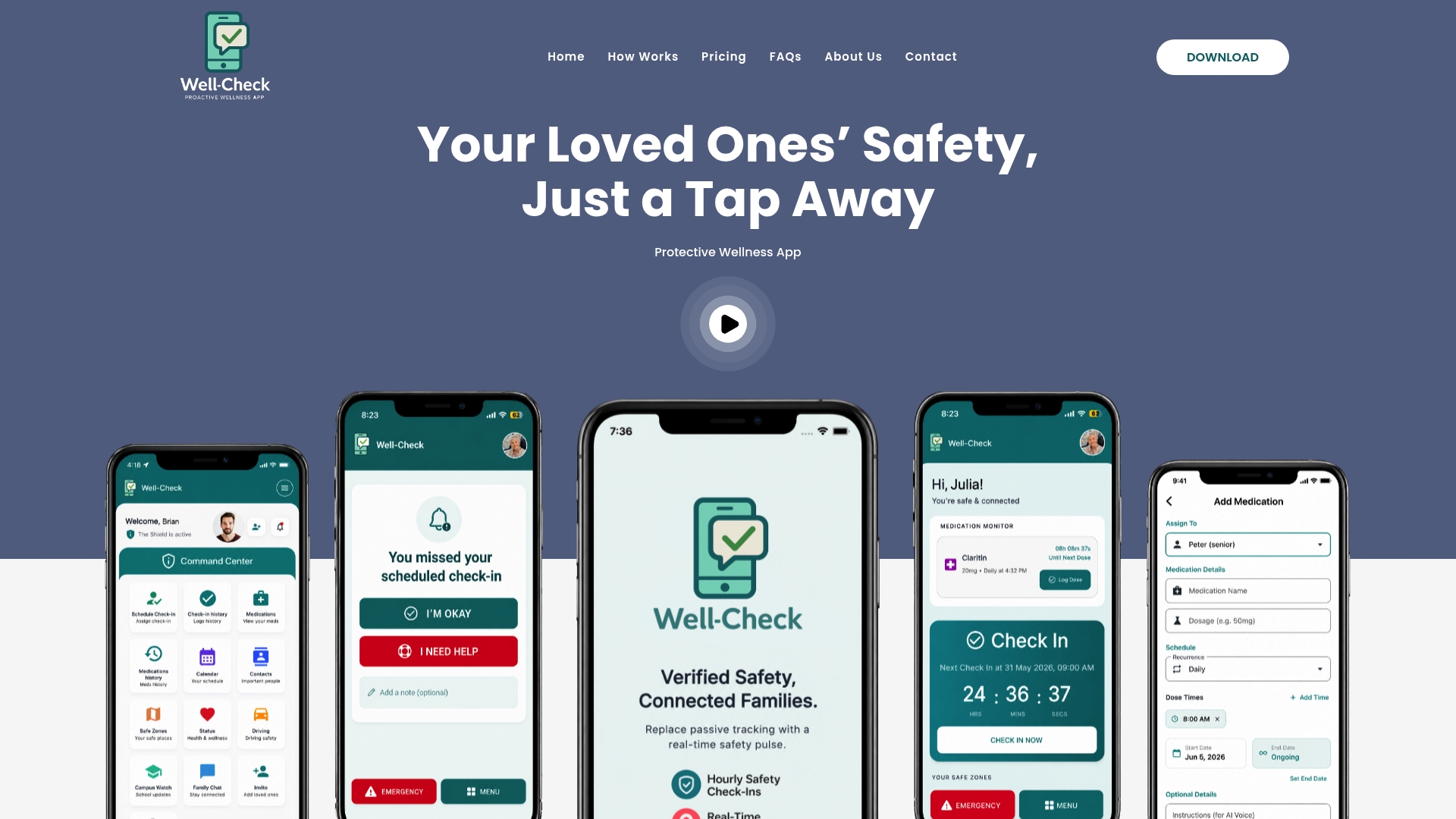
It is built for simplicity and dignity: a parent can confirm they are fine in a second, and the family hears when something changes.
FAQ
What are the best medication adherence strategies for older adults?
Start by simplifying the regimen with the prescriber or pharmacist, then link each dose to a daily habit and add one reminder. Keep an updated medication list and use one pharmacy with synchronized refills. Reviews show that pharmacist-led help and combining several approaches tend to work better than relying on a single tactic.
What should a medication list include?
List every prescription and over-the-counter medicine, vitamin and supplement, with dose, schedule and purpose. Add allergies, the pharmacy and prescriber contacts, and the date you last verified it. Update it when a provider confirms a change and bring it to each appointment.
How do I set medication reminders for a parent without being intrusive?
Ask how involved they want you to be, then pick a method they choose: a call at dose time, an organizer, an alarm or an app. Respect their privacy and decide together who is told about a missed dose. Review the setup regularly and adjust if it feels like nagging.
What are the most common reasons people do not take medicines as prescribed?
Forgetting is cited most often. Others include complicated or frequent dosing, side effects, cost, misunderstanding instructions, running out, and doubts about whether the medicine is needed. Naming the actual reason lets you pick a fix that matches it.
When should I talk to a pharmacist or doctor?
Talk to them before stopping or changing any dose, if side effects bother you, if cost is a problem, or after any hospital stay. A pharmacist review is especially useful when someone takes several medicines a day.
Sources
- Adherence to Medication, MSD Manual Consumer Version
- Why You Need to Take Your Medications as Prescribed, U.S. FDA
- Pharmacy-Based Interventions to Improve Medication Adherence, CDC
- Understanding Treatment Adherence in Chronic Diseases, 2025 review
- Effects of medication adherence interventions for older adults, 2022 meta-analysis
- Medication adherence interventions and outcomes: an overview of systematic reviews
- Adherence to Long-Term Therapies: Evidence for Action, WHO
- Improving medication adherence in the community: an umbrella review
- Reminding to take medicines: supporting adherence, NHS SPS
- Preventing Medication Mishaps, U.S. Department of Veterans Affairs
- Caregiver medication list template for families
- Transitions of Care, WHO
- Medicines: tips for carers, NHS
- Medication support in adult day care




[…] guides on medication adherence strategies at home and setting medication reminders show how to build reminders around real routines. If a check-in is […]