
You can reduce the risk of wandering today by meeting basic needs, securing exits, preparing identification and a response plan, and layering supervised safe walking with technology as a backup. No single measure works alone, so combining them gives the best protection while keeping a recent photo and emergency contacts within reach.
TL;DR:
- Combining home safety measures, routines, identification, and technology creates the most reliable system to prevent wandering effectively.
- Keeping a log of wandering triggers and times helps schedule supervision and reduce risks during peak episodes.
- Using visual barriers, alarms, secure gates, and out-of-sight storage reduces exit cues without trapping or restricting independence unnecessarily.
- Enrolling in Safe Return services, wearing IDs, and maintaining a recent photo significantly shorten search times if someone goes missing.
- Non-drug approaches like environmental adjustments and structured activity outperform medication and are the first-line response to behavioral wandering.
Table of Contents
- Understanding the signs and triggers of wandering
- Making the home safer without restricting independence
- Using routines and activity to ease sundowning pressure
- Identification, safe return services, and the limits of technology
- What to do the moment someone goes missing
- Why non-drug approaches come first and when to call a clinician
- What years of caregiver stories get wrong about wandering
- Legal steps that protect both the person and the caregiver
- What actually keeps someone safe, and what does not
- How Well-Check adds a layer of support to your plan
- Where to learn more and save for your safety plan
- Sources
- FAQ
Understanding the signs and triggers of wandering
Wandering rarely happens without warning. Watch for pacing, repeated attempts to open doors, trying to put on a coat or shoes, or repeatedly asking to “go home” even when already there. These behaviors often signal an unmet need rather than confusion for its own sake, according to the National Institute on Aging.
Common triggers include:
- Hunger, thirst, pain, or the need to use the bathroom
- Overstimulation from noise, crowds, or too many visitors
- Sundowning, the late-afternoon or evening rise in confusion and restlessness
- Unfamiliar surroundings, including a new caregiver, room, or recent move
Keeping a simple log of the time, activity, and mood before each episode can reveal a pattern within a few weeks, letting you schedule supervised activity right before the risk window opens.
Making the home safer without restricting independence
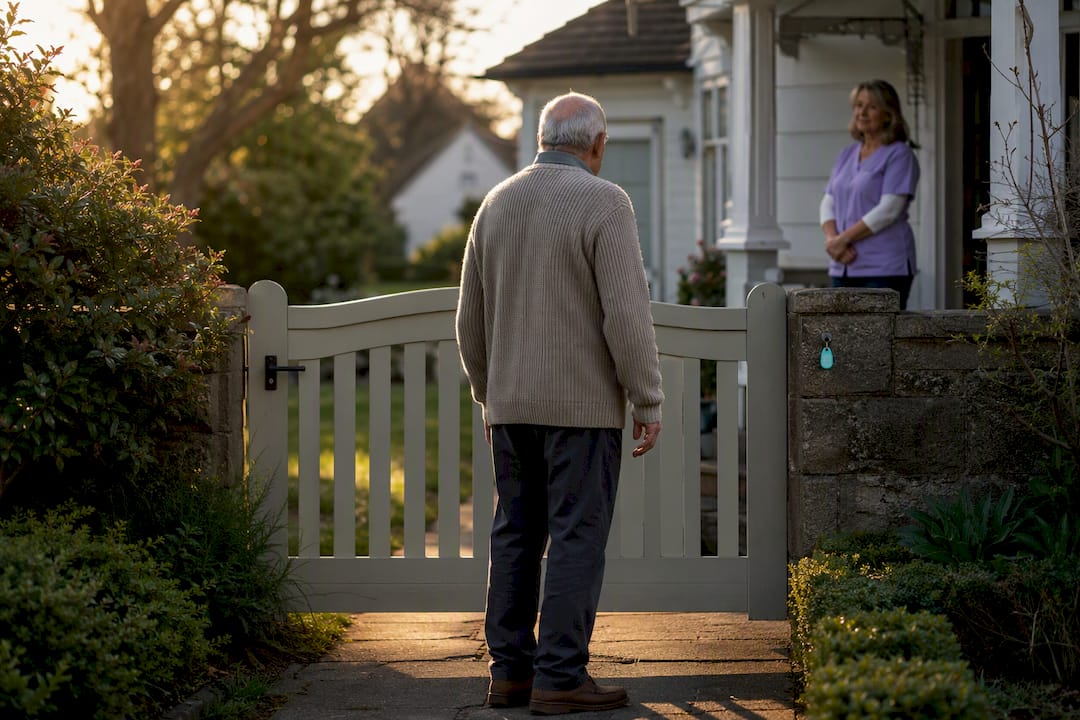
Most wandering starts at the door. The National Institute on Aging recommends keeping departure cues out of sight and using visual or auditory barriers rather than locking a person in without a plan.
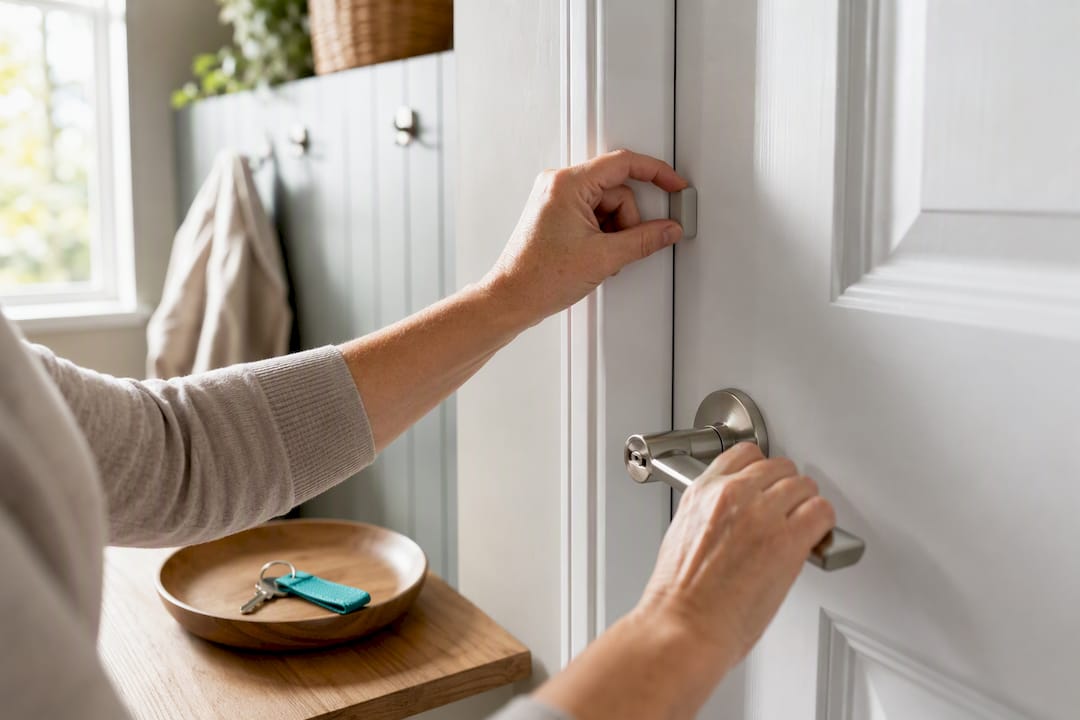
- Install deadbolts above or below eye level, add doorknob covers, or camouflage doors with a curtain or a matching paint color.
- Add chimes or door alarms that alert you when an exterior door opens.
- Use pressure mats near beds or exits to alert a caregiver at night.
- Secure the yard with fencing and locked gates, and check windows for safe opening limits.
- Store keys, coats, shoes, and luggage out of sight to reduce visible cues to leave.
A room-by-room wandering prevention checklist can help you walk through each space methodically.
None of these measures should block an emergency exit or trap someone alone. A caregiver should always have quick access to a spare key, and locked doors or doorknob covers are meant to be used only while supervision is present, not as a substitute for it.
Pro Tip: Test every lock, alarm, and camouflage trick with a family member first, so you know it actually slows someone down without creating a new hazard.
Using routines and activity to ease sundowning pressure
A predictable day reduces the anxiety that often drives wandering. Scheduled toileting, regular meals and snacks, and a quick check for pain or discomfort address many of the unmet needs behind exit-seeking behavior, per NIA guidance on agitation and sundowning.
Supervised walking outdoors, at the same time each day, gives a safe outlet for the urge to move. For people who sundown in the late afternoon or evening, a few adjustments help:
- Get outdoor daylight exposure earlier in the day
- Avoid caffeine or alcohol in the afternoon and evening
- Build a calming, low-stimulation evening routine
- Move demanding activities and appointments to the morning
When purposeless wandering starts, redirecting to a hands-on task such as folding laundry, listening to familiar music, or looking through old photos often works better than trying to stop the movement directly.
Identification, safe return services, and the limits of technology
Every person at risk of wandering should wear a medical ID bracelet and carry a recent photo, and clothing labels with a name and caregiver phone number add another layer, according to the Alzheimer’s Association. Enrolling in a MedicAlert-affiliated Safe Return type service can speed up an official search, though enrollment steps and any fees vary by country and program.
For GPS and locating devices, a few practical habits matter more than the gadget itself:
- Check the battery and charge status daily
- Confirm the device is comfortable enough to be worn consistently
- Assign one family member to monitor alerts so nothing falls through the cracks
- Rehearse the notification steps so everyone knows their role
Six in 10 people living with dementia wander at least once during the disease, according to the Alzheimer’s Association, which is why identification and a return plan matter as much as any lock on the door. Technology supplements supervision; it never replaces it, and a dead battery or a device left at home can undo the whole system.
What to do the moment someone goes missing
Acting fast and in order matters more than acting alone.
- Search nearby familiar places first: past homes, workplaces, places of worship, or favorite walking routes.
- Call 911 immediately if the person is not found within a few minutes; do not wait the traditional 24 hours required for other missing-person cases.
- Give responders a recent photo, a description of worn clothing, medical conditions, and medications.
- Alert neighbors and, if enrolled, activate any Safe Return type service.
- Pull your identification kit: photo, clothing description, medication list, and likely destinations, so you are not searching for information while also searching for a person.
Caregivers should not search alone in unsafe conditions, such as after dark, near water, or during severe weather. Wait for trained responders in those situations and keep a phone line open in case the person is found or calls for help.
Why non-drug approaches come first and when to call a clinician
Environmental changes, structured activity, and psychosocial support are the first-line response to wandering and other behavioral symptoms of dementia, not medication. Research from the University of Michigan’s Institute for Healthcare Policy and Innovation found that non-drug approaches tend to outperform medication for these behaviors.
Antipsychotics and physical restraints carry serious risks, including sedation, falls, and increased mortality in older adults with dementia, and should only be considered after a clinician has ruled out other causes.
Seek a geriatric or behavioral health assessment when:
- Wandering escalates despite home safety changes
- The person shows signs of new pain, illness, or sudden confusion
- Behavior puts the person or others in danger
What years of caregiver stories get wrong about wandering
Layered protection, meaning prevention, identification, technology, and a rehearsed response plan working together, is the only approach that holds up under real conditions. Any single fix, whether a lock or a GPS tracker, eventually fails on its own.
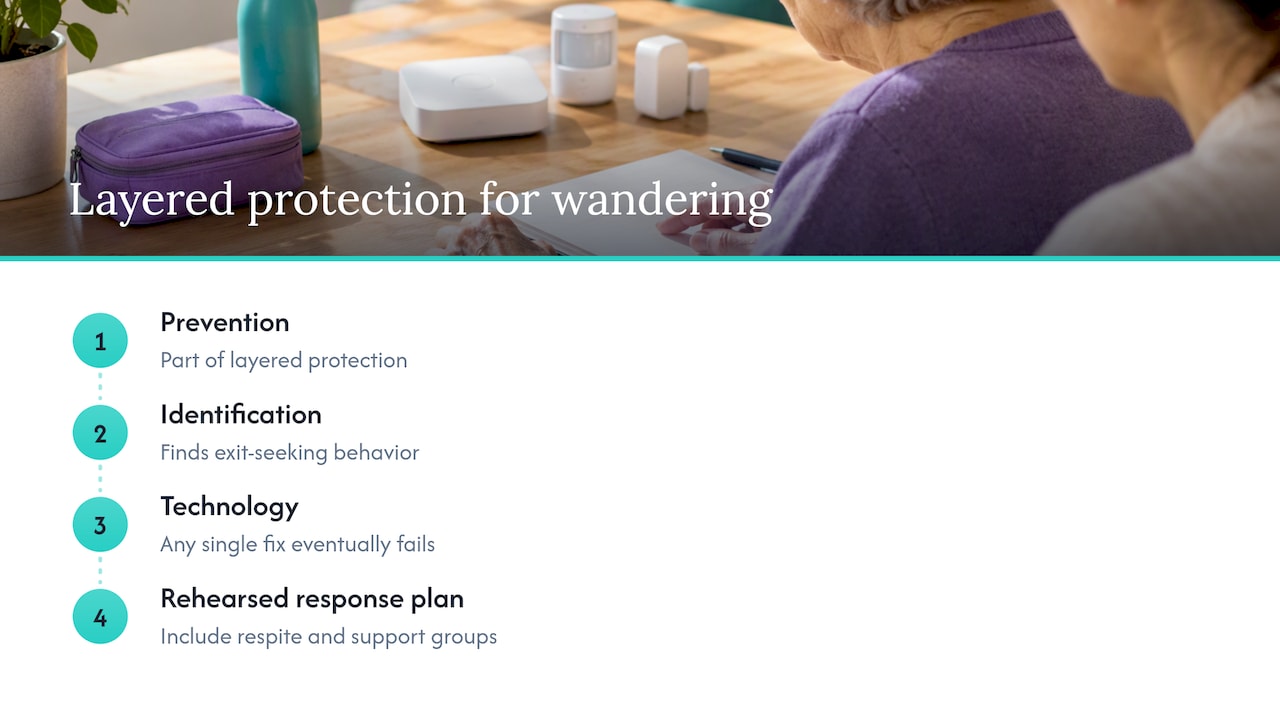
What often gets missed is the toll this takes on the caregiver. Watching someone you love for exit-seeking behavior around the clock is exhausting, and respite care or a local caregiver support group is not a luxury, it is part of a sustainable safety plan.
Legal steps that protect both the person and the caregiver
Wandering prevention involves paperwork as well as door locks. A durable power of attorney, arranged while the person with dementia can still participate in the decision, lets a designated family member make health and safety decisions, including consenting to home modifications or tracking devices, once capacity declines.
Consent for GPS trackers and monitoring apps deserves particular attention. Whenever possible, involve the person in the decision early, while they can still understand and agree to being tracked for their own safety. Once capacity is lost, a healthcare power of attorney or legal guardian typically has the authority to consent on their behalf, though the exact rules depend on the laws where you live. Speaking with an elder law attorney before an incident occurs, rather than during a crisis, gives the family time to put the right documents in place.
It also helps to document safety decisions in writing: which locks were installed, when a tracking device was introduced, and any conversations about consent. This record can matter if a family disagreement arises or if a facility or agency asks how monitoring decisions were made. Keeping copies of the power of attorney, medical information, and a signed consent note for tracking alongside the identification kit means everything a responder or a family member might need is in one place.
What actually keeps someone safe, and what does not
The caregivers who handle wandering best are not the ones with the most gadgets. They are the ones who treat prevention as a system: routines that meet basic needs, a home that removes obvious exit cues, identification that works even if the person cannot speak for themselves, and a rehearsed plan for the worst case.
Where conventional advice falls short is treating a lock or a tracker as the finish line. A pressure mat without a plan for who responds to it is just noise. A GPS device with a dead battery is decoration. The habit worth building first is not a purchase, it is the log of triggers and times that tells you when risk actually rises, because that is what lets every other layer, from supervised walks to door alarms, actually get used at the right moment.
Prioritize the boring stuff: meals, bathroom schedules, daylight, and a written response plan taped inside a kitchen cabinet. The dramatic measures matter less than the routine ones.
— Brian
How Well-Check adds a layer of support to your plan
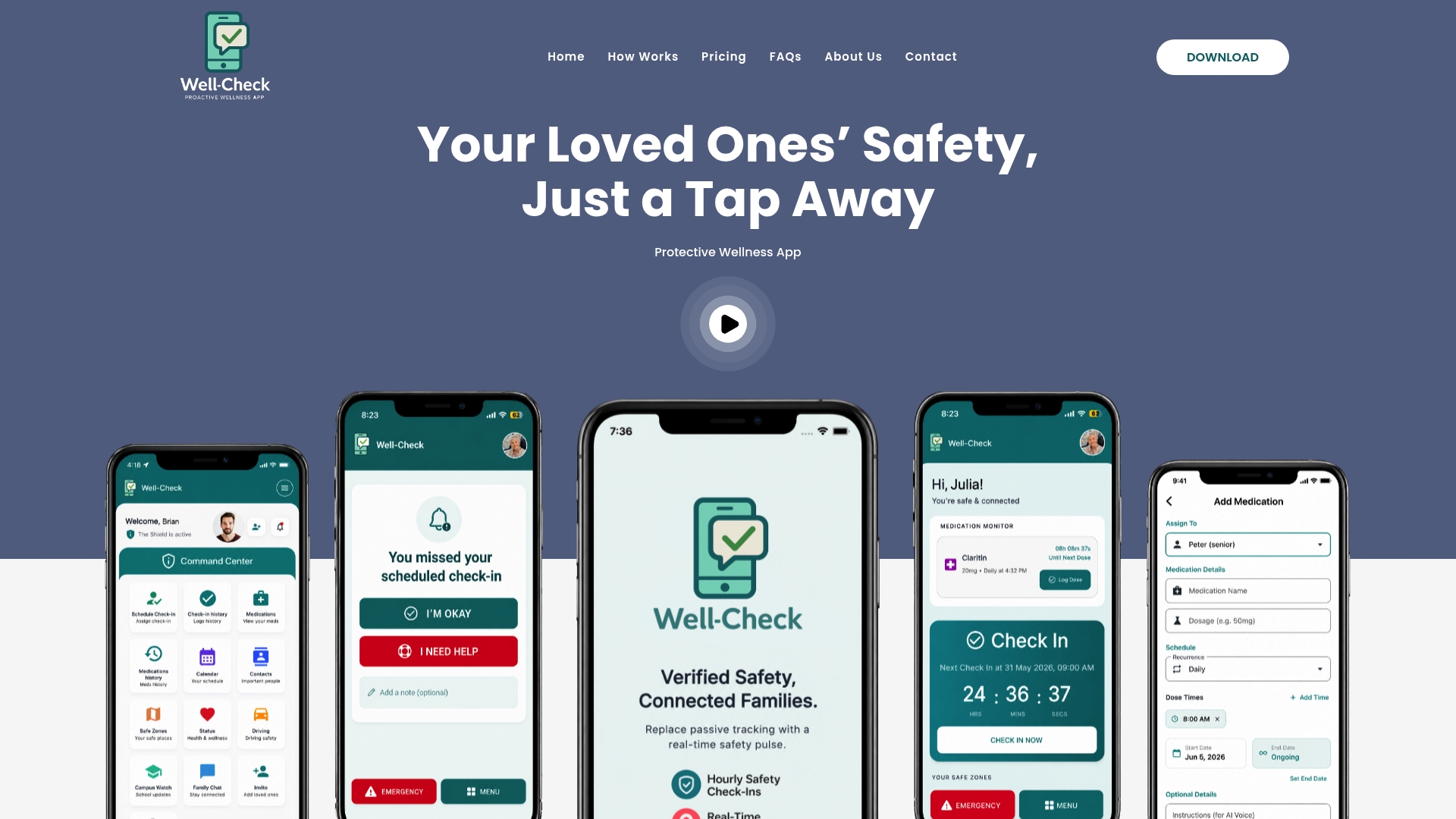
A wandering response plan works best when the people on it are actually reachable and informed, and that is where Well-Check fits into the picture. It will not replace supervision or a secured yard, but it gives your family a shared, current source of information when minutes matter.
- Daily and check-ins let a senior confirm they are okay without a phone call
- Missed check-in alerts notify family members if something seems off
- GPS tracking provides location information alongside your identification kit
- Medication reminders help keep routines steady, which may reduce one common wandering trigger
- An emergency contact network keeps contact information current and ready to share with responders
If you are building out a caregiver safety plan, compare the Essential and Complete plans to see which fits your family’s routine, and see how Well-Check works alongside the steps in this guide.
Where to learn more and save for your safety plan
The National Institute on Aging covers home safety and prevention basics, while its guide to sundowning and agitation explains evening routines. The Alzheimer’s Association’s wandering page details safe return services and identification kits. Save these links alongside your written response plan and bring them to your next clinician visit.
This article is general information, not a substitute for advice from a qualified doctor. Consult a qualified healthcare professional about your own circumstances before acting on anything here.
Sources
FAQ
What is the 90 second rule for dementia?
There is no clinically established rule for dementia in the sources caregivers typically rely on, such as the National Institute on Aging or the Alzheimer’s Association. If you have seen such terms online, treat them as informal advice rather than documented guidelines, and focus instead on the wandering response steps covered above.
How do you keep an elderly person in bed at night?
Bed rails and physical restraints are not routine safety tools and can create new risks such as entrapment or falls. A safer approach pairs a pressure mat or bed alarm with daytime activity, a calming evening routine, and addressing pain or bathroom needs before bedtime, as recommended by the National Institute on Aging.
What vitamin cuts dementia risk by 40%?
No single vitamin is documented to cut dementia risk by that margin. The World Health Organization’s 2026 guidance notes that a substantial portion of dementia risk may be tied to modifiable factors like physical activity, diet, and vascular health at a population level, not to one vitamin or a guarantee for any individual.
What is one habit to avoid dementia?
There is no single habit proven to prevent dementia. Population-level guidance from the World Health Organization points to physical activity, tobacco cessation, limiting harmful alcohol use, and managing vascular risk factors together, rather than any one change on its own.
How can technology help prevent wandering in dementia patients?
GPS devices and check-in apps like Well-Check give caregivers location information and alerts if a routine check-in is missed, which can speed up a response. These tools work best as a supplement to supervision and home safety measures, not as a replacement for either.

[…] Keep Them Safe and Independent: Prevent Wandering in Dementia […]