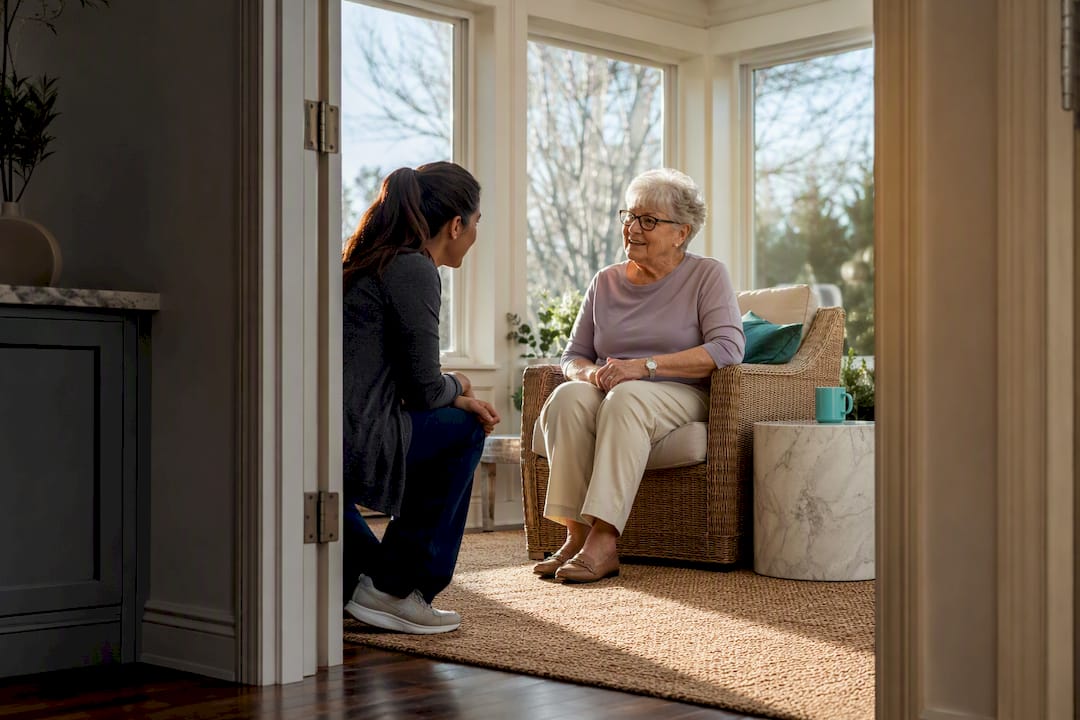
Check on a healthy, independent senior a few times a week; move to daily brief checks once you notice mild memory lapses, balance issues, or a chronic condition acting up; and increase to multiple daily or in-person checks for anyone with dementia, recent hospitalization, or serious mobility loss. The rule that overrides every schedule: match frequency to current health, mobility, and cognition, then increase it immediately after any hospital stay, fall, or new diagnosis. If a check-in is missed and something feels wrong, act right away.
TL;DR:
- Weekly checks are sufficient for healthy seniors, but those with mild concerns should move to daily contact, especially after health changes.
- For high-risk individuals, multiple daily checks, including in-person visits, are necessary, with increased frequency after falls, hospital stays, or diagnoses.
- Using a combination of phone, video calls, apps, and wearables enhances safety and can be tailored based on mobility, cognition, and living situation.
- Missing a check-in with red flag symptoms, such as confusion or fall, requires immediate follow-up or emergency contact escalation.
- Building a shared, flexible schedule and log among caregivers increases adherence and helps identify patterns early without relying solely on memory or gut feeling.
Table of Contents
- What’s the Right Check-In Frequency for Seniors?
- How Do You Decide the Right Check-In Schedule?
- Which Check-In Tools Actually Work?
- What Do You Do When a Check-In Is Missed?
- How Do You Build a Check-In Routine That Actually Sticks?
- Balancing Safety With Independence
- A Practical Way to Handle Daily Check-Ins
- Sources
- FAQ
What’s the Right Check-In Frequency for Seniors?
There’s no single number that fits every family, but there are four baseline schedules that cover most situations.
- Independent and healthy: 2 to 3 check-ins a week, usually a phone call or a quick app confirmation. This is enough to catch a pattern shift without hovering.
- Mild concerns (early memory changes, a chronic condition, living alone after a spouse’s death): a short daily check, even if it’s just a text or a one tap “I’m okay” confirmation.
- Moderate to high needs (dementia, frequent falls, complex medication schedules): multiple checks a day, ideally mixing a morning safety check with an evening call, plus a weekly in-person visit.
- Post hospital discharge or new diagnosis: temporarily bump whatever your normal schedule is up one level for at least two to four weeks while things stabilize.
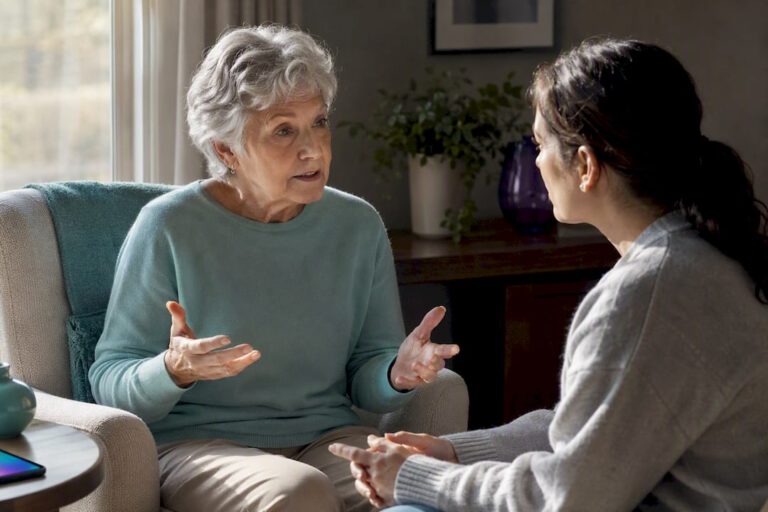
What actually happens during a check matters as much as how often it happens. A quick check might just confirm someone woke up and took their morning pills. A fuller check covers whether the stove is off, whether the home feels too cold or too hot, and whether the person seems like themselves on the phone. Add companionship time separately. Task-only calls rarely address loneliness the way a relaxed conversation does.
Certain events should always push your frequency up temporarily: a hospital discharge, a stretch of extreme heat or cold, a new medication, or any fall in the past 30 days. Seasonal risk is real. Hypothermia can set in with symptoms like shivering, confusion, and slurred speech, and a senior living alone in a poorly heated home during a cold snap needs more frequent contact than the same person in mild weather.
How Do You Decide the Right Check-In Schedule?
Pick a cadence by walking through the same handful of factors every time, not by guessing or defaulting to whatever feels least intrusive.
- Medical stability. Uncontrolled diabetes, heart failure, or recent surgery pushes you toward daily contact.
- Cognitive status. Any diagnosis of dementia or mild cognitive impairment generally means more frequent, more structured checks.
- Mobility and fall risk. A senior who uses a cane or has fallen in the past year needs closer monitoring than one who still walks the dog daily.
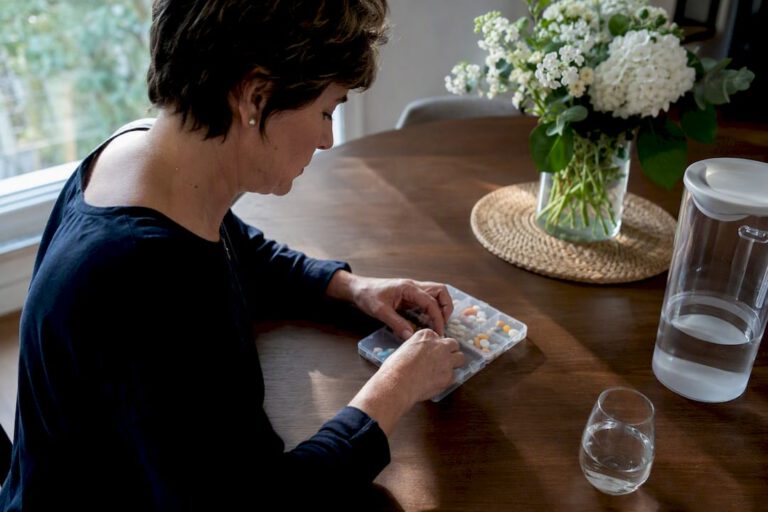
- Medication complexity. Five or more daily medications raises the odds of a missed or doubled dose, which argues for a daily med check.
- Living situation. Someone alone in a house needs more contact than someone in a building with staff or a concierge.
- Social isolation. Loneliness itself is a health risk, separate from physical safety, and deserves its own line item on the schedule.
The evidence on visit frequency and dementia is worth taking seriously. One study of nursing home residents with moderate dementia found that more frequent family visits were linked to fewer behavioral and psychological symptoms, including agitation and mood disturbance. That’s not proof that visits cure dementia symptoms, but it’s a strong signal that contact frequency isn’t just a comfort measure. It’s tied to measurable behavior.
Pro Tip: Write your answer to each factor down once, then revisit it monthly. Families argue about check-in frequency far less when there’s a shared checklist instead of competing gut feelings.
Which Check-In Tools Actually Work?
Different tools solve different problems, and most families end up combining two or three rather than picking one.
- Phone calls are simple and familiar, but a voice alone can hide confusion better than you’d think.
- Video calls let you actually see whether someone looks unwell, and they became a lifeline during the pandemic. Research on nursing home residents found video-call users had noticeably higher contact frequency than those relying on in-person visits alone, largely because video is easier to schedule across distance.
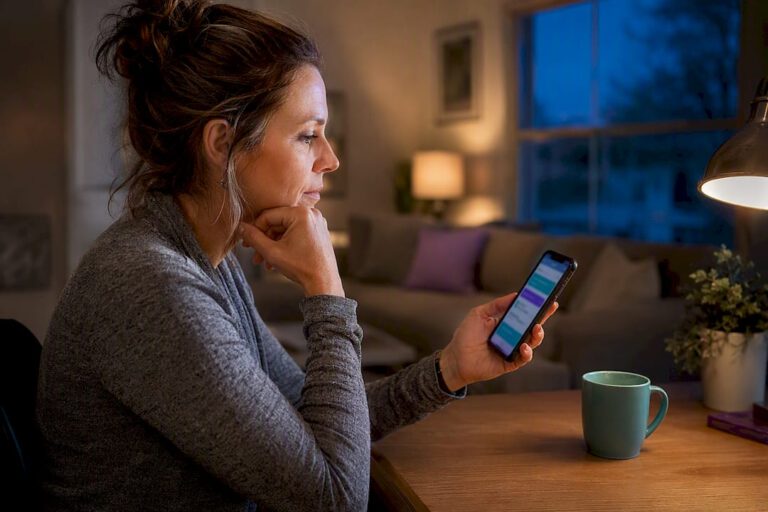
- Automated check-in apps send a daily prompt and alert family if it goes unanswered, which removes the burden of someone having to remember to call every single day.
- Wearables and pendants add fall detection and location tracking, useful for anyone with a fall history or wandering risk.
- In-person visits remain the only way to check on home safety, hygiene, and the state of the refrigerator.
Get consent before installing anything with GPS tracking or automated alerts. Most seniors accept monitoring far more easily when they helped choose it. A workable hybrid plan might look like a daily automated app check, a weekly video call for face time, and an in-person visit once a month. If communication itself is becoming a struggle, a resource like speech therapy support for seniors can help identify whether hearing or speech issues are behind those “off” phone calls.
What Do You Do When a Check-In Is Missed?
Certain signs mean you stop treating a missed check as a scheduling fluke and start treating it as a possible emergency: confusion or slurred speech, missed medication doses, a fall, trouble breathing, or shivering combined with disorientation, which can point to hypothermia.
- Retry contact within 15 to 30 minutes through a second method (call, then text, then app).
- Call your secondary contact list, whoever is next after the primary caregiver.
- Reach a neighbor, building concierge, or nearby friend if no one on the contact list answers.
- Call emergency services if there’s still no response and any red flag was present in the last known contact.
Nearly six in ten long-term care residents in national surveys receive family visits at least weekly, which sets a rough benchmark for how much contact is considered normal and protective. Build your backup contact list before you need it, not during a crisis.
How Do You Build a Check-In Routine That Actually Sticks?
A schedule only works if someone besides you can follow it. Put check-in times on a shared calendar, assign specific days to specific family members, and write down a fallback plan for when the primary person is unreachable.
- Keep a short log after each check: mood, appetite, anything unusual said or noticed.
- Rotate responsibility weekly among siblings or caregivers so no one person burns out.
- Revisit the whole schedule after any hospital discharge, new diagnosis, or mobility change. Don’t wait for the next family gathering to notice something’s shifted.
- Share the log with everyone involved so patterns show up early instead of getting lost in memory.
Pro Tip: A two-line text after each check (“Mom sounded tired but ate breakfast, meds taken”) does more for pattern spotting over three months than anyone’s memory will.
Balancing Safety With Independence
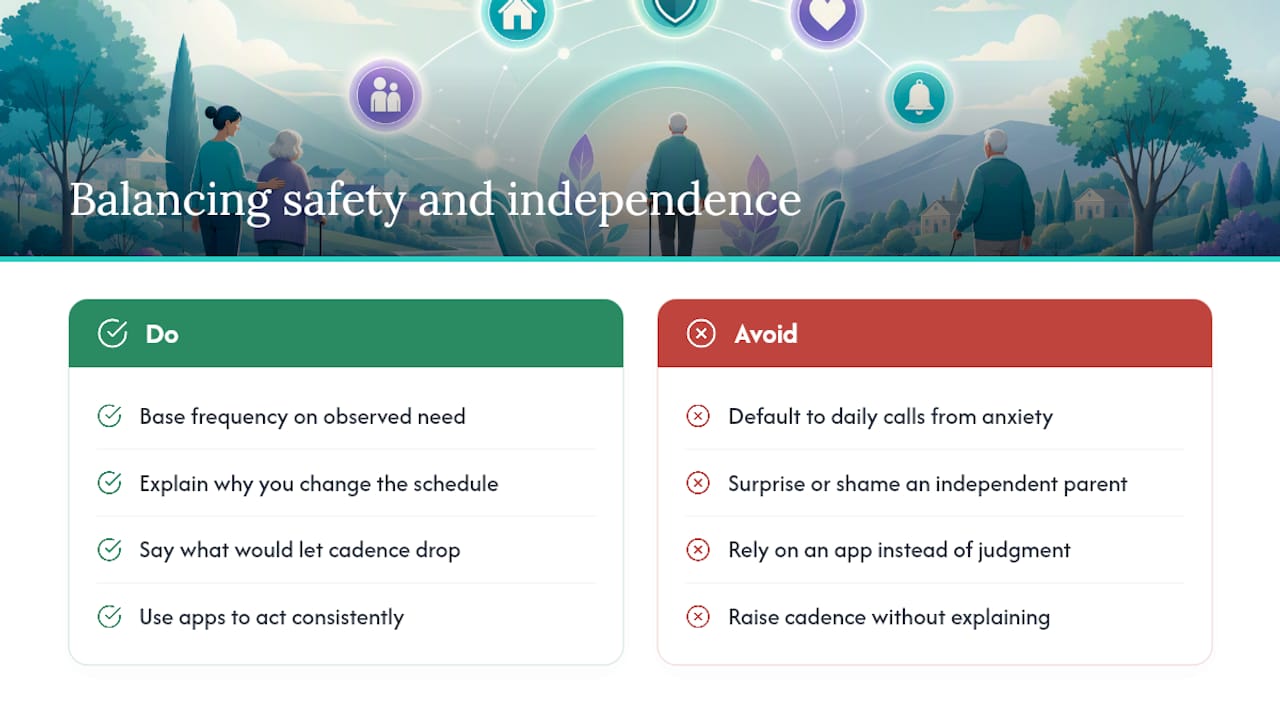
The hardest part of any check-in decision isn’t the schedule. It’s the conversation about why you’re changing it. I’ve seen families default to daily calls out of anxiety, then wonder why a sharp, independent parent starts screening their calls. Frequency should follow need, not fear. When you raise the cadence, say why, and say what would let it come back down.
Data on isolation among the roughly 16 million U.S. seniors living alone shaped how we think about this. The honest answer is that no app replaces judgment. It just makes the judgment easier to act on consistently.
— Brian
A Practical Way to Handle Daily Check-Ins
Most of the schedules above only work long term if someone doesn’t have to remember to run them by hand every day. That’s the gap Well-Check fills: it supports the daily automated check, the missed-check alert to family, medication reminders, and an emergency contact network, all in one app instead of five separate habits you’re hoping everyone keeps up.
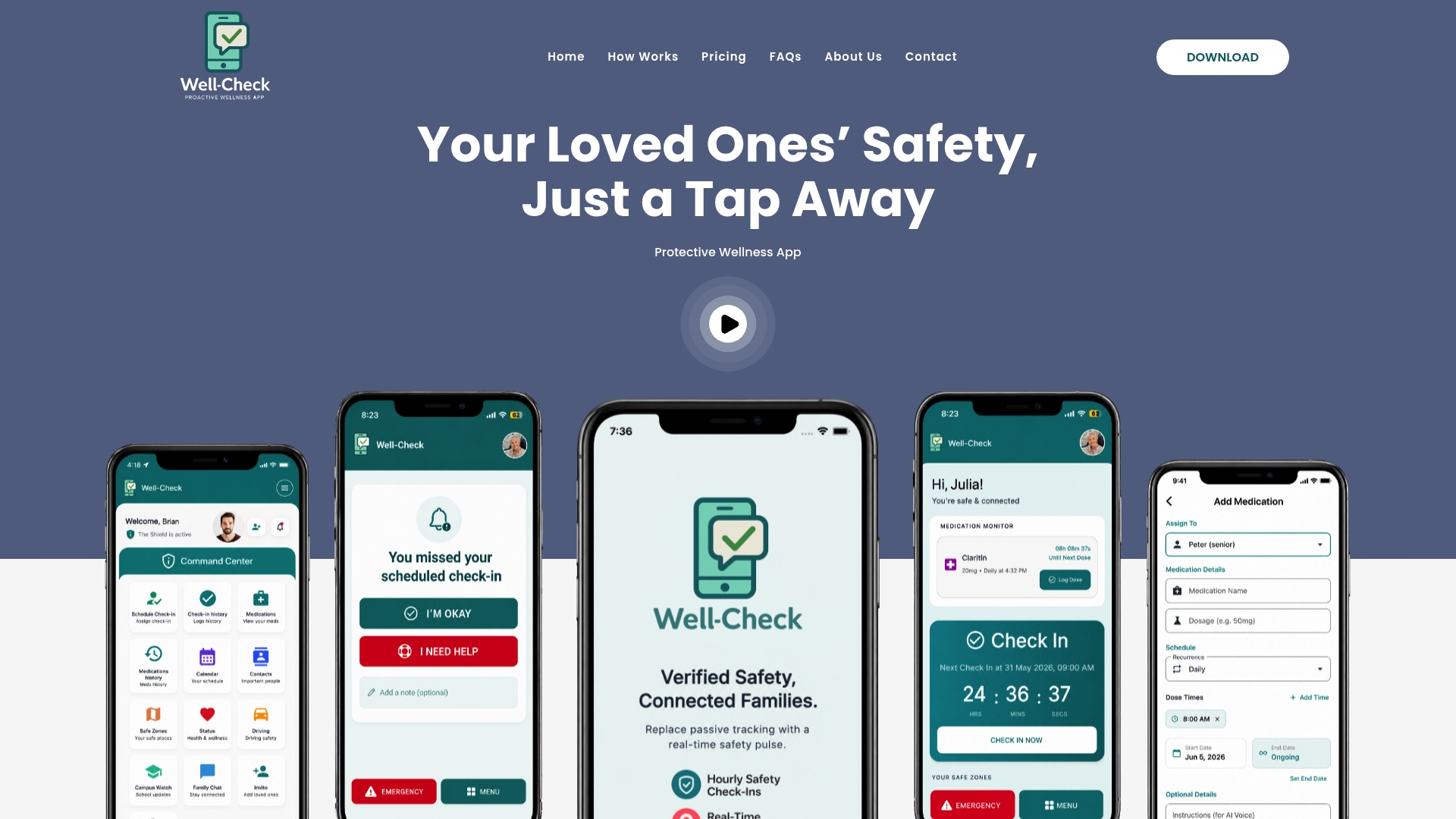
If your family lands on daily brief checks or multiple daily checks as the right cadence, that’s exactly the load an app is built to carry instead of a person. You can see exactly how the daily check-in and alert system works, then compare pricing plans to find the tier that matches how much monitoring your situation actually needs. Start with a look at how the missed-check alerts trigger, and decide from there whether it fits your family’s schedule.
Sources
- The Frequency of Family Visits Influences the Behavioral and Psychological Symptoms of Dementia (BPSD) of Aged People with Dementia in a Nursing Home
- Family visits among nursing home residents during the COVID-19 pandemic: a cross-sectional study | BMC Geriatrics
- How Does the Frequency of Visits Impact the Quality of Life for Nursing Home Residents?
- Mayo Clinic — Hypothermia: Symptoms and causes
FAQ
How Often Should an 80 Year Old Bathe?
Most seniors do well with a full bath or shower two to three times a week, with daily washing of the face, hands, and underarms in between; skin gets thinner and drier with age, so over-bathing can cause more harm than under-bathing.
What Is a Good Check-In App for Elderly People?
Look for an app that offers a daily automated check, missed-check alerts to family, medication reminders, and an emergency contact network, potentially with GPS tracking for added peace of mind.
What Is the 40/70 Rule for Aging and Caregiving?
It’s a rough guideline suggesting that in middle age or early senior years, families should start having honest conversations about future care needs, finances, and preferences before a crisis forces the issue.
What Should a 70 Year Old Be Doing Every Day at Home?
A healthy senior benefits from a consistent daily rhythm: some light physical activity, a balanced meal schedule, medication taken on time, and at least one point of social contact, whether that’s a call, a visit, or a check-in app confirmation.