Location sharing is consensual when it’s voluntary, time-limited, and something either person can turn off without a fight. It becomes stalking when tracking is covert, constant, and used to control where someone goes or who they see. If you suspect the second scenario, don’t just switch off the tracking. Document what you’re seeing first, then contact a domestic violence advocate or hotline before you touch a single setting.
TL;DR:
- Most location sharing tools are set to “always on” by default, making it easy to unknowingly drift into covert monitoring rather than consensual sharing.
- Hidden GPS devices, Bluetooth trackers, stalkerware, and data leaks from third-party apps are common methods used to covertly track a person’s location.
- Warning signs of coercive monitoring include constant availability demands, punishment for disabling sharing, and discovering unexplainable devices or knowledge of private movements.
- To safely identify and respond to unauthorized tracking, review device accounts, audit app permissions, inspect physical spaces, and document suspicious findings before acting.
- Structured, consent-based check-ins using specific apps can replace constant tracking for reassurance, especially for vulnerable individuals like seniors and those managing health conditions.
Table of Contents
- Location Sharing vs Stalking: What Consent Actually Looks Like
- How Does Location Tracking Actually Work?
- What Are the Red Flags of Coercive Location Monitoring?
- How Can I Tell if I’m Being Tracked?
- What Should I Do Before Removing a Tracker or Disabling Sharing?
- How Do I Share My Location Safely?
- Well-Check as a Consent-First Alternative to Constant Tracking
- Psychological Impact of Stalking Versus Consensual Sharing
- What Are the Legal Differences Between Sharing and Stalking?
- How Can I Prevent Being Stalked Through Location Technology?
- Where Is Location Tracking Technology Headed?
- Balancing Safety and Autonomy
- Get Peace of Mind With Structured, Consent-Based Check-Ins
- Where to Get Help and Learn More
- Sources
- FAQ
Location Sharing vs Stalking: What Consent Actually Looks Like
The difference between a caring check-in and coercive control usually comes down to four things: who asked, why, for how long, and whether saying no carries a cost. Consensual location sharing has a stated purpose. Two friends hiking a remote trail share their pins so someone knows where to send help if a phone dies. A parent and a teenager agree to share location during the first month of solo driving. An adult child checks a parent’s location during a solo road trip, with the parent’s full knowledge and buy-in.
The legitimate uses cluster around a handful of situations:
- Safety check-ins during specific activities, like solo travel, late shifts, or first dates.
- Coordinating logistics, such as figuring out whose closer to pick up a kid from practice.
- Caregiving arrangements, where an aging parent or a person managing a health condition agrees to share location so family knows they’re safe.
- Group travel or events, where a festival crowd or hiking party wants to regroup without twenty texts asking “where are you now?”
What separates these from surveillance is not the technology. It’s the agreement wrapped around it. A real consent arrangement has a stated reason both people can say out loud, a defined timeframe (even if that timeframe is “until the trip ends” rather than a calendar date), and a working off switch that doesn’t trigger a fight. If you can turn off sharing and the other person shrugs, that’s consent. If turning it off triggers accusations, guilt trips, or interrogation, the arrangement was never mutual to begin with.
Here’s the part apps don’t advertise: most location sharing tools are built with “always on” as the default and “off” as the buried option. Family locator apps, ride shares, and messaging platforms nudge users toward permanent visibility because engagement metrics reward it, not because permanent visibility is safer. Younger users in particular have grown up in a culture where constant sharing between partners and friend groups reads as normal rather than notable, which research on youth attitudes toward location apps suggests makes it harder to recognize when that same behavior turns into monitoring. The habit of sharing everything with everyone, all the time, quietly resets what feels like a reasonable request. That’s worth noticing before you agree to a new sharing arrangement, not after it’s already awkward to ask for boundaries.
How Does Location Tracking Actually Work?
Understanding the mechanics matters because different tracking methods leave different traces, and knowing which one is in play changes how you check for it and how urgently you need to act.
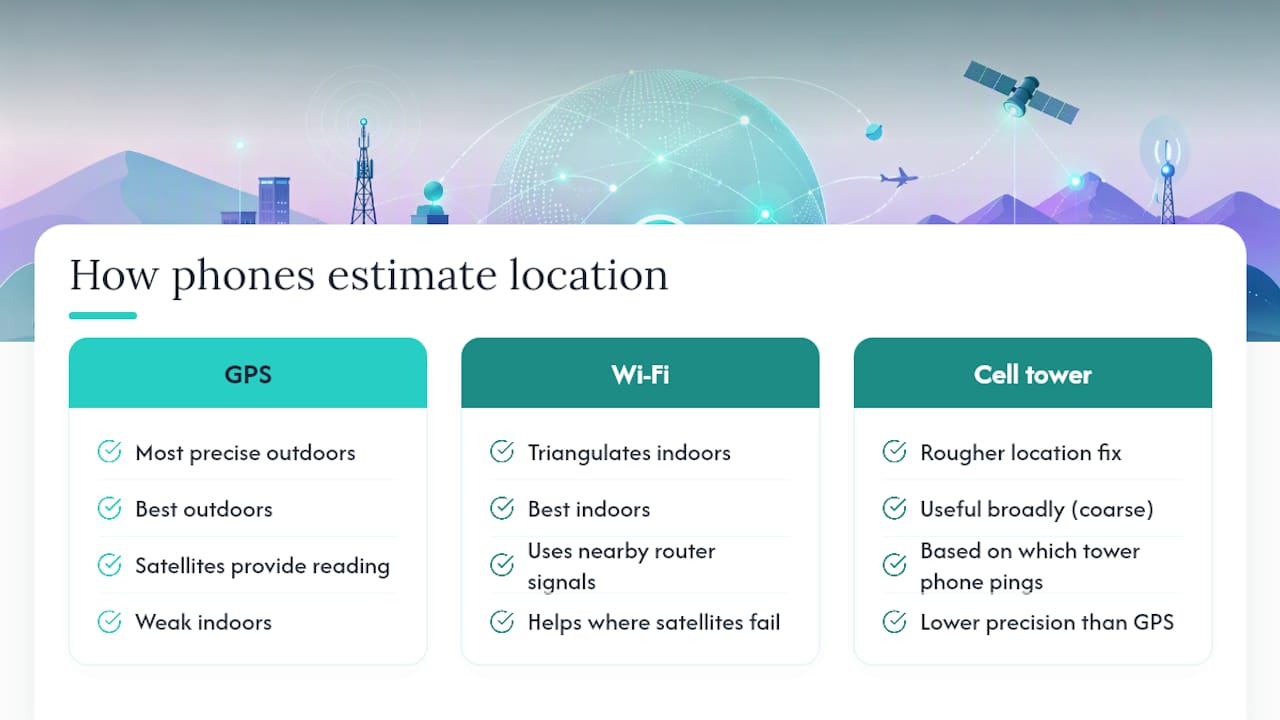
GPS, Wi-Fi, and cell towers are the three signals your phone uses to estimate location, often blended together for accuracy. GPS satellites give the most precise reading outdoors. Wi-Fi positioning uses nearby router signals to triangulate location indoors, where satellite signal is weak. Cell towers provide a rougher location fix based on which tower your phone is pinging. Any app with location permission can access some combination of these, which is why permission settings matter more than most people realize.
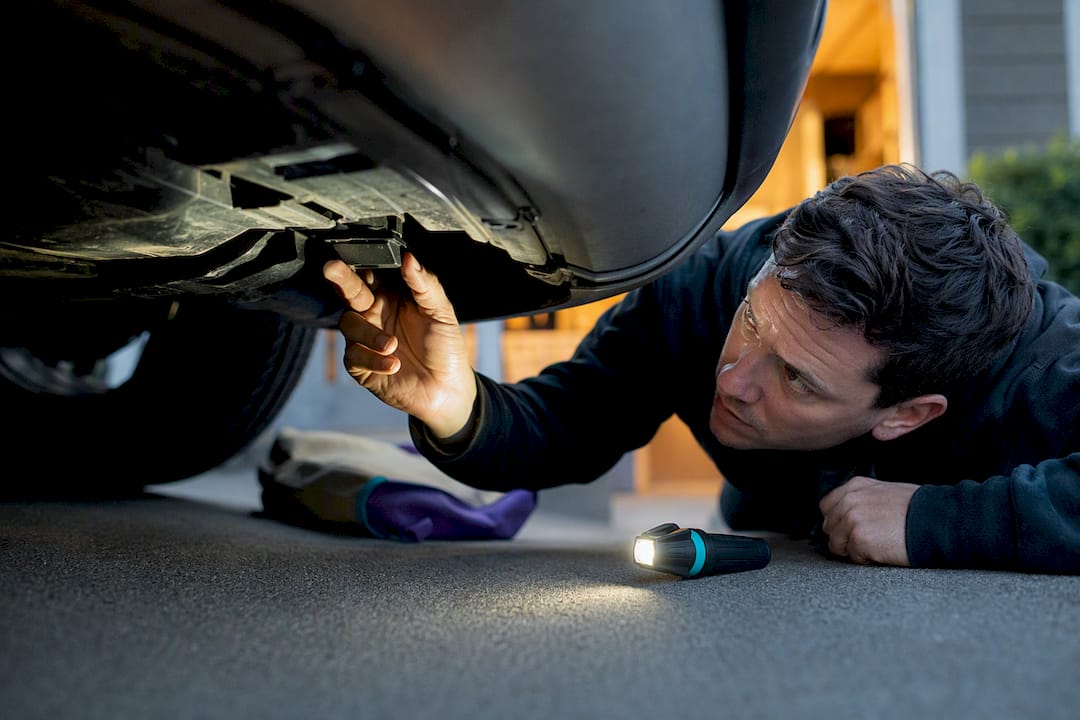
Hidden GPS and Bluetooth trackers are small, battery-powered devices designed to be tucked somewhere and forgotten. They’re commonly hidden in vehicle bumpers, wheel wells, under seats, inside fuel caps, and sewn into bag linings or coat pockets, according to a technology-facilitated stalking report on car-based monitoring. Bluetooth trackers rely on a network of nearby phones to relay their location, which means they can work even without cellular service, and they’re often the size of a coin.
Stalkerware is spyware installed directly on a phone, usually requiring brief physical access to the device. Once installed, it can silently transmit location, messages, call logs, and browsing activity to another person’s device, often disguised as a system utility so it doesn’t show up as an obviously named app.
Third-party data flows are the least visible risk of the four. Advertising software development kits (SDKs) embedded in ordinary apps, games, weather trackers, even flashlight apps, routinely collect and resell location data to data brokers, according to research from the Electronic Frontier Foundation on ad library location leaks. Nobody “shared” that location on purpose. An app’s default settings did it quietly, in the background, as part of its business model.
By the numbers: 72.4% of respondents in a location-based services privacy survey had heard of location-sharing technologies, and a large share expressed concern about who could access that data and whether it might reveal their home address.
Separately, technology plays an outsized role in stalking generally. A report on technology-facilitated stalking found more than twice as many stalking victims are tracked using technology than without it, and 15% of tech-facilitated stalking victims specifically were tracked through a device or app.
What Are the Red Flags of Coercive Location Monitoring?
Not every uncomfortable moment with location sharing signals abuse. But a pattern of the behaviors below, especially when several shows up together, is a signal worth taking seriously.
- Constant availability is treated as an obligation, not a courtesy. If your location shows you at the gym and you get a call demanding to know why you didn’t answer within two minutes, that’s not concern. That’s surveillance dressed up as worry.
- You’re asked to explain routes, not just destinations. Someone who wants updates for safety cares that you arrived. Someone who wants to control you asks why you took a different street than usual.
- Sharing gets switched off and the reaction is punishment, not conversation. Anger, silent treatment, guilt trips, or accusations of infidelity when you disable tracking are a documented warning sign that sharing has shifted into coercive control.
- They know things you never told them. If a partner mentions a store you visited, a friend you met, or a route you drove, and you never shared that information, something is transmitting your location without your knowledge.
- Trackers appear without your involvement. A device found taped under your car, a new app you don’t remember installing, or a “gift” gadget that happens to have location features baked in.
- Friends or family “check in on your behalf” as a favor to someone else. Monitoring sometimes gets outsourced through a trusted third party, which makes it easier to disguise as normal social contact rather than surveillance.
Clinical guidance on this topic is blunt: location sharing should exist to support safety and connection, not to soothe someone else’s insecurity. Expecting constant, granular monitoring is a controlling behavior, not a reasonable relationship expectation, no matter how it gets framed in the moment.
How Can I Tell if I’m Being Tracked?
Start quiet, start methodical, and don’t tip anyone off before you’re ready to act on what you find.
Check accounts before checking devices. Review which devices are logged into your Apple ID, Google account, or shared family plans, since account-level access is one of the most common and least visible ways someone maintains visibility into your location, even after you’ve deleted an app. Look for unfamiliar devices, shared calendars you didn’t set up, or family location features you don’t remember enabling.
Audit your app permissions. Go into your phone’s privacy settings and look at exactly which apps have location access, and whether it’s set to “always,” “while using,” or “never.” An app with no obvious reason to need constant location, a note-taking app, a game, a flashlight utility, is worth investigating or removing.
Inspect physical spaces. Hidden trackers are commonly tucked into bumpers, wheel wells, under seats, in glove compartments, or sewn into bag linings and coat pockets. A flashlight and a slow, methodical sweep of your vehicle’s undercarriage and interior pockets catches most of them.
Watch for device behavior changes. Unusual battery drain, unfamiliar apps you don’t remember downloading, a phone that runs warm when idle, or notifications that flash and disappear too fast to read can all indicate something running in the background.
- Review linked devices on Apple ID and Google account settings.
- Check location permission settings app by app, not just in bulk.
- Search your car’s bumper, wheel wells, seats, and trunk liner.
- Note any unexplained knowledge of your whereabouts, with dates.
Pro Tip: Take photos and note the date and time of anything suspicious before you touch it. If you eventually need to involve police or a shelter advocate, a timestamped record is far more useful than your memory of “sometime last week.”
If you find something, resist the urge to immediately rip it out or delete it. What you do next depends heavily on whether the person tracking you might escalate, which is exactly what the next section walks through.
What Should I Do Before Removing a Tracker or Disabling Sharing?
This is the step people skip, and it’s the one that matters most if there’s any chance the person tracking you is controlling or abusive. Immediately disabling tracking or ripping out a device can tip off someone who then escalates, sometimes dangerously. Safety planners consistently recommend building a plan with an advocate before you make a visible move, according to guidance from the Safety Net Project on location tracking.
Here’s a safer sequence:
- Document everything first. Screenshot suspicious messages, note dates and times of unexplained knowledge about your whereabouts, and photograph any physical device you find before moving it. Keep this record somewhere the other person can’t access, like a cloud folder tied to a new email account or a trusted friend’s device.
- Contact an advocate or hotline before you act. A domestic violence hotline or local advocacy organization can help you weigh the actual risk of removing a tracker versus leaving it in place temporarily while you build a broader safety plan. They’ve handled this exact scenario before; you likely haven’t.
- Take low-risk steps immediately. Change passwords on accounts the other person doesn’t know you’re changing, enable two-factor authentication on a device only you control, and quietly review who has access to your shared calendars, cloud photo libraries, and family location features.
- Set up a check-in buddy and an alternate route. Tell one trusted person your schedule and ask them to check in with you at set times, especially in the days immediately after you make any visible change.
- Decide on reporting and legal steps with support, not alone. Whether to involve police, file for a protective order, or contact a domestic violence shelter is a decision advocates can help you think through, including how it might affect custody arrangements, shared leases, or an abuser’s access to firearms.
Pro Tip: If you share a phone plan, car, or smart home devices with someone you no longer trust, an advocate can help you figure out which accounts to quietly separate first, before making any change the other person would notice.
Non-consensual monitoring including hidden trackers and stalkerware has been tied to serious harm in documented domestic abuse cases, which is exactly why sequencing matters here more than speed.
How Do I Share My Location Safely?
Good privacy hygiene doesn’t mean refusing to share location ever again. It means sharing on your own terms, with settings you actually control.
Start with permission granularity. Most phones let you choose “while using the app” instead of “always,” which stops background tracking the moment you close an app. Review this setting app by app rather than trusting a blanket privacy sweep, since defaults vary widely between apps.
Use one-time or time-limited sharing whenever the app offers it. Many messaging and map apps now include a temporary sharing toggle that automatically expires after a set number of hours, a workflow that research on safe location-sharing habits suggests meaningfully reduces the drift toward normalized, always-on monitoring. Turn it on for a specific trip or event, and let it expire on its own instead of remembering to switch it off.
A few habits worth building into your routine:
- Strip location metadata from photos before posting, since many phones embed exact coordinates in image files by default.
- Turn off automatic check-ins on social platforms, or delay posting locations until after you’ve left.
- Periodically revisit sharing arrangements out loud with the people you share with, even ones that feel fine, so consent stays active rather than assumed.
- Delete or restrict location permissions for apps that have no functional reason to need them.
- Review your family sharing settings quarterly, since these often get set up once and forgotten for years.
The third-party exposure problem deserves separate attention because it’s invisible by design. Advertising SDKs baked into ordinary apps routinely collect and resell location data to data brokers, which means your movements can end up in a marketing database without a single deliberate sharing decision on your part. Cutting the number of apps with standing location permissions is the single most effective way to shrink that exposure. If an app doesn’t need your location to function, that permission should be off, full stop. For deeper guidance on setting digital boundaries with a partner without it becoming a conflict, resources on thoughtful digital communication offer practical scripts for that conversation.
Well-Check as a Consent-First Alternative to Constant Tracking
Some people don’t want always-on location tracking at all, even from family, and that preference is completely reasonable. Some wellness apps take a different approach: scheduled daily check-ins instead of continuous surveillance. A person confirms they’re okay with a single tap, and if a check-in gets missed, the app alerts a pre-set emergency contact network automatically. GPS location is available for consented check-ins, not silent background tracking.
This fits people living alone, aging parents, or anyone who wants mutual reassurance without feeling watched. It is not built for, and should never substitute for, a safety plan in an actively abusive situation. If tracking is being used to control you, the priority is an advocate and a safety plan, not a new app. For everyone else looking for structured, consent-based peace of mind, this type of service offers a middle ground between “no check-in at all” and “constant tracking.”
Psychological Impact of Stalking Versus Consensual Sharing
The emotional experience of these two situations couldn’t be more different, even though both involve someone knowing where you are. Consensual sharing, done well, tends to reduce anxiety. Knowing a friend made it home safely, or that a parent can see you’re on the right side of a mountain trail, closes an open loop and lets everyone relax.
Being stalked through location technology produces the opposite effect: chronic hypervigilance, a sense that no space is truly private, and a corrosive uncertainty about how the other person always seems to know. Victims often describe second guessing everyday decisions, changing routes out of paranoia, and losing trust in their own devices, which is a strange and destabilizing thing to lose trust in.
The parent-child version of this tension has been studied directly. Digital location tracking between parents and teens can shift family dynamics regardless of whether the teen cooperates with it, sometimes reducing the trust and autonomy the tracking was meant to protect. Kids sometimes find workarounds, leaving a phone behind or borrowing a friend’s, and the tracking itself becomes the source of conflict rather than the safety net it was supposed to be.
The through line: sharing that reduces worry is doing its job. Sharing that increases hypervigilance, secrecy, or fear has already crossed into something else, regardless of what either person calls it.
What Are the Legal Differences Between Sharing and Stalking?
Laws vary by jurisdiction, but the underlying legal principle is consistent: consent is what separates a lawful arrangement from a crime. Two adults who agree to share location, with the ability for either to revoke that agreement, are operating within an ordinary, legal use of technology, no different from agreeing to share a calendar or a photo album.
Stalking statutes generally require a pattern of unwanted conduct that would cause a reasonable person to feel fear or harassment, and courts increasingly recognize covert electronic tracking as satisfying that pattern. Installing stalkerware or planting a hidden GPS tracker on someone’s vehicle or belongings without their knowledge can carry criminal penalties in many jurisdictions, separate from any related harassment or domestic violence charges. Some places have added specific statutory language covering electronic tracking devices precisely because ordinary stalking laws were written before this technology existed.
The consequences also diverge sharply depending on relationship status and intent. A workplace requiring delivery drivers to share location during shifts operates under employment law and typically requires disclosure. A partner secretly installing tracking software on a spouse’s phone can face both criminal charges and, in relevant jurisdictions, consequences in custody or divorce proceedings, since courts often treat covert surveillance as evidence of controlling behavior. If you’re unsure whether what’s happening to you meets a legal threshold, a domestic violence advocate or attorney familiar with local stalking statutes can tell you far more precisely than a generic checklist, because the exact wording of these laws varies enough between jurisdictions that guessing isn’t safe.
How Can I Prevent Being Stalked Through Location Technology?
Prevention here isn’t about paranoia. It’s about closing the ordinary, boring gaps that make covert tracking easy in the first place.
Keep your phone’s lock screen enabled with a passcode only you know, and change it if anyone else has ever had access, since most stalkerware requires a few minutes of physical access to install. Review linked accounts and family sharing groups at least twice a year, not just when something feels off, since these settings tend to get set up once during a relationship and never revisited after it ends.
Be deliberate about who gets a spare key, a car with your belongings in it, or unsupervised access to your phone, since hidden GPS trackers require physical placement. Buy secondhand electronics, including gifted phones, tablets, or car accessories, from sources you trust, and do a factory reset on any device before using it if you’re at all uncertain of its history.
Limit how many apps carry standing location permissions, since each one is a potential leak point through advertising SDKs and data broker relationships you never agreed to. And when a relationship ends, whether romantic, familial, or a former roommate situation, treat that as a trigger to audit every shared account, every family locator app, and every device that person ever had access to, rather than assuming the access quietly expired on its own.
Where Is Location Tracking Technology Headed?
Tracking technology is getting smaller, cheaper, and harder to detect, and the tools to defend against it are racing to keep pace. Bluetooth tracker networks that rely on crowdsourced device meshes, the kind used in consumer item finders, have already prompted manufacturers to add unwanted tracker alerts to phones, warning users when an unfamiliar tracker seems to be traveling with them over time.
At the same time, smart home devices, connected cars, and wearables are quietly expanding the number of ways a location can leak without anyone touching a dedicated tracking app. A car’s built-in navigation system, a smartwatch synced to a shared family account, or a smart doorbell with location tagging can all reveal patterns of movement that nobody consciously decided to broadcast.
Regulatory pressure is starting to catch up. Growing scrutiny of advertising SDKs and data broker practices suggests location-data resale is heading toward tighter default restrictions rather than looser ones, though enforcement still lags behind the pace of new tracking hardware hitting the market. The practical takeaway for anyone reading this in 2026 is that the gap between “device with a screen” and “device that can reveal your location” is closing fast, which makes the habits in this article, checking permissions, auditing accounts, questioning defaults, more relevant with each new gadget that ships, not less.
Balancing Safety and Autonomy
The hardest part of this topic isn’t the technology. It’s that care and control can look identical from the outside, and only the person on the receiving end really knows which one they’re living with. I’d rather you trust that gut feeling of unease than talk yourself out of it because the tracking came from someone who says they love you.
Refusing to share your location is not evidence of secrecy. It’s a boundary, and a reasonable one, full stop. If asserting it costs you a relationship, that tells you something the location data never could.
— Brian
Get Peace of Mind With Structured, Consent-Based Check-Ins
If everything above tells you your situation is about mutual care, not control, you don’t need constant tracking to feel connected to the people you love. Some apps give families and individuals a simpler option: scheduled daily check-ins, missed-check alerts sent automatically to an emergency contact network, and optional GPS that only activates with consent, not silent background surveillance.
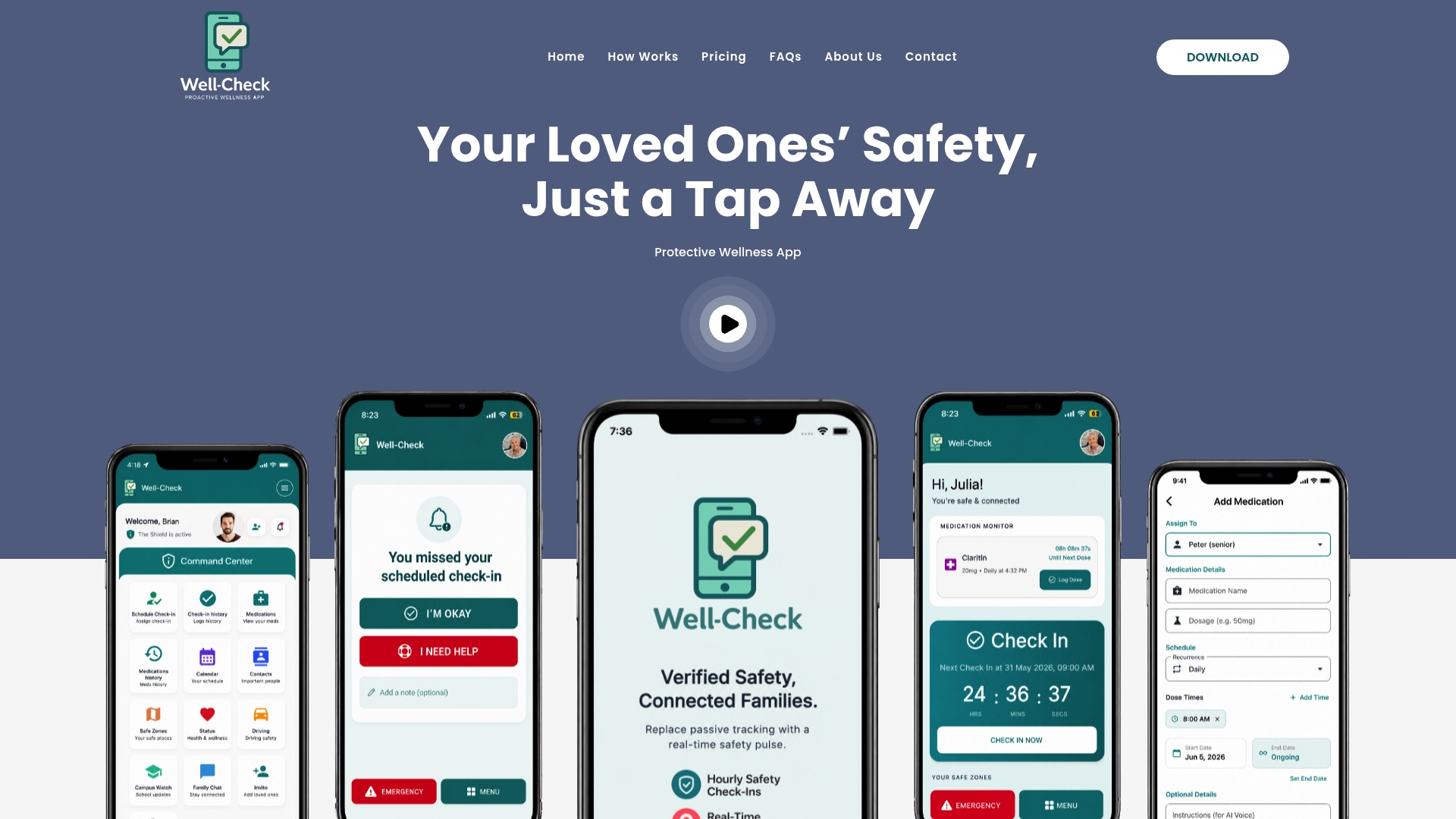
This works especially well for seniors living alone, adult children coordinating care for aging parents, or anyone who wants the reassurance of a daily “I’m okay” without feeling monitored around the clock. To be clear: such apps are built for mutual, consensual peace of mind. If tracking is already being used against you, an advocate and a safety plan come first, not a new app. For everyone else ready to trade always-on anxiety for a simple daily check-in, see how Well-Check works or compare pricing plans to find the right fit for your family.
Where to Get Help and Learn More
If you suspect you’re being tracked without consent, the Safety Net Project’s location tracking guide walks through account and device checks in more technical depth than covered here. For a closer look at how coercive control shows up in relationships beyond location data, a therapist’s breakdown of psychological abuse warning signs is worth reading. If you need hands-on support identifying trackers or navigating next steps, Kin Watchdog offers practical guidance built specifically for this situation.
Sources
- Location Tracking And Technology-Facilitated Stalking
- LBS privacy survey and application analysis
- Developers, beware: ad libraries betray your users’ location privacy
FAQ
Can You Tell if Someone Keeps Checking Your Location?
Most apps won’t notify you every time someone views your shared location, so you often can’t tell in real time. What you can do is check who currently has standing access in your account and family sharing settings, since ongoing account-level visibility is more common than people realize.
Is Sharing Location in a Relationship Toxic?
Not inherently. Sharing becomes a problem when it’s demanded rather than agreed to, when turning it off triggers punishment, or when it’s used to monitor routes and routines rather than confirm safety. Clinical guidance frames constant, granular monitoring as a controlling behavior, not a reasonable relationship expectation.
Can Someone Track Your Location Without You Knowing It?
Yes, through hidden GPS or Bluetooth tags, stalkerware installed with brief phone access, shared accounts you forgot about, or third-party apps that leak data through advertising SDKs. More than twice as many stalking victims are tracked with technology than without it, and 15% of those victims were tracked specifically through a device or app.
Why Shouldn’t You Share Your Location Constantly?
Constant sharing normalizes surveillance as a baseline expectation instead of an occasional courtesy, and it exposes more of your movement patterns to apps, accounts, and third parties than most people realize. If you want reassurance without always-on tracking, scheduled check-in tools like Well-Check offer a consent-based middle ground built around confirming safety rather than monitoring movement.
What Should I Do First if I Think I’m Being Stalked Through My Phone?
Document what you’re seeing, including dates, screenshots, and any unexplained knowledge of your whereabouts, before changing any settings. Contact a domestic violence hotline or advocate to build a safety plan, since removing a tracker too quickly can sometimes escalate risk in an abusive situation.