

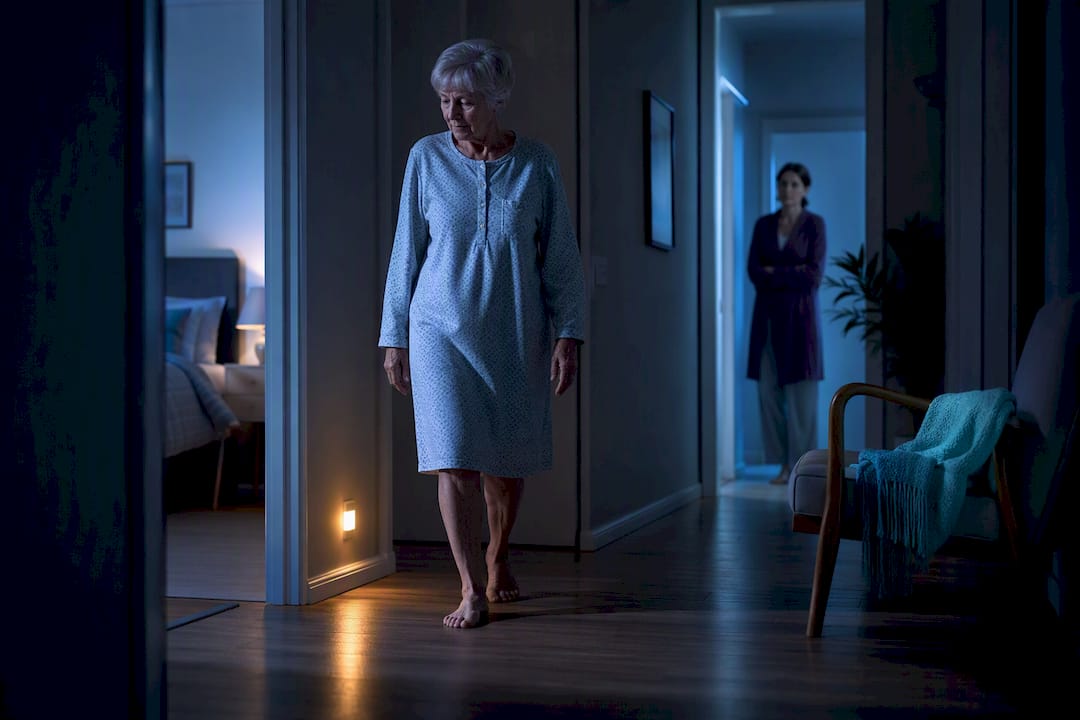
Night wandering is common in dementia, tends to peak alongside sundowning in the middle stages of the disease, and can turn dangerous fast if a person leaves home unnoticed. The immediate priority is a three-part safety plan: lock down exits and trip hazards tonight, meet basic needs like toileting and hunger before bed, and have an ID, tracking, and search plan ready before you ever need it.
TL;DR:
- Most wandering incidents end within 1.5 miles of home, but serious injuries risk rises sharply if the person is missing for more than 24 hours.
- Early warning signs include pacing, asking to go home, testing doors, and getting disoriented, especially when combined with recent changes in medication, environment, or confusion.
- Building a consistent daily routine, increasing daytime light exposure, and gradually dimming lights in the evening significantly reduce the risk of night wandering.
- Home modifications such as camouflaged or high and low locks, alarms, and floor mats, along with personal safety IDs and registry enrollment, are essential layered safeguards.
- Using remote check-in tools and alert systems enhances safety but still requires active monitoring and an emergency response plan to be effective.
Table of Contents
- What Causes Night Wandering in Dementia?
- How Dangerous Is Night Wandering, and What Are the Warning Signs?
- Preventing Night Wandering: Routines, Light, and Non-Drug Therapies
- Building a Layered Safety Plan: IDs, Registries, and Technology
- What to Do the Moment They Wander at Night
- When Living Alone Stops Being Safe
- A Caregiver’s Honest Take on Managing the Nights
- Adding a Daily Check-In Layer to Your Safety Plan
- Where to Learn More
- Sources
- FAQ
What Causes Night Wandering in Dementia?
Sundowning is the term clinicians use for the cluster of confusion, anxiety, and agitation that tends to spike in late afternoon and evening. According to the Mayo Clinic, it’s often triggered by fatigue, low lighting, and a disrupted circadian rhythm, the internal clock that tells the brain when to sleep and when to wake. When that clock breaks down, a person can feel wide awake and restless at 2 a.m. and genuinely unable to tell day from night.
Physical discomfort plays a bigger role than most families expect. A full bladder, an aching hip, or a side effect from a new medication can all trigger someone to get up and start moving, and because the person may not be able to name or locate the discomfort, wandering becomes the visible symptom of an invisible problem. Hunger and thirst work the same way.
Boredom and disorientation add another layer. Someone who spent decades getting up for a night shift, checking on kids, or locking up the house may still feel that pull long after the routine has lost its context. A changed room, a new caregiver, or even rearranged furniture can be enough to spark a search for something familiar.
The most common triggers caregivers report include:
- Sleep disruption from pain, medication timing, or an irregular daytime nap schedule
- Unmet physical needs such as needing the bathroom, being hungry, or feeling too hot or cold
- Low or inconsistent lighting that creates shadows and misreads of the room
- Boredom or leftover habits from a lifelong routine, like “going to work” or checking locks
- Unfamiliar surroundings, including a new home, a hospital stay, or recently moved furniture
Recognizing which trigger fits your loved one matters more than any generic fix, because the same behavior, pacing near the door, can mean “I need the bathroom” for one person and “I think it’s time to pick up the kids” for another.
How Dangerous Is Night Wandering, and What Are the Warning Signs?
The numbers here are worth sitting with. If a person with dementia who has wandered is not found within 24 hours, up to 50% suffer serious injury or death, and most who wander on foot are found within about 1.5 miles of their last known location. That combination, high stakes and a fairly small search radius, is exactly why a fast, organized response matters more than a wide one.
By the numbers: Most wandering incidents end within 1.5 miles of home, but the risk of serious harm climbs sharply once someone is missing for more than a day. Speed of response, not search distance, is what protects people most.
Wandering rarely comes out of nowhere. Watch for these earlier signals, which often show up weeks before an actual exit:
- Pacing, especially in hallways or near doors, in the late afternoon or evening
- Repeatedly asking to “go home” even while already at home
- Trying doors, windows, or exits more than usual, including testing locks
- Getting turned around inside a familiar house, like walking into a closet expecting a bathroom
- Talking about outdated obligations, such as needing to pick up children or get to a job
Any one of these on its own isn’t an emergency. A pattern of them, especially combined with a new medication, a recent move, or a change in overall confusion, is a signal to tighten supervision and loop in a physician or geriatric specialist sooner rather than later. Waiting for the first actual wandering episode to act is the single most common mistake families make.
Preventing Night Wandering: Routines, Light, and Non-Drug Therapies
Prevention works better than reaction, and most of what helps is free or nearly free. Start with the daily rhythm, because a body that’s genuinely tired at bedtime is far less likely to go looking for something to do at 3 a.m.
- Build a consistent daily schedule. Wake, meals, activity, and bedtime at the same times every day help re-anchor a broken internal clock.
- Get bright light exposure during the day. Sitting near a sunny window or spending time outdoors for even 20 to 30 minutes can help; light therapy and increased daytime activity have shown real benefit in reducing nighttime awakenings, though results vary from person to person and long-term effects are still being studied.
- Dim the lights gradually in the evening, but never to full dark. A low, warm night light in the hallway and bathroom reduces the disorientation that sends someone wandering in search of a light switch.
- Run a predictable pre-bed routine. Toileting, a light snack, a pain check, and a quick review of medication timing with the prescribing doctor can head off the physical triggers before they turn into restlessness.
- Modify the home itself. Clear walking paths, remove throw rugs and clutter, and consider camouflaging exit doors with a curtain or matching paint. The National Institute on Aging notes that changing the environment with high or low door locks and door alarms is usually more effective and safer than trying to physically restrain someone who wants to leave.
Non-drug approaches carry the strongest and safest track record here. A review of sleep interventions found that non-pharmacological options, light exposure, increased activity, and comfort measures like gentle touch or a familiar object, are generally recommended before medication, since drug treatments for sleep in dementia carry real side-effect risks and only modest evidence of benefit. Some caregivers have also tried the PARO robotic seal or similar comfort tools with mixed but promising results in small studies.
Pro Tip: Keep a specific pair of pajamas, the same side of the bed, and one familiar object like a worn robe or a favorite blanket in the exact same spot every night. Small consistency cues do more to reduce disorientation than a full bedroom remodel.
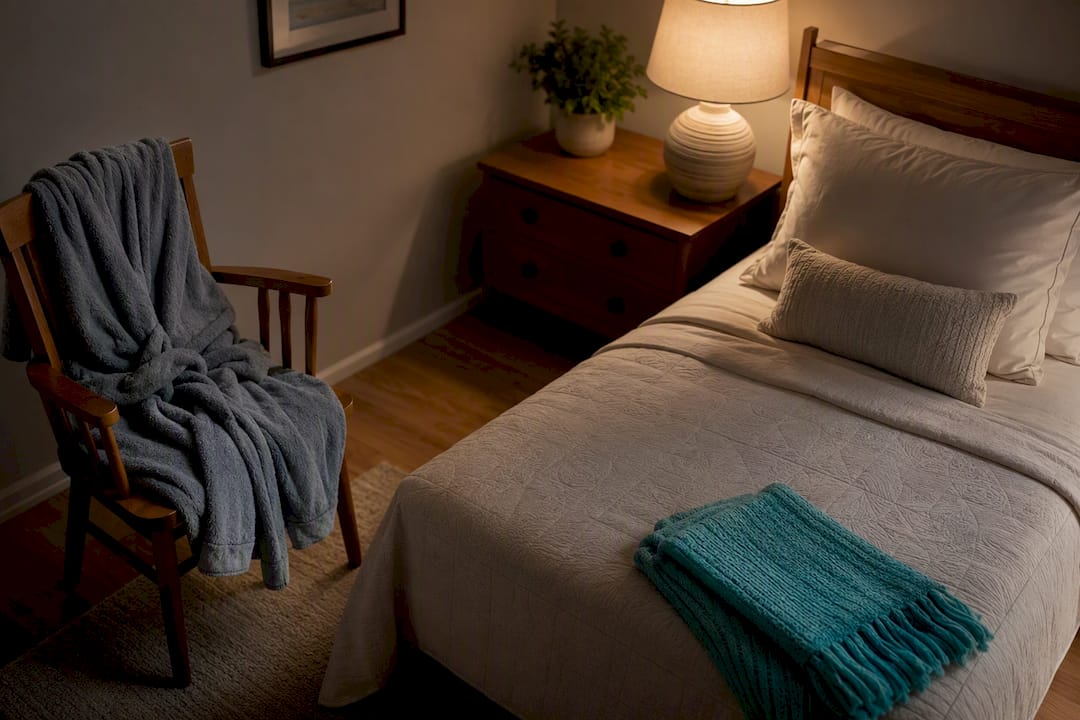
None of this eliminates wandering completely. Think of it as lowering the odds and buying yourself earlier warning, not installing a guarantee.
Building a Layered Safety Plan: IDs, Registries, and Technology
A safety plan needs to work whether you’re asleep, in another room, or three states away visiting family. Start with the paper basics, because batteries die and apps crash, but a laminated card in a wallet doesn’t.
Your core safety folder should include a recent, close-up photo; a written description of typical clothing, especially what they usually sleep in; a current medication list; emergency contacts; and enrollment information for a local wandering registry. Community “bring me back” registries give law enforcement instant access to photos and medical details during a search, which can shave critical minutes off a response.
Layer in low-tech home fixes next:
- A medical ID bracelet or necklace listing the diagnosis and an emergency number
- High and low deadbolts placed out of the typical sight line, since many people with dementia don’t think to look up or down
- Door alarms or simple pressure-sensitive floor mats that chime when someone gets up at night
- Motion-activated night lights along the path from bedroom to bathroom
Technology adds another layer, but it comes with trade-offs worth naming honestly. Wearable GPS devices can locate a person within minutes, and smart-home sensor systems have shown real promise for catching night wandering before someone reaches the front door. The catch is that these tools only work inside a workflow: someone has to actually watch the alerts, charge the devices, and know what to do when one goes off. A GPS tracker on a device nobody checks at 2 a.m. isn’t protection, it’s a false sense of one.
Before relying on any device, decide who gets the alert, who calls emergency services if needed, and how you’ll tell a real emergency from a false alarm. Test the system on a normal night, not during an actual crisis, so you know it actually works.
What to Do the Moment They Wander at Night
Every minute counts, and having a memorized order of operations beats trying to think clearly while panicking.
- Search likely spots inside the house first. Bathrooms, closets, the garage, and the yard account for a surprising number of “wandering” scares that never leave the property.
- Check every exit immediately. Note which door or window is open or unlocked; that tells you the likely direction of travel.
- Call 911 or your local non-emergency police line right away if an outside door is open and they’re not inside. Don’t wait to see if they come back on their own. Mention specifically that the missing person has dementia; many departments have specific protocols, sometimes called a Silver Alert, for these cases.
- Give responders a tight description: age, clothing (especially sleepwear), mobility level, medications, and any place they might be headed, like a childhood home or former workplace.
- Note the last confirmed time you saw them. Since most people are found within about 1.5 miles on foot, this timestamp helps responders draw a realistic search radius fast.
- Alert neighbors directly and ask them to check yards, porches, and cars. A quick knock or text to a neighborhood group often finds someone before police arrive.
- Use any GPS or phone-ping tools you have set up, and share that location data with responders the moment you have it.
Keep a small “missing person kit” (recent photo, description card, medication list) somewhere grab-and-go, like a kitchen drawer, so step four doesn’t cost you precious time hunting for a phone charger to find an old picture.
When Living Alone Stops Being Safe
Wandering that happens more than once is one of the clearest signals that solo living has become risky, especially when it’s paired with an inability to respond appropriately to a knock at the door, a phone call, or a smoke alarm. Other red flags include a steady decline in daily tasks like cooking or bathing, and confusion at night that’s noticeably worse than during the day.
This decision rarely happens all at once, and it doesn’t have to. The National Institute on Aging recommends treating it as an ongoing reassessment rather than a single dramatic call, which means families can add support in stages rather than jumping straight to a facility move.
A workable sequence looks like this:
- Add a night sitter or increase check-ins during the highest-risk hours first
- Bring in daytime respite care or an adult day program to reduce isolation and fatigue
- Schedule a formal cognitive and safety assessment with a physician or geriatric care manager
- Use that assessment to guide a decision about assisted living, memory care, or moving in with family
Loop in a geriatric care manager early if you can. They’ve seen the full range of what “aging in place” can safely stretch to, and they can help you sort out finances and legal paperwork, like power of attorney, before a crisis forces a rushed decision.
A Caregiver’s Honest Take on Managing the Nights
Anyone who has stood in a dark hallway at 3 a.m., trying to talk a confused parent back to bed, knows the specific exhaustion this creates. That fear doesn’t mean you’re doing it wrong. It means you’re paying attention to something genuinely risky, and the goal isn’t to eliminate every bit of anxiety, it’s to make the crises less frequent and less severe.
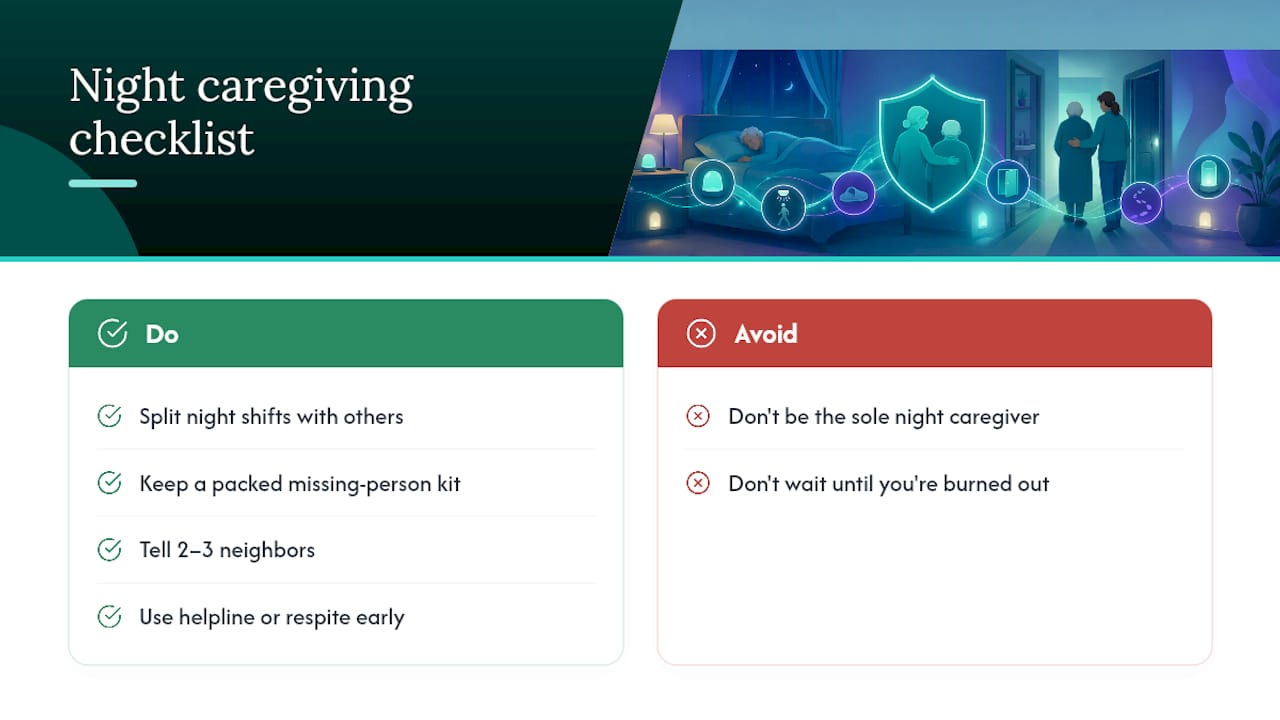
A few things actually help. Split monitoring shifts with siblings or hired help so no one person is the sole line of defense every single night. Keep a “missing person kit” packed and ready, described earlier, so you’re never digging for a photo while the clock runs. Tell two or three neighbors what’s going on; a quiet heads-up turns them into extra eyes for free. And use the Alzheimer’s Association helpline or a local respite program before you’re running on fumes, not after.
— Brian
Adding a Daily Check-In Layer to Your Safety Plan
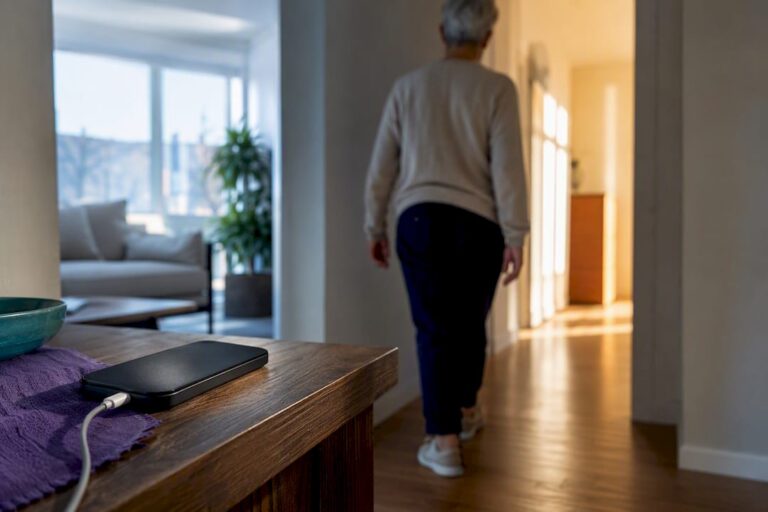
A safety plan built on IDs, home locks, and a search checklist covers the moment something goes wrong. What most families are missing is the earlier layer: a simple way to know something’s off before it turns into a 2 a.m. search. That’s the gap Well-check is built to close.

Well-check works as one piece of the broader plan, not a replacement for supervision or the home safety fixes covered above. It gives your loved one a one-tap way to confirm they’re okay, sends you an alert the moment a check-in gets missed, and includes medication reminders so a skipped dose doesn’t become tonight’s trigger for restlessness. You can build out an emergency contact network so alerts don’t rely on one exhausted person catching every notification, and optional GPS tracking adds a locating tool if a wandering episode does happen. It won’t work if the phone dies, the coverage drops, or no one’s watching for the alert, so it still needs a real person on the other end, same as any device discussed above. For caregivers ready to add that layer, Well-check’s Essential and Complete plans start at $5.99 a month, and you can see exactly how the check-ins and alerts work before you commit.
Where to Learn More
The guidance in this article draws on the Alzheimer’s Association, the National Institute on Aging, and Mayo Clinic, along with peer-reviewed research on light therapy for sleep in dementia and smart-home sensor interventions. Check with your local police department or Area Agency on Aging about wandering registry programs in your community, since availability and enrollment steps vary by state.
This article is general information, not a substitute for advice from a qualified doctor. Consult a qualified healthcare professional about your own circumstances before acting on anything here.
Sources
- Saved by a Bark
- Mayo Clinic — Sundowning FAQ
- Light therapy and sleep interventions in dementia (systematic review / meta-analysis)
- NIA — Wandering and Alzheimer’s disease
FAQ
How do you stop a dementia patient from wandering at night?
You can’t guarantee it will never happen, but consistent daytime routines, bright daytime light exposure, a calm bedtime routine covering toileting and pain checks, and home modifications like camouflaged exits and high or low door locks meaningfully reduce the risk. Layering in a wearable ID and a monitoring tool like Well-check adds an extra safeguard if prevention alone doesn’t stop an episode.
At what stage of dementia does wandering typically occur?
Wandering most often appears in the middle stages of dementia, when someone still has enough mobility to walk but has lost the judgment and memory needed to navigate safely. It can continue into later stages too, so ongoing reassessment of the home environment and supervision level matters throughout the disease.
At what stage does sundowning usually start?
Sundowning tends to emerge in the middle stages of dementia and often overlaps with the same period when wandering risk rises. According to Mayo Clinic, it’s driven by fatigue, low light, and circadian rhythm disruption, and it tends to ease somewhat as the disease progresses into its latest stages.
When should a person with dementia stop living alone?
Living alone becomes unsafe when wandering happens more than once, when the person can’t respond appropriately to emergencies like a knock at the door or a smoke alarm, or when nighttime confusion is significantly worse than daytime confusion. Rather than one dramatic decision, most families add supports gradually, starting with night sitters or check-in tools and moving toward a formal geriatric assessment if risks keep climbing.


[…] of day. Late afternoon and night are common. If evenings are the risk, our guide to stopping 2 AM wandering covers the night shift in more […]