Aging alone can be safe and fulfilling when three things are in place: a home set up to prevent falls and fires, a daily routine that someone notices when it breaks, and a small network of people who know how to reach you. Falls are the biggest physical risk, and isolation is the biggest hidden one. Both are manageable. This guide covers the real numbers, the warning signs that living alone is becoming unsafe, and the steps that help most, whether you are the older adult or the family member worried about one.
TL;DR
- More than 16 million Americans age 65 and older live alone, and falls are the leading cause of injury for this age group.
- Most risk can be cut with a home safety walk-through: lighting, rugs, grab bars, alarms, a 120°F water heater and labeled medicines.
- Warning signs include missed medications, weight changes, a cluttered home, confusion, falls and withdrawal from friends.
- A daily check-in that alerts someone when it is missed closes the biggest gap of living alone: nobody knowing something went wrong.
- Safety works best when the older adult chooses it. Privacy and dignity are part of the plan.
Table of Contents
- Why living alone changes the risk picture
- Signs that living alone is becoming unsafe
- Make the home safer, room by room
- Build routines and a network that notice
- Safety without losing independence
- Our perspective
- A simple daily check-in with Well-Check
- A one-weekend action plan
- FAQ
- Sources
Why living alone changes the risk picture
Living alone is common. According to KFF Health News, more than 16 million Americans age 65 and older live alone, about 28% of that age group, based on 2023 Census data. The same report notes that nearly 4 in 10 of them have vision or hearing loss, trouble caring for themselves, cognitive problems or another disability, and that they face a higher risk of isolation, depression, accidents and self-neglect.
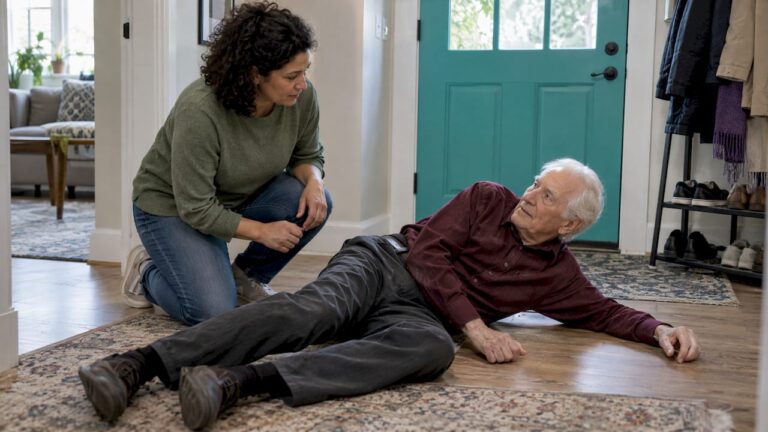
The core problem is not that older adults living alone fall more in every case. It is that when something goes wrong, nobody is there to notice. A fall at 2 p.m. on a Tuesday can mean hours on the floor.
Falls come first
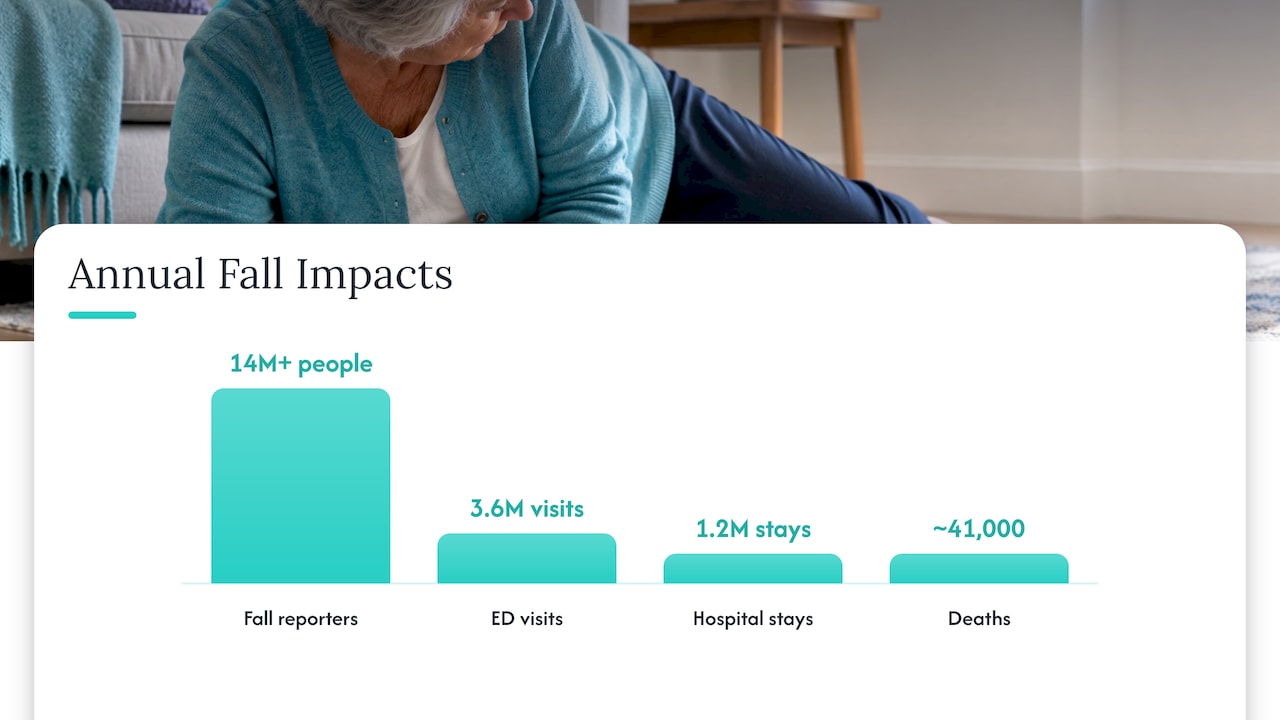
The CDC reports that falls are the leading cause of injury and injury-related death among adults 65 and older, with over 14 million older adults, about 1 in 4, reporting a fall each year. The age-adjusted fall death rate rose 21%, from 64.7 per 100,000 in 2018 to 78.4 per 100,000 in 2024.
The cost is large too. The CDC’s fact sheet says older adult falls lead to about 41,000 deaths, 3.6 million emergency department visits and 1.2 million hospital stays every year in the U.S.
Living arrangement matters. A peer-reviewed study of U.S. adults over eight years found a higher incidence of falls among people living alone than among those living with others (73.15% vs. 67.59%), and it linked environmental hazards in the home and neighborhood to fall risk as well.
Fire, burns and poisoning
The Consumer Product Safety Commission says falls and fires are the two leading causes of unintentional injury and death among adults 65 and older. The American Geriatrics Society’s Health in Aging foundation adds that burns and poisonings are among the most common accidents, and that older adults who live alone may also be targeted by criminals.
Isolation is a safety issue, not just a feeling
A 2025 meta-analysis of 86 prospective studies found that living alone was associated with a 21% higher risk of death from any cause in older adults, social isolation with a 35% higher risk and loneliness with a 14% higher risk. These are associations, not guarantees, but they explain why a good safety plan includes people and routines, not only gadgets.
Fear can compound this. Columbia geriatric psychiatrist Dr. Mark Nathanson notes that falling can lead to worsening isolation because of fear of going outside. Safety and social life support each other.
Signs that living alone is becoming unsafe
Nobody wakes up one day unable to live alone. The change is gradual, which is why families often miss it. The National Institute on Aging lists signs that an older adult may need extra support, in its guide on whether an older adult in your life needs help:
- Difficulty preparing meals safely
- Not bathing regularly or dressing appropriately for the weather
- A home that is no longer relatively clean or free of clutter
- Not having needed medications, or not taking them regularly
- Significant weight changes
- Confusion
- Falls, or trouble walking and getting around
- Loneliness or social isolation
Mail, recycling or trash piling up is another red flag in the NIA’s home safety checklist.
A simple test: daily activities
Cedars-Sinai describes a practical litmus test for aging in place: can the person handle basic activities of daily living such as showering, eating, dressing and using the bathroom? Dr. Rosen puts it bluntly in their guidance on supporting older parents: the question is whether the person could get out of the house in a fire. If help is needed only with tasks like cooking, shopping or driving, living alone can still work with a caregiver or part-time assistance filling the gaps.
What to do when you notice signs
The NIA’s advice is to talk with the older person about your concerns without sounding critical, try to honor their wishes with practical help, suggest a health care visit if you worry about physical or mental health, and share caregiving with family, neighbors or friends. Dr. Rosen warns that families often live in denial and ignore warning signs. Her message: if you see something, speak up.
If memory loss is part of the picture, our guide to a dementia caregiver check-in covers what to ask, watch and do.
Make the home safer, room by room
A home safety walk-through is the highest-value hour you can spend. Start with the NIA’s home safety checklist, which checks for these basics:
- Grab bars near toilets and in the tub or shower
- A water heater set at 120°F
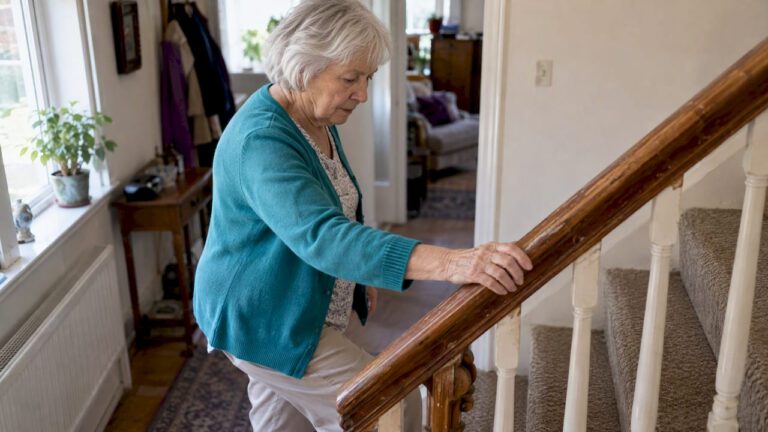
- Good lighting inside and out, especially at the top and bottom of stairs
- Throw rugs and clutter removed
- Prescription bottles clearly labeled with name, drug, strength, dosage frequency and expiration date
- Emergency numbers and the home address near every phone
- Any guns locked up and unloaded, with ammunition stored separately
Kitchen and fire safety
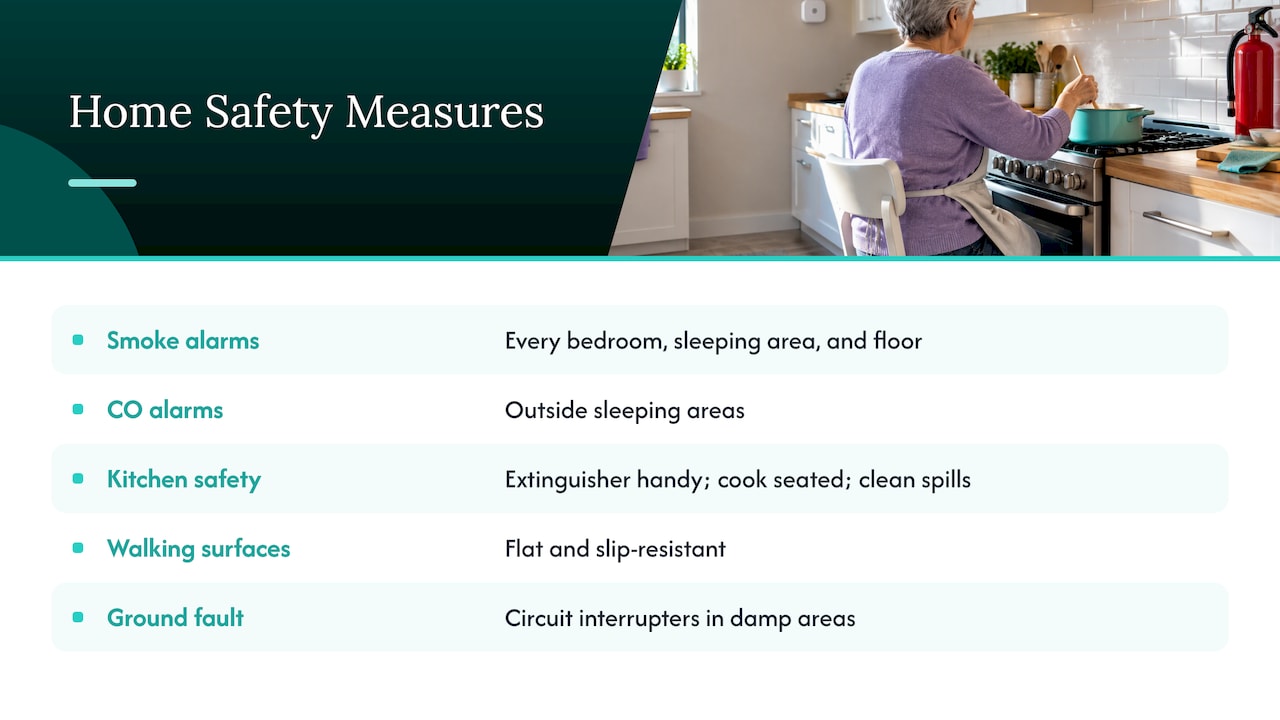
The CPSC recommends smoke and carbon monoxide alarms throughout the home, a fire extinguisher handy in the kitchen, flat and slip-resistant walking surfaces, and ground fault circuit interrupters in damp areas such as the kitchen, bathroom and garage. It also says to put a smoke alarm in every bedroom, outside every sleeping area and on every floor, with a carbon monoxide alarm outside sleeping areas. For the invisible hazard, see our carbon monoxide safety guide for seniors.
The NIA’s room-by-room fall guidance adds kitchen habits: prepare food while seated to avoid fatigue or loss of balance, clean up spills right away, and keep frequently used pots and utensils within easy reach.
Your body is part of the home
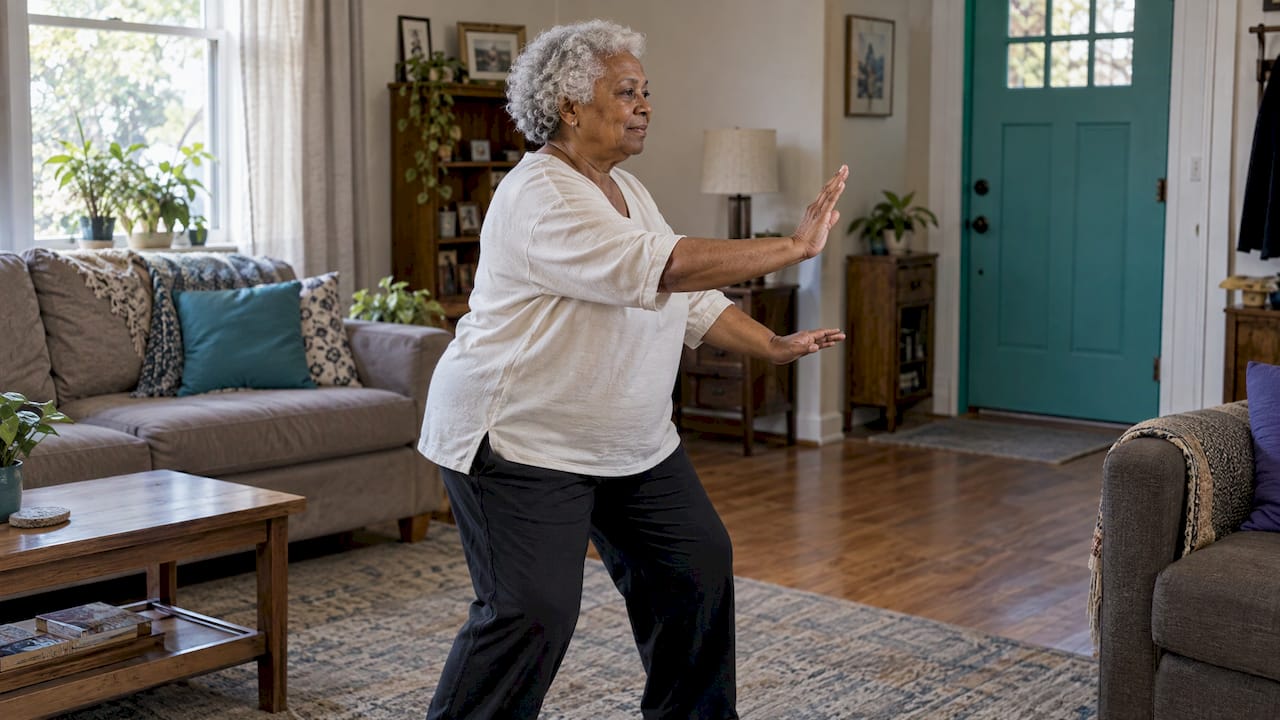
The CDC’s fall prevention advice goes beyond the house. Ask your doctor or pharmacist to review your medicines for any that could make you dizzy or sleepy, do exercises that build leg strength and balance such as Tai Chi, and have your eyes checked at least once a year.
If you want to understand the balance side, why balance declines with age explains the brain’s role, which is worth reading before you talk with your doctor. Strength matters as well: losing strength and falling more often go together, and that can shake confidence and social connection, which is a reason to treat strength work as a safety measure.
Build routines and a network that notice
A safe house still cannot call for help. Three layers do that.
Layer 1: a way to call for help
The NIA suggests setting up a system to get help after a fall, such as a necklace or bracelet with a button that alerts 911. It also suggests carrying a charged cordless or mobile phone around the house, keeping close friends and family on speed dial, and considering a smart home device or smartwatch that can detect sudden fall-like movements and call for help automatically. It recommends keeping large-print emergency numbers near each landline and saved as favorites on a mobile phone. If you have a serious allergy or medical need, the NIA says to ask your doctor about a medical alert ID bracelet or necklace.
Layer 2: a daily signal
Alert buttons only work when the person can press them. A daily check-in covers the cases where they cannot. The government of Quebec, for example, describes a free automated daily call service that can be scheduled once or several times a day, with a quick health check if the call goes unanswered. It also describes friendship calls from someone who contacts the older adult regularly, and neighbors who respond when something seems out of the ordinary. The idea travels well: a predictable signal, and a human who acts when it stops.
How often should someone check in? Our guide on 2 to 3 weekly check-ins and when to automate helps you choose a rhythm, and the missed check-in protocol lays out what to do step by step when one does not come.
Layer 3: people with defined roles
A network works when everyone knows their job. Pick three to five people, confirm they are willing, and give them roles. Our guides on building a verified emergency contact list and caregiver roles and responsibilities walk through it. If you have no obvious family nearby, a mix of neighbors, friends and community members still counts. Harvard-affiliated geriatrician Dr. Susanne Hartmann describes virtual villages as a way to help delay a move to assisted living, though not a replacement if that level of care is what someone needs.
To start tonight, try 3 moves to begin a safety plan.
Safety without losing independence
The biggest reason older adults refuse help is the fear of being watched. That fear is reasonable, and the research backs it up. A 2026 scoping review of 110 publications from 30 countries found that home monitoring technologies can raise privacy, autonomy and trust concerns, and that person-centered design involving both the older person and their caregivers is crucial. A separate qualitative study found that participants questioned why alarms went to caregivers rather than to them, and that some people unplugged devices after false alarms disturbed relatives.
The practical lessons:
- Decide together. The older adult chooses who is alerted and when.
- Keep it light. One tap a day beats a device that feels like surveillance.
- Reduce false alarms. Alerts that cry wolf get switched off. A grace period before contacts are notified helps.
- Be clear about location. If GPS is used, agree on when and why. Read our notes on whether GPS tracking is safe and the privacy nonnegotiables for senior GPS apps before turning it on.
Our perspective
Most of the older adults we think about are not asking to be monitored. They are asking to stay in their own homes, on their own terms, and for the people they love to stop worrying.
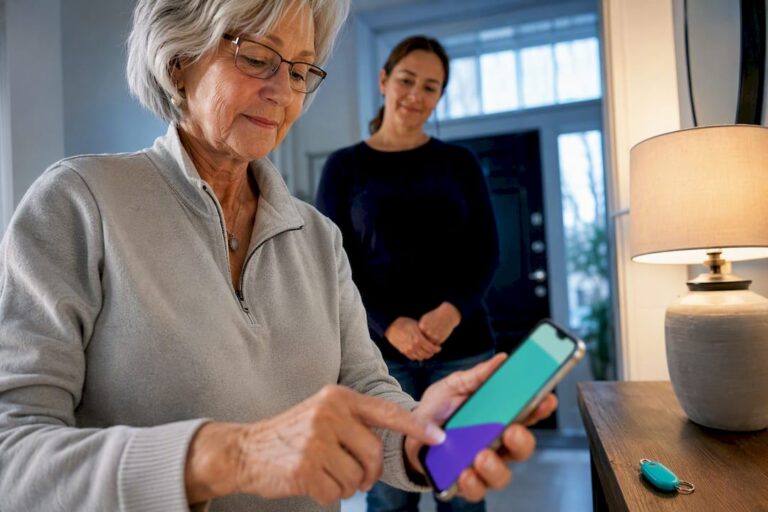
That is why we built Well-Check around simplicity and dignity. A one-tap “I’m okay” each day takes seconds. If it does not come, the people you chose are alerted. It is a small gesture that tells family everything is fine without a phone call that feels like an inspection.
We also believe independence and safety are not opposites. Medication reminders, a customizable contact network, GPS tracking and smart caregiver analysis are there to support the routine the person already has, so that independence does not depend on luck. Our design aims at peace of mind for families with minimal intrusion for the person living alone.
If you take one thing from this article: do not wait for the fall. Set up the check-in while everyone is calm and the older adult can shape it.
Brian
A simple daily check-in with Well-Check
If you want the daily signal layer without extra hardware, Well-Check is a mobile app built for this. The older adult taps once to confirm they are okay, or to ask for help. If a check-in is missed, emergency contacts are alerted. The app also sends medication reminders and lets you build an emergency contact network, with GPS tracking and smart caregiver analysis available for families who want them.
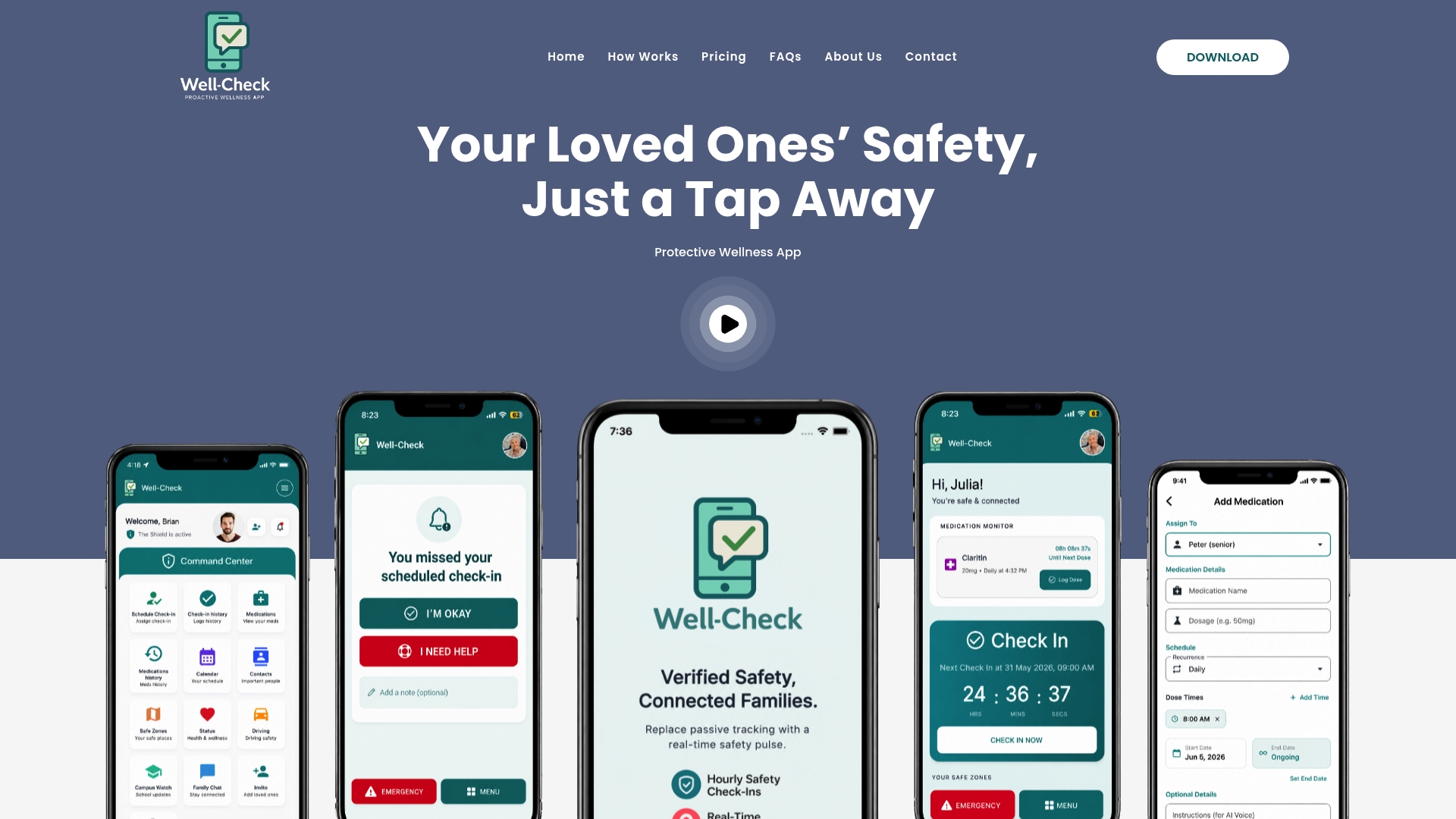
Plans are published on our pricing page: Essential is $5.99 per month and Complete is $7.99 per month. Before choosing, our six onboarding tests for senior isolation solutions help families set the app up in a way that works for both generations. You can also learn more about the wellness check-in app for older adults.
A one-weekend action plan
You do not need to fix everything at once. This order gives the most protection for the least effort:
- Saturday morning: walk through the home with the NIA checklist. Remove rugs, add night lights, label medicines.
- Saturday afternoon: test every smoke and carbon monoxide alarm, and check the water heater temperature.
- Sunday morning: agree on the people who will be contacted. Write their numbers in large print by the phone.
- Sunday afternoon: set up the daily check-in and a way to call for help from anywhere in the home. Run a test so everyone knows what an alert looks like.
- Within the month: book a medication review with a doctor or pharmacist and an annual eye exam.
Repeat the walk-through once or twice a year, and any time health changes.
FAQ
How can I keep an aging parent safe at home when they live alone?
Start with a home safety walk-through covering lighting, rugs, grab bars, alarms and labeled medicines. Then add a daily check-in so someone notices if routine breaks, and an emergency contact list near every phone. Involve your parent in each decision so the plan feels like theirs.
What are the signs that living alone is no longer safe?
Watch for missed or incorrect medications, weight changes, poor hygiene, a cluttered or unclean home, confusion, frequent falls and growing isolation, as the NIA lists. A key question is whether the person can manage basic daily activities and get out of the house in an emergency. If you see several signs, suggest a health care visit.
How common is it for seniors to live alone in the U.S.?
Quite common. More than 16 million Americans age 65 and older live alone, about 28% of that group, according to KFF Health News reporting on 2023 Census data. The share rises with age: a study of 2018 survey data found that 51.77% of adults 80 and older lived alone.
Does a check-in app replace a medical alert button?
They do different jobs. A wearable alert button lets someone call for help right away, and the NIA suggests such systems for people worried about falling. A daily check-in covers the silence: it tells your contacts when the usual signal does not come. Many families use both.
Sources
- Historic Numbers of Americans Live by Themselves, KFF Health News
- Older Adult Falls Data, CDC
- Older Adult Fall Prevention At-a-Glance, CDC
- Preventing Falls and Hip Fractures, CDC
- Living Alone, Environmental Hazards, and Falls Among U.S. Older Adults, PMC
- Associations between living alone, depression, and falls, PubMed
- Older Adults, CPSC
- Safety for Older Consumers home safety checklist, CPSC
- Home Safety Tips for Older Adults, Health in Aging
- Loneliness, social isolation, and living alone: a meta-analysis
- Living Alone Can Be Hazardous for Senior Health, ColumbiaDoctors
- Does an Older Adult in Your Life Need Help?, NIA
- Home Safety Checklist, NIA
- Preventing Falls at Home: Room by Room, NIA
- Aging in Place: Growing Older at Home, NIA
- Aging in Place: Tips to Support Older Parents’ Safety, Cedars-Sinai
- Improving the safety of seniors living at home, Gouvernement du Québec
- A new angle on aging in place: the virtual village, Harvard Health
- Ethical considerations in home monitoring technologies, PubMed
- Renegotiating autonomy and safety, PMC
- Why your balance declines with age
- Losing strength is the real reason we fall more as we age

[…] Aging Alone Safety: How to Stay Safe and Independent at Home […]